

Israel News
A Giant Second Temple mikveh Just Opened at Tel Hebron
A one-of-a-kind, roughly 200-cubic-meter ritual mikveh has undergone complex conservation and accessibility work by the Israel Nature and Parks Authority. Unearthed years ago, the find is now open to the public, offering a vivid peek into Jewish life in Hebron nearly 2,000 years ago.
- Hidabroot
- | Updated
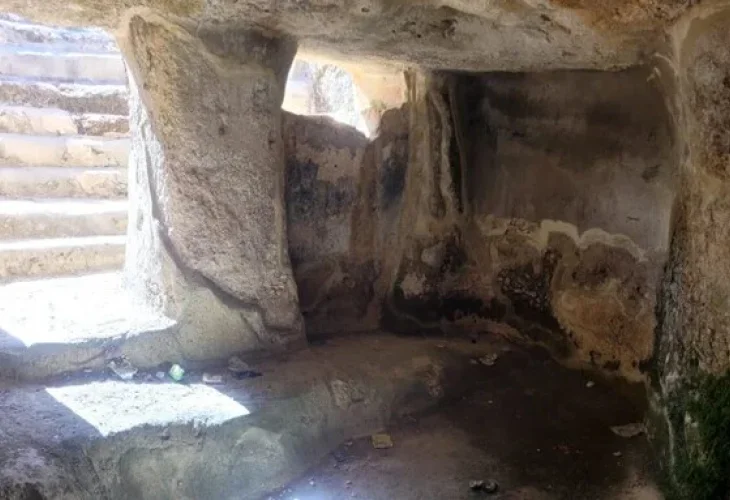 Photo: Ilya Borda, Israel Nature and Parks Authority
An ambitious preservation and accessibility project at Tel Hebron has just wrapped, opening a Second Temple–period ritual mikveh to the public. First uncovered in 2014 during excavations by the Staff Officer for Archaeology led by Dr. Emanuel Eisenberg and Prof. David Ben-Shlomo, the structure ranks among the largest and most impressive found in Israel. After meticulous conservation, visitors can now experience first-hand how central the mitzvah of ritual purity was to Hebron residents in the early Roman period.
The striking mikveh has two main parts: a broad stairwell leading down to an inner cave carved entirely from natural bedrock. Its vast capacity—about 200 cubic meters—speaks to the importance of the installation and suggests it served a large community or many travelers on their way to Jerusalem or other holy places.
The recent conservation work was led by a team of specialists, including engineers and preservation architects, who carried out delicate measures to stabilize the original structure. They preserved surviving layers of ancient plaster still coating the walls, treated geological cracks in the rock, and thoroughly cleaned accumulated deposits. The ancient rainwater drainage system was also restored, with strict care to maintain the authenticity of the original remains.
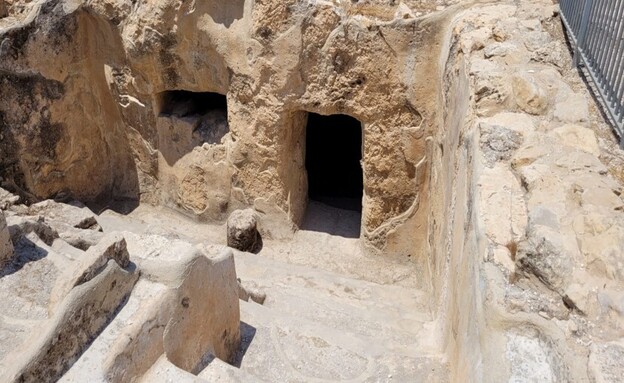 צילום: איליה בורדה, רשות הטבע והגנים
Tel Hebron, located on the southern slopes of the biblical city and about a kilometer and a half from the Cave of the Patriarchs, is considered one of Israel's most important archaeological sites. The site preserves remains from the Canaanite period through the Byzantine era. Highlights include the "Cyclopean Wall," a massive Canaanite fortification preserved to a height of 4 meters, as well as rare finds such as stamps inscribed "lamelech Hevron" from First Temple days and coins from the Bar Kokhba Revolt.
Ilan Cohen, Heritage Supervisor for the Judea and Samaria District at the Israel Nature and Parks Authority, explains: "The finds show that Hebron was an important Canaanite and Jewish center over thousands of years. In the early Roman period, settlement expanded beyond the walls, and industrial installations and ritual mikvaot—like the one now accessible—were built. Its opening is a significant step in revealing the site's history to the broader public."
Although the broader accessibility project for the tel is still ongoing, the Israel Nature and Parks Authority has already opened the preserved mikveh. Visitors can now descend the ancient steps into the hewn cave, take in the ancient plasterwork, and more deeply grasp the religious and social reality that shaped the area at the end of the Second Temple period.

