

Raising Children
How to Explain Rosh Hashanah to Children: Simple Ways to Make the Holiday Meaningful
Using everyday examples, stories, and symbols to help kids connect to the deeper meaning of the Jewish New Year
- Shira Dabush (Cohen)
- | Updated
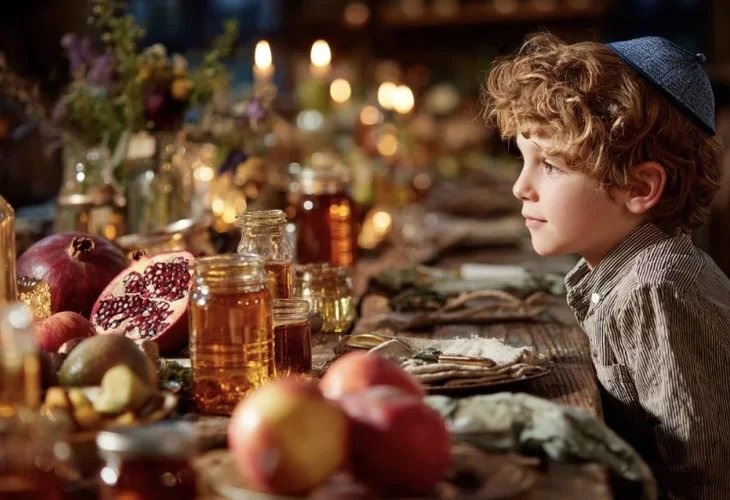
Rosh Hashanah presents parents with a unique challenge: how do we convey the true meaning of the holiday to children? On the one hand, they easily recognize its symbols of apples, honey, and pomegranates, and on the spiritual side, prayers in the synagogue, self-reflection, and the shofar. On the other hand, it’s much harder for them to understand what all of this really means: Why do we begin a new year? What is “judgment”? And what does it mean to hope for a good year?
To make these ideas accessible, it’s important to use simple language, draw from their everyday experiences, and incorporate games, stories, and open-ended questions. This way, children don’t just hear about the holiday, but they experience it personally, in a language they understand.
Apples and Honey: A Sweet Beginning
Conversation:
Child: “Why do we eat apples with honey?”
Parent: “Just like you love when a sweet dessert makes you smile, we want the new year to begin sweet and happy for all of us. It’s a way of showing that things can be good, and maybe even better than before.”
The Shofar: A Special Sound for a New Year
Conversation:
Child: “Why do we blow the shofar?”
Parent: “The shofar reminds us to pause, listen to our hearts, and think about how we can be better. It’s like an alarm clock that wakes us up for a brand-new day.”
The Pomegranate: Many Seeds, Many Good Deeds
Conversation:
Child: “Why do we eat a pomegranate?”
Parent: “Because it has so many tiny seeds. It reminds us that we can fill the year with many good deeds — even small ones — and each one matters.”
A Fresh Start: Like a New Notebook
Conversation:
Parent: “Do you know that feeling when you open a brand-new notebook at the beginning of the school year? The pages are clean, and you can write whatever you want. It feels exciting, right? That’s what Rosh Hashanah is like — we’re starting a new page in our lives, and what we do gets written from the beginning.”
Making It Meaningful for Children
In order for children to truly understand Rosh Hashanah, they need images and ideas that connect to their inner world. Children have a rich imagination, and to help them connect, we need to translate deeper concepts into familiar, everyday objects — like food, a notebook, or an alarm clock.
When we do this, even complex ideas become living, relatable messages. They bring joy to the child and help them connect to the mitzvot with their heart, from a young age.

