

Wonders of Creation
The Human Eye: A Super-Camera Beyond Any Modern Technology
From precision light control to millions of visual sensors, explore how the human eye outperforms the most advanced cameras ever imagined
- Rabbi Zamir Cohen
- | Updated
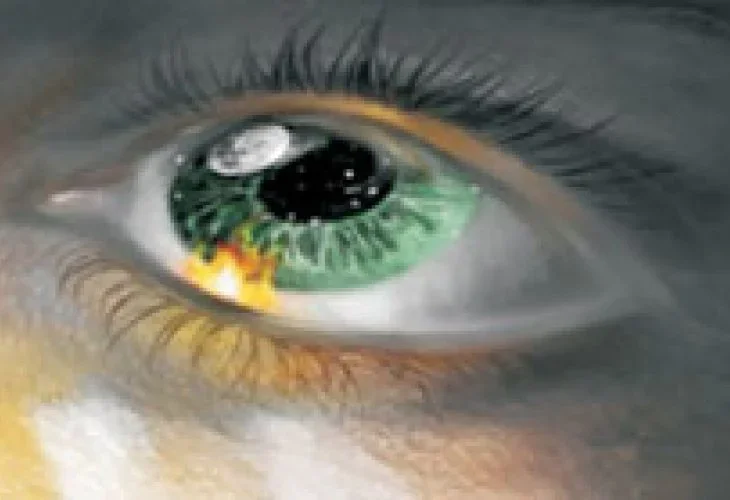
Let us imagine a newspaper headline like this: in the most advanced laboratory in the world, leading scientists have developed a remarkable device that can only be described as a super-camera.
This camera can operate in any environment without the need for artificial lighting or film. Every image is automatically transmitted to a special computer and processed within a fraction of a second. The super-camera can simultaneously capture near and distant objects, both small and large.
Advanced Light and Focus Mechanisms
At the center of the camera is an automatic aperture that contracts in strong light to allow only the necessary amount of light to enter, and expands in low light to let in as much light as possible. Its automatic zoom is powered by a highly sophisticated system of electronic mechanisms.
As soon as light enters the camera, seven million (!) color sensors are activated, precisely and automatically adjusting the colors to produce an accurate, vivid image. However, when there is insufficient light for color imaging — such as in darkness, those sensors are replaced by 127 million (!) specially designed black-and-white sensors that capture the image instead.
A Self-Cleaning, Self-Protecting System
Because of the sensitivity and importance of this extraordinary device, special attention was given — perhaps for the first time in the history of photography, to automatic lens cleaning of the highest quality, ensuring maximum clarity and transparency.
Two delicate membranes, constantly coated on their inner side with a special fluid, open and close repeatedly over the lens, cleaning it at incredible speed without interfering with image capture. The designer chose to use two membranes — one from above and one from below, rather than a single covering, to allow for faster and more efficient movement.
In addition, a unique lubrication system continuously provides moisture to the lenses, allowing them to move freely in all directions while also removing any dust or debris that enters the surrounding area. Thanks to this system, the camera can function even in extreme conditions, including sandstorms. When necessary, the membranes close automatically — even sealing completely, to prevent damage. If particles do enter, the system detects them and releases additional cleaning fluid until the lens is fully restored.
The Power of 3D Vision
One of the most impressive features of the super-camera is its ability to produce three-dimensional images. This is achieved by combining two separate imaging systems (each containing all the features described above). A special computer processes both images instantly and merges them into a single 3D image, all within fractions of a second.
The Astonishing Reveal
It is worth noting that the diameter of each such super-camera is only about two and a half centimeters.
Both of these cameras are permanently positioned at the front of the most sophisticated creation in the world, and they are eyes.
Is it any wonder that even before these numerical details were known, Charles Darwin — considered the father of the theory of evolution, wrote that the complexity and perfection of the eye filled him with deep unease? As he put it: “To this day, the thought of the eye makes me shudder.”

