

Magazine
Rescuing Ancient Tiberias: One Man’s Fight to Save the Sanhedrin’s City
In Tiberias, a neglected archaeological site holds the legacy of the Sanhedrin and the roots of Jewish scholarship. One man is working to restore and protect it.
- Michal Arieli
- | Updated
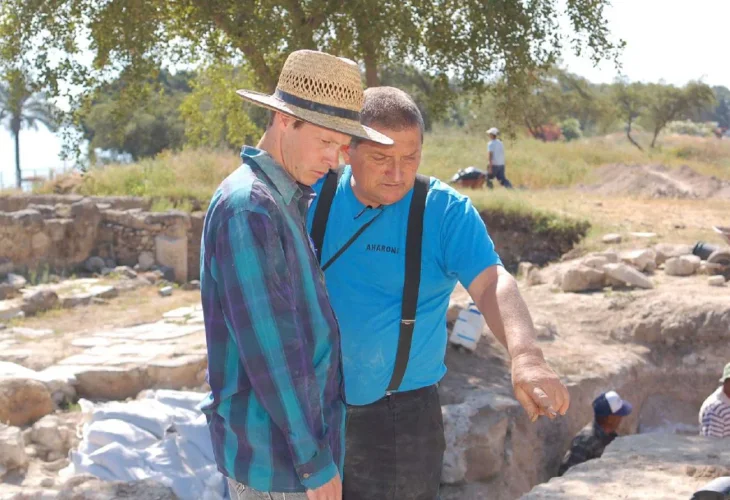 (Right: Amitai Aharoni)
Amitai Aharoni knows Tiberias like the back of his hand.
He lives the Kinneret, surrounded by the city’s unique landscapes. But alongside the beauty, he also sees something else: neglected areas filled with thorns, garbage, and signs of abandonment.
And precisely there, in places that seem stripped of all grandeur, Aharoni sees something extraordinary. He sees what he calls the “Jerusalem of the Galilee.”
Seeing What Lies Beneath
Where others see empty, forgotten land, Aharoni sees history. He imagines the marble floors of the palace where the Sanhedrin once sat, and the streets where Rabbi Yochanan and Reish Lakish walked.
A botanist and archaeologist by training, Aharoni joined Professor Yizhar Hirschfeld’s excavation team in 2004. As they dug deeper, the significance of the site became undeniable.
They were not just uncovering ruins. They were standing at the very heart of Talmudic Judaism.
This is where the Jerusalem Talmud was written. This is where the sages of the Masorah developed the system of vocalization, the nikud, that Jews still use today when reading the Torah.
A Discovery and a Shock
In 2008, the excavations wrapped up. The team left behind a clean, carefully preserved site, something visitors could walk through and truly learn from.
But when Aharoni returned later, the scene had completely changed.
The area had become neglected again. By night, it attracted crime. By day, it was treated like a dumping ground. People walked over ancient stones without realizing their significance.
That was the moment Aharoni understood something crucial: uncovering history is only half the work. Preserving it is the real challenge.
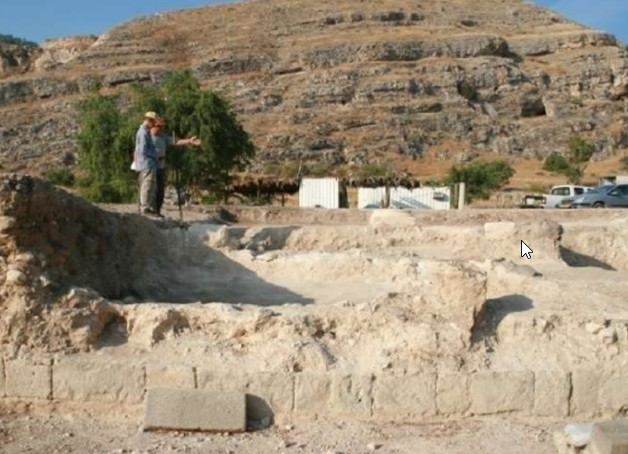 Polished Stone Floor from Herod Antipas’ Palace. Photo: Hirschfeld Excavation Team
Stones That Tell a Story
Among the most remarkable discoveries was a massive palace dating back to the time of Herod.
Based on the research, Aharoni believes it may have been the very place where the Sanhedrin convened. He points to descriptions in the Talmud of judges walking “between four corners” during deliberations, a detail that closely matches what was uncovered at the site.
These are not just ancient stones. They are pieces of a living story.
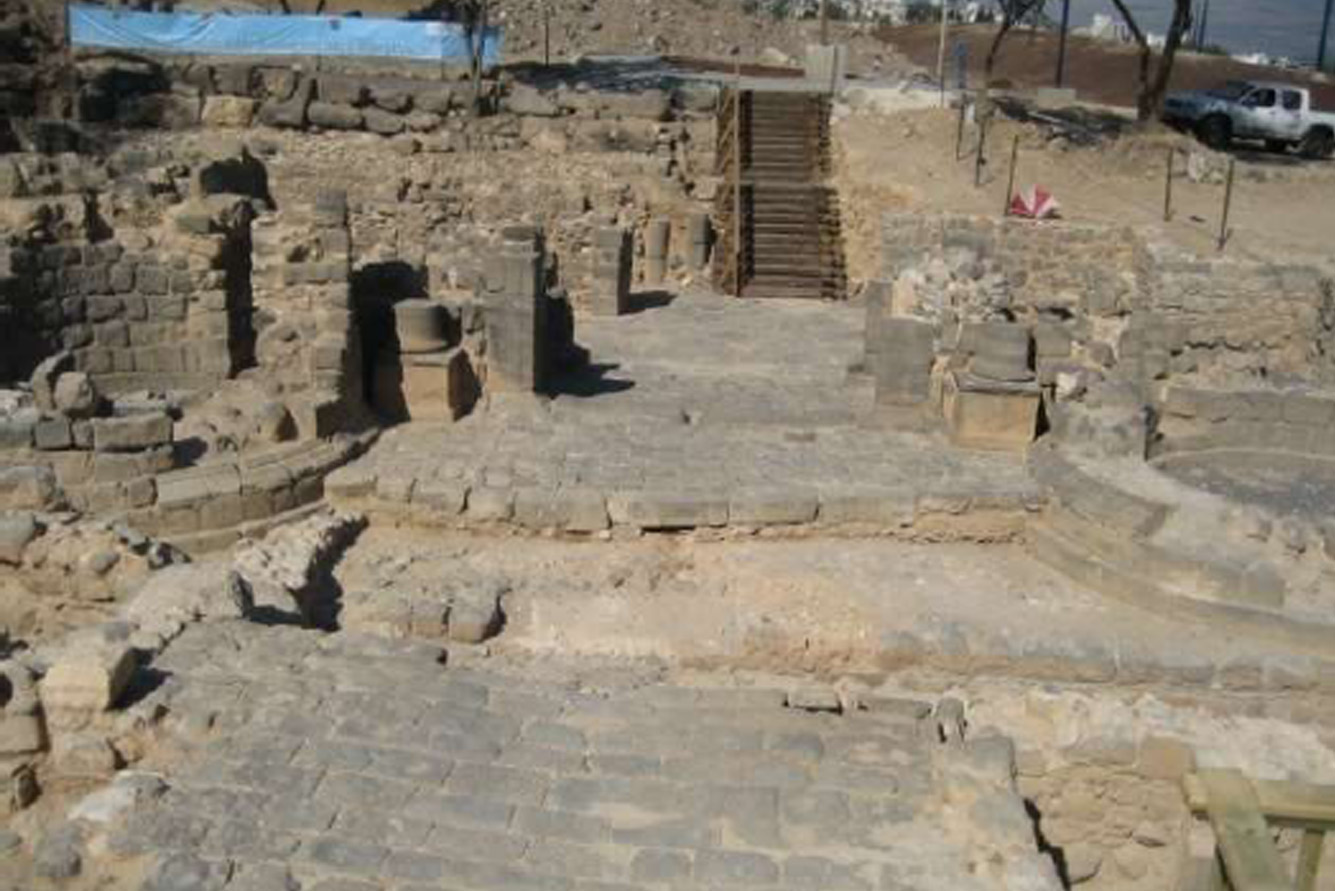 The Southern Gate. Photo: Amitai Aharoni
Aharoni often emphasizes that Judaism is not only a tradition of books. In Tiberias, you can see the physical foundations of Jewish life.
This is where the Masorah was refined. Until that time, the Hebrew text was written as a continuous flow of letters. The scholars of Tiberias introduced the system of nikud, giving structure and clarity to the language.
It is also where the Aleppo Codex was written, one of the most accurate versions of the Tanakh ever produced.
A City That Once Thrived
What would someone have seen when entering Tiberias in its prime?
According to Aharoni, it was a carefully planned city, built in an organized grid. There were bustling markets, bathhouses fed by natural hot springs, and a vibrant daily life.
But what made it truly unique was the blend of everyday living and Torah learning.
The sages were not isolated. They sat among the people, in shaded corners and along the streets, discussing ideas that would later become part of the Gemara.
Taking Responsibility
After seeing the site fall into neglect, Aharoni knew he could not walk away.
Together with tour guide Alon Navon, he founded ALTA, Citizens for Ancient Tiberias. Their goal was simple: to protect and restore what had been uncovered.
They launched a crowdfunding campaign called “Save Tiberias’s Heritage,” drawing support from people who understood the importance of the site.
With the funds, they cleared massive amounts of garbage, brought in equipment, and began the first steps of preservation. The area was cleaned, stabilized, and fenced.
A Work Still in Progress
The work, however, is far from complete.
Although awareness has grown, the site still faces challenges. Some people continue to treat it carelessly, not realizing the damage they are causing.
Aharoni’s vision is for the area to become a recognized national park, a place where visitors can walk through history and understand its significance.
Today, the stones are no longer buried under trash. They are visible again. But the journey toward full restoration is still ongoing.
A Simple Request
Aharoni has one request for anyone who visits.
Do not walk past these stones as if they are just rocks.
Beneath your feet lies a city that preserved Jewish life and spirit through some of its most challenging times. Tiberias stands as a reminder of resilience, creativity, and continuity.
The least we can do is treat it with the respect it deserves.

