

Parashat Shemot
Egypt and Beyond: The Promise Hidden Within Exile
The story of Egypt reveals a deeper truth about exile, growth, and resilience. Even in hardship, the seeds of redemption are already in place.
- Rabbi Moshe Sheinfeld
- | Updated
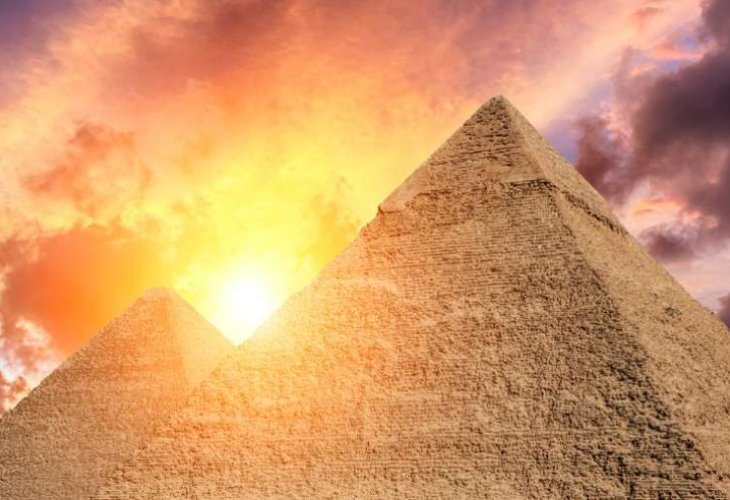 (Photo: shutterstock)
The portion of Shemot describes the first exile experienced by the Jewish people.
Our sages teach: “All kingdoms are called by the name of Egypt, for they oppress Israel” (Bereishit Rabbah 16:4).
This means the story of Egypt is not just history. It contains hints and patterns that repeat throughout future exiles.
Growth Within Affliction
The Torah describes the suffering in powerful terms:
“They set taskmasters over them to afflict them… and they built for Pharaoh treasure cities, Pithom and Raamses. But the more they afflicted them, the more they multiplied and grew… and they made their lives bitter with hard bondage” (Exodus 1:11–14).
One phrase stands out: “The more they afflicted them, the more they multiplied and grew.”
The word “grew” is linked to expansion and abundance, as in the verse: “You shall spread out westward and eastward and northward and southward” (Bereishit 28:14).
But this raises a question. If “multiplied” already expresses growth, why does the Torah add “and they grew”?
Breaking the Plans
The Ben Ish Chai, in Od Yosef Chai on Parshat Shemot, addresses this question.
A Midrash (Midrash Tehillim 9) describes a dialogue between a Roman philosopher and Rabbi Eliezer. The philosopher challenges the prophecy: “They will build, and I will destroy” (Malachi 1:4), referring to Edom, arguing that their buildings still stand.
Rabbi Eliezer responds that the verse does not refer to physical buildings, but to plans and schemes. Nations may plan to harm the Jewish people, but those plans are ultimately overturned.
The philosopher himself admits: they plan again and again to destroy, yet somehow those plans do not come to fruition.
With this understanding, the verse in Shemot takes on a deeper meaning.
“The more they afflicted them, the more they multiplied” refers to physical growth. “And they grew” also points to breaking through, dismantling the very plans built against them.
As oppression increased, the Jewish people not only grew in number, they also overcame the system designed to crush them.
A Promise for Every Generation
This idea is not limited to Egypt.
It serves as an opening message for all exiles. The Torah is offering two assurances: “They will multiply” and “they will grow.” Even as suffering increases, growth continues, and destructive plans ultimately fail.
The Meaning of “Hebrew”
When Hashem sends Moshe to Pharaoh, he says: “The Lord, God of the Hebrews, has met with us” (Exodus 3:18).
Why specifically “Hebrews”?
Rabbi Samson Raphael Hirsch explains that this term does not describe only a nation, but a quality within each individual.
It reflects the trait first seen in Avraham. As Rabbi Yehuda says: “The whole world is on one side, and he is on the other” (Bereishit Rabbah 42:8).
This courage, to stand apart and remain true, was passed down to every generation.
By using the name “Hebrews,” Moshe declares that each individual carries the strength of the entire people. Each person has the ability to stand firm, even alone.
Like a Tree
Rabbi Hirsch offers a powerful image.
The nations of the world are often compared to animals, which can be destroyed quickly. But Israel is compared to a tree.
A tree may be cut down, damaged, or reduced, but as long as even a small part remains, it can grow again. Its life force returns and spreads.
So too, the Jewish people cannot be destroyed. The spirit of the nation lives within each individual.
The Solution Begins With the Struggle
The Torah concludes with a remarkable detail.
Yocheved, the mother of Moshe, was born as Yaakov and his family entered Egypt, right at the boundary, between its walls (Sotah 12a; Rashi on Bereishit 46:15).
This is more than a historical note.
At the very moment the descent into exile begins, the seeds of redemption are already in place.
Before the darkness unfolds, the solution has already begun.
Adapted from the teachings of Rabbi Menachem Yakovzon, head of the Mahar Yitzchak Yeshiva in Moshav Chemdat.

