

Jewish Law
The Fascinating Halachic Debate: Is Wild Buffalo Kosher?
Explore the halachic debate around wild oxen, the importance of tradition in determining kashrut, and the fascinating history of this once-common animal in the Land of Israel
- Yosef Yaavetz
- | Updated
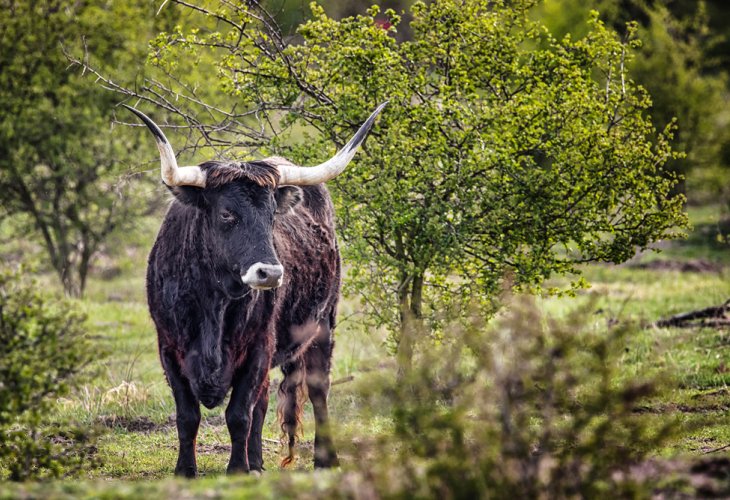 (Photo: shutterstock)
It is well known that in the future, God will prepare a feast for the righteous from the Shor HaBar (the wild ox). For now, we make do with ordinary cattle.
However, there are many different species of wild oxen found around the world. About eighty years ago, there was an attempt to import a South American ox known as the “Zebu,” which differs somewhat from the familiar domestic ox. Some of the leading rabbis of the time, including the Chazon Ish, opposed this, arguing that kosher animals are only eaten based on an established tradition (mesorah), and one cannot rely solely on the physical signs of kashrut.
The “Jamus”: A Local Wild Ox
In contrast, there is a type of wild ox known as the “Jamus” (water buffalo), which until one or two generations ago was very common in the Land of Israel.
The Hula Lake region was populated with these animals, as were the swamps around the Yarkon River and Petach Tikva. There was even an Arab village named after them — “Jamasin” whose residents traded in these animals. Today, the neighborhood of Pardes Katz in Bnei Brak stands on its ruins.
Even today, small populations of these animals remain in nature reserves, such as Tel Afek near Akko. The Jamus is a large wild bovine, similar to the South American buffalo. It is certainly not an animal one would want to encounter alone in a swamp. Besides a few wild herds, there is also a domesticated herd in Moshav Bitzaron.
Is It Kosher?
This raises an important question: Does one need a tradition (mesorah) to eat its meat or benefit from its milk?
A kashrut expert, Rabbi Yisrael Meir Levinger, testified that he heard from ritual slaughterers of the Old Yishuv in Jerusalem that they regularly slaughtered and ate Jamus meat under strict kosher standards. Due to the animal’s large size, they even needed sacks of soil to fulfill the mitzvah of covering the blood (kisui hadam).
Similarly, Rabbi Nissim Karelitz testified that although the Chazon Ish opposed introducing new species, he did not object to eating Jamus, since there was a clear tradition among the Jews of the Land of Israel.
Additionally, the Jamus is closely related to the American buffalo (bison), which is consumed by Jews in South America. This view was also supported by Rabbi Shmuel Wosner in his responsa Shevet HaLevi.
For those interested in trying it, Jamus meat is considered high quality. It contains relatively low cholesterol while being rich in protein and iron.
The story of the Jamus highlights an important principle in Jewish law: tradition plays a central role in determining what is permissible to eat. At the same time, it offers a fascinating glimpse into a once-common animal of the Land of Israel — one that bridges halachic discussion, history, and modern dietary interest.

