

Facts in Judaism
10 Essential Facts About the Mishnah: The Foundation of Halacha
Discover key facts about the Mishnah, including its 4,192 teachings, Six Orders, and its role as the foundation of Jewish law.
- Yonatan HaLevi
- | Updated
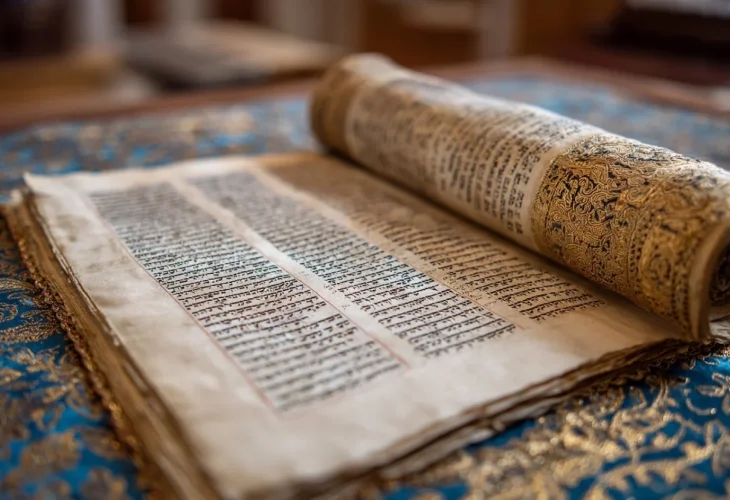
What is the Mishnah and why does it matter? Here are 10 key facts to help you understand this foundational work of Jewish law.
The Mishnah is one of the most foundational texts in Jewish life. It brings together centuries of teaching, discussion, and tradition, shaping how Torah is learned and how Jews live every day.
Here are 10 essential facts to know:
1. The Core of the Oral Torah
The Mishnah is a central part of the Oral Torah. It preserves the teachings of the Tannaim, passed down orally from teacher to student, beginning with Moshe and continuing through later generations.
2. A Comprehensive Guide to Jewish Law
The Mishnah covers a wide range of topics and lays out the practical details of halacha in every area of life.
3. Who Are the Tannaim
The sages whose teachings are recorded in the Mishnah are known as the Tannaim.
4. What the Name “Mishnah” Means
The word “Mishnah” comes from the Hebrew root related to repetition and learning by heart. It reflects the way the material was traditionally taught and memorized.
Another explanation connects it to the idea of “second,” as it follows the Written Torah.
5. The Six Orders of the Mishnah
The Mishnah is divided into six major sections, known as Shas, each focusing on a different area of life:
Zeraim focuses on blessings and agricultural laws connected to the Land of Israel and contains 655 mishnayot across 11 tractates.
Moed deals with Shabbat, festivals, and fast days and contains 681 mishnayot across 12 tractates.
Nashim covers marriage, betrothal, divorce, and related topics and contains 578 mishnayot across 7 tractates.
Nezikin focuses on civil law, damages, and the court system and contains 685 mishnayot across 10 tractates.
Kodashim discusses the Temple service and sacrifices and contains 590 mishnayot across 11 tractates.
Taharot addresses ritual purity and impurity and contains 1,003 mishnayot across 12 tractates.
6. A Simple Way to Remember
A common mnemonic used to remember the six orders is “ZMaN NaKaT.”
7. Built in a Clear Structure
Each tractate is divided into chapters, and each chapter is made up of smaller units called mishnayot.
8. The Full Scope
Altogether, the Mishnah includes 63 tractates and 4,192 individual mishnayot, covering a vast range of Jewish life and law.
9. The Power of Memorization
One traditional way to learn the Mishnah is through repetition and memorization. The more a person reviews, the more the material becomes part of them.
This approach reflects the Talmud’s advice: “If someone asks you something, do not hesitate, answer immediately” (Kiddushin 30a).
10. Learning That Stays With You
The Chafetz Chaim highlights a unique advantage of memorizing Torah. A person who knows their learning by heart can review it anywhere, even without access to a book.
He encourages investing in this kind of learning, explaining that every piece of Torah learned creates lasting merit, and repeated learning strengthens that impact even more.
A Living Foundation
The Mishnah is not just a text to study. It is a living foundation of Jewish life.
Through its structure, clarity, and depth, it continues to guide, shape, and connect generations of learners to Torah every single day.

