

Beginners Guide
Why Wear a Kippah? The Deeper Meaning Behind the Tradition
From ancient custom to modern identity, explore the meaning of the kippah and why it remains a powerful Jewish symbol.
- Yonatan HaLevi
- | Updated
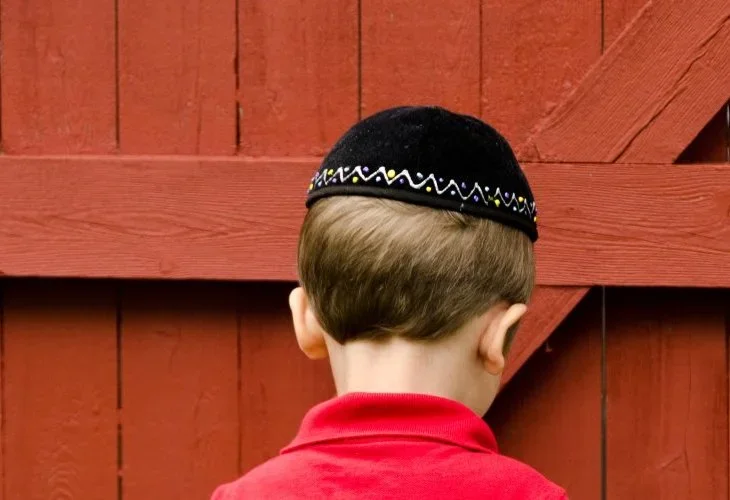 (Photo: Shutterstock)
The practice of wearing a kippah, also called a yarmulke, is rooted in an ancient Jewish custom designed to cultivate awareness of God, humility, and a sense of standing before the Supreme King in whose presence we live.
Our sages taught that a person should not walk even a short distance, traditionally defined as four cubits, with their head uncovered. Over time, this practice expanded and became a visible sign of Jewish identity, marking a person who is connected to the heritage of Israel and committed to living by its values and commandments.
What Does a Kippah Really Represent?
Many people wonder what such a small piece of fabric can truly represent.
In reality, the meaning of the kippah is far greater than its size suggests. It reflects a mindset and a way of life. Wearing a kippah is a daily reminder that life is lived within a higher framework, with purpose, responsibility, and awareness.
A Constant Reminder of Responsibility
One way to understand the kippah is through a simple comparison. Just as a soldier’s uniform signals duty and discipline, the kippah serves as a personal reminder of commitment.
The moment a soldier puts on a beret, he knows he has responsibilities and boundaries. In a similar way, a person who wears a kippah is reminded that they are part of something greater. It reflects a sense of purpose and a commitment to live according to Jewish values.
Identity and Connection
Beyond personal awareness, the kippah also serves as an outward expression of identity. It connects a person to generations of Jewish tradition and signals a sense of belonging to the Jewish people.
For many, it is not just about personal practice, but about visibly identifying with a shared history and mission.
A Symbol Shaped by History
Throughout history, many Jews held onto this practice even in the face of difficulty and sacrifice. Because of that, the kippah carries a deeper meaning that goes beyond its physical form.
In some ways, it can be compared to a national flag. A flag is simply a piece of cloth, yet it represents values, identity, and shared experience. The kippah, too, carries layers of meaning shaped by generations who lived and preserved Jewish life with dedication.
A Small Covering with a Powerful Message
While it may seem simple, the kippah holds profound significance. It is a daily expression of humility, identity, and responsibility, reminding the person who wears it of their connection to God, to tradition, and to a meaningful way of life.

