

Facts in Judaism
Who Was Amalek? Origins, History, and Disappearance of Israel’s Ancient Enemy
Explore the biblical, historical, and archaeological insights into Amalek, from its roots in Esau’s lineage to its eventual disappearance from history
- Yosef Yaavetz
- | Updated
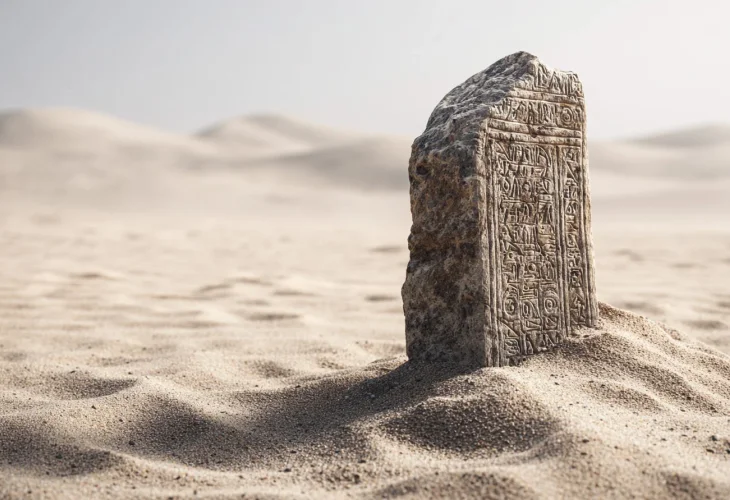
Amalek is described as the enemy of the people of Israel, and the Torah commands us to remember this, not to ignore the threat, but to remain aware of the obligation to oppose and eradicate it. Where did Amalek come from, what did they do, and what became of them?
1. Amalek Appears Before Being Born
In the portion of Lech Lecha, the war of the four kings is described, and the verse mentions “the field of the Amalekites” (Genesis 14:7). However, according to the genealogies later in the Torah, Amalek was the grandson of Esau, the son of Eliphaz and Timna (Genesis 36:12), meaning he had not yet been born at that time. Most commentators explain that the place was named retroactively, “the field of the Amalekites.”
2. Amalek as a Descendant of Abraham
Amalek was not a foreign nation but part of Abraham’s extended family. Timna, the concubine of Eliphaz son of Esau, gave birth to Amalek. Rabbinic tradition expands on this, describing Timna as someone who sought to join Abraham’s household but was not accepted, leading to the emergence of Amalek.
3. A “City of Amalek” in the Prophets
In the Torah, Amalek is described as a nomadic people. Later, however, in the book of Samuel, when King Saul goes to war against them, it states that he came “to the city of Amalek.” This suggests that at least at one stage they had a settled location or central base. Some researchers identify this site with archaeological remains in the Negev region.
4. Desert Fortresses and Amalek
In the Negev highlands and surrounding desert areas, dozens of sites from the period of the Judges have been discovered, some built as oval shaped fortresses. Scholars debate whether these were part of early Israelite defense systems or settlements of nomadic groups such as Amalek, described in the Torah as dwelling in the Negev.
5. Stone Sanctuary in the Negev
One intriguing archaeological discovery is a site of large standing stones in the Negev. Some researchers suggest it may have served as a gathering place or even a ritual site for nomadic tribes, possibly including Amalekite groups in the region.
6. Kadesh Barnea and Amalek
Kadesh Barnea, identified with Tell el Qudeirat, is a key desert location associated with the journeys of the Israelites after leaving Egypt. It is also connected to the regions where Amalek is described as operating. Archaeological remains there include fortresses and artifacts from the relevant period.
7. A Possible Egyptian Connection
Some scholars have proposed that the name Amalek may be related to an Egyptian term meaning something like “hostile Asiatic,” possibly referring to nomadic groups in the regions of Edom and the Negev. This idea connects with the biblical description of Amalek as a descendant of Esau.
8. A People Without Written Records
Unlike many ancient nations, Amalek left no known written inscriptions. Some researchers suggest this indicates a primarily nomadic culture that did not develop a written tradition.
9. The Wars Between Israel and Amalek
During the Exodus: Amalek attacked Israel at Rephidim. Joshua led the battle while Moses raised his hands, and afterward came the commandment to remember and erase Amalek.
In the wilderness: After the sin of the spies, Amalek and the Canaanites defeated the Israelites at Hormah.
In the time of the Judges: Amalek joined Moab and Ammon in oppressing Israel during the days of Ehud.
In the time of King Saul: Saul was commanded to destroy Amalek but spared Agag and the best livestock. The prophet Samuel then executed Agag, and Saul’s kingship was ultimately taken from him.
In the time of King David: Amalek raided Ziklag and took captives. David pursued them, defeated them, and recovered everything.
In the time of Hezekiah: it is recorded that descendants of the tribe of Simeon struck the remaining Amalekites in the region of Mount Seir.
10. The Disappearance of Amalek
In the time of Sennacherib, king of Assyria, many nations were displaced and mixed together. Amalek was among those who were dispersed and assimilated, eventually disappearing as a distinct people. For this reason, later authorities, including Maimonides, ruled that today there is no practical way to identify or eradicate Amalek, since it no longer exists as a distinct nation.

