

Facts in Judaism
What Is a Synagogue? 10 Essential Facts About Its Meaning and Importance
Discover the spiritual role of the synagogue, its connection to the Temple, and the traditions that shape prayer, community, and Divine presence
- Yonatan HaLevi
- | Updated
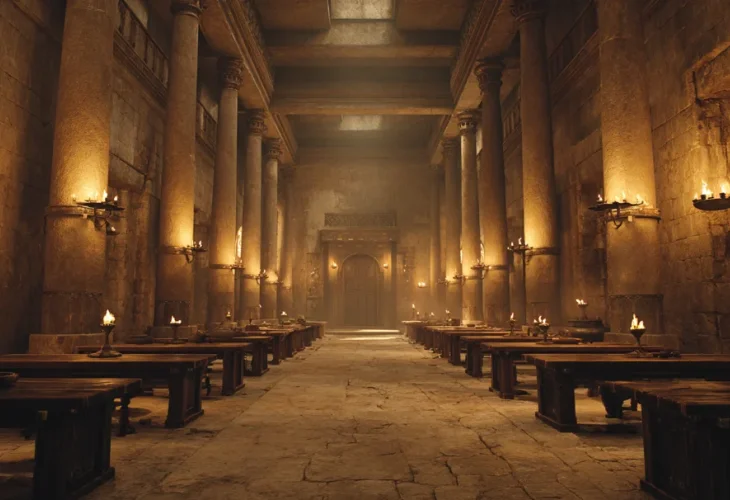
God is present everywhere in the world, and there is no place where He is not. Yet there are special places where He chooses to make His presence felt in a more revealed way. One such place is the synagogue, where every Jew comes to pour out their heart before their Father in Heaven three times a day: Shacharit, Mincha, and Maariv, and sometimes even more. Following are ten important facts about the synagogue.
1. A Fixed Place for Prayer
Rabbi Achai Gaon wrote that the people of Israel are obligated to pray in a designated place for prayer, just as Jacob prayed in a specific place, as it says, “And he encountered the place,” and the term “encounter” refers to prayer. From here we learn the importance of establishing a fixed place for prayer. As Rabbi Chelbo said in the name of Rabbi Chanina, “Whoever establishes a fixed place for prayer, the God of Abraham will help him.”
2. From the Temple to the Synagogue
In ancient times, during the period of the Tabernacle and later the Temple, these were the central places where the Jewish people gathered to connect with God.
At that time, prayer did not have a fixed text. It was Ezra the Scribe, after the destruction of the First Temple, who saw that prayer had become disorganized. Together with the Men of the Great Assembly, he established a structured prayer text that included praise of God alongside requests for human needs.
3. The Times of Prayer
Ezra also established the times of prayer to correspond with the daily offerings in the Temple.
Shacharit corresponds to the morning offering, Mincha to the afternoon offering, and Maariv corresponds to the parts of the offerings that were burned on the altar during the night.
4. A “Mini Sanctuary” in Exile
The prophet Ezekiel wrote, “I will be for them a small sanctuary in the lands where they have gone.”
5. Rashi’s Explanation
Rashi explains that synagogues are considered like the Temple itself. Just as God’s presence dwelled in the Temple, so too His holiness is present in synagogues and study halls.
6. Abarbanel’s Insight
Isaac Abarbanel explains that synagogues serve as places in exile where Jews can pray, and God promises to be with them, hear their prayers, and save them from their enemies.
7. The Synagogue as a Dwelling for the Divine Presence
According to Metzudat David, the synagogue functions as a temporary substitute for the Temple, a place where God’s presence rests among the people.
Midrashic and Talmudic sources emphasize this idea strongly. The Midrash states that without synagogues and study halls, God would not dwell in the world. The Talmud teaches that God is present in the synagogue, based on the verse “God stands in the congregation of God.”
8. Spiritual Impact on Those Who Enter
The holiness of the synagogue affects those who enter it. A Midrash compares entering a synagogue to immersing in a stream: just as someone who immerses in water becomes purified, so too a person who enters a synagogue filled with sins can leave filled with merits.
For this reason, it is highly recommended to pray in a synagogue, even if a quorum is not present. According to Maimonides, there is a special quality to prayer offered in a synagogue that helps it be accepted.
9. A Source of Long Life
The Talmud relates that Rabbi Yochanan once wondered how certain people in Babylonia lived such long lives, since the Torah connects longevity with living in the Land of Israel. When he was told that they regularly rose early to go to the synagogue and stayed late, he understood that this dedication contributed to their long lives.
10. Prayer at Any Time
Although the synagogue is primarily used for communal prayer at fixed times, it is also a place where individuals can pray at any time. The Shulchan Aruch rules that even someone who missed communal prayer should still pray in a synagogue if possible.
Proper Conduct in the Synagogue
Because of its great sanctity, one must behave with respect and reverence in a synagogue. Among the guidelines:
It is not appropriate to show physical affection such as kissing children inside the synagogue, as it is a place dedicated to love of God.
Talking during prayer is prohibited, since the synagogue is a place of Divine presence and casual conversation is inappropriate.
The sanctity of the synagogue forbids using it for personal needs such as eating, drinking, or sleeping, except in the case of a meal connected to a mitzvah.
One should not enter the synagogue for personal reasons, unless it involves a matter of holiness. If entering for shelter, for example from rain, one should engage in a mitzvah such as studying or reciting Psalms.
Dress should reflect the holiness of the place, and should be clean, modest, and respectful. Both men and women should cover their heads appropriately according to custom.
While in the synagogue, one should avoid frivolity and idle talk, focusing instead on prayer and connection with God, just as one would behave respectfully in the presence of a king, and even more so before the King of all kings.

