

Shabbat
Why We Bless Our Children on Shabbat: 7 Things to Know
Discover the meaning, origins, and beauty of blessing children on Shabbat through 7 simple and meaningful facts.
- Yonatan HaLevi
- | Updated
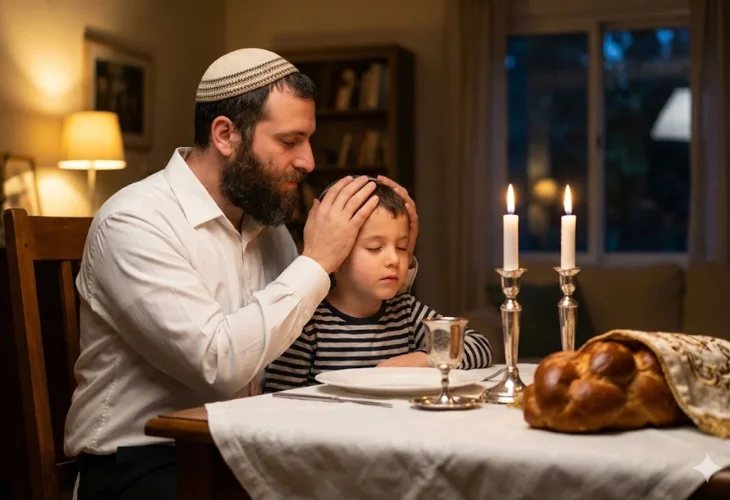
Moments before Kiddush on Friday night, many families share a quiet and powerful ritual. A parent places a hand on a child’s head and offers a blessing filled with love, hope, and faith. Where does this custom come from? What do the words mean, and why is it said specifically at these moments? Here are seven meaningful facts that reveal the depth behind this beloved tradition.
1. A Beloved Shabbat Custom
The Parents’ Blessing is a widespread custom in many Jewish communities. In some families, both parents bless their children, while in others it is traditionally the father. It is most commonly recited on Friday night and on the eve of Yom Kippur.
2. The Words of the Blessing
The blessing begins with a personal line.
For a son: “May Hashem make you like Ephraim and Manasseh.”
For a daughter: “May Hashem make you like Sarah, Rebecca, Rachel, and Leah.”
It continues with the Priestly Blessing: “May Hashem bless you and protect you, may Hashem shine His face upon you and be gracious to you, may Hashem lift His face toward you and grant you peace.”
These words express a parent’s deepest hopes for their child’s future.
3. Roots in the Torah
The source of this custom is found in Parashat Vayechi, when Jacob blessed his grandsons Ephraim and Manasseh. He said, “By you shall Israel bless,” which many commentators understand as establishing a model for future generations.
While not an obligation, it became a meaningful and lasting tradition.
4. A Tradition Passed Through Generations
The custom appears in written form in the later rabbinic period. Rabbi Chaim ben Betzalel, brother of the Maharal of Prague, describes how fathers would bless their children on Shabbat, a time when spiritual channels are open.
He also offers a practical insight: during the week, tension can build between parents and children. Beginning Shabbat with a blessing helps reset that relationship with warmth and positivity.
5. The Gesture of Blessing
Many have the custom to place both hands on the child’s head while giving the blessing. This mirrors the way Jacob blessed his grandsons, adding a physical expression of care and connection to the words.
6. A Special Moment Before Yom Kippur
The blessing is also traditionally given on the eve of Yom Kippur. At that time, it takes on added depth, as families pray for a good year, forgiveness, and spiritual growth.
Parents often offer the blessing with great emotion, asking that their children grow with love of Hashem, strong values, and a life guided by Torah and mitzvot.
7. Additional Customs
Over time, different communities have developed their own variations.
In some places, both parents bless the children. In others, the blessing is also given before a wedding or at significant life moments. Some teachers and rabbis extend this blessing to their students or community members.
In certain Mizrahi communities, a father spreads his tallit over his children and grandchildren while blessing them, creating a powerful sense of unity and continuity.
A Moment That Lasts
The Parents’ Blessing may take only a few seconds, but its impact can last a lifetime. It is a moment of connection, of passing down values, and of reminding children that they are loved, guided, and supported.
In the quiet moments before Shabbat begins, these words carry generations of meaning—and a parent’s deepest hopes for the future.

