

Wonders of Creation
Inside the Beehive: 10 Fascinating Facts About Bees
Discover how a beehive works, from the queen to the workers, and the fascinating life cycle of bees.
- Rinat Shachar
- | Updated
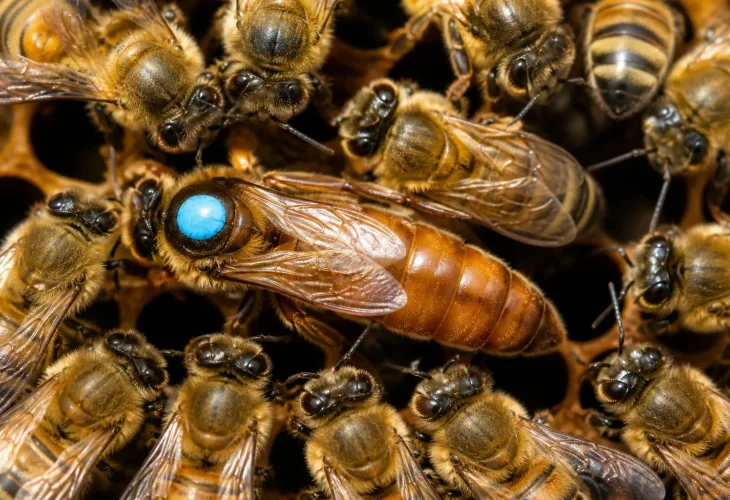
A beehive is a world of order, purpose, and constant activity. Each bee has a role, and together they create a highly organized system that allows the colony to survive and thrive.
The Queen: The Heart of the Hive
At the center of the hive is the queen bee. She is the mother of the colony and her primary role is to lay eggs and ensure the continuation of the species.
The queen is slightly larger than the worker bees, measuring about 17 millimeters, compared to the workers’ 13 millimeters. She moves from cell to cell, carefully inspecting each one before laying a single egg.
She can lay thousands of eggs a day, especially during warmer seasons when conditions are ideal. After mating once, she stores enough genetic material to continue laying eggs for the rest of her life.
From Egg to Bee
Every bee begins as a tiny egg placed in a wax cell.
After three days, the egg hatches into a larva. Worker bees feed the larva constantly, sometimes up to a thousand times in a single day. All larvae are first fed royal jelly, a nutrient-rich substance. Later, most are switched to a mixture of honey and pollen, while future queens continue receiving royal jelly.
Within days, the larva grows, fills its cell, and spins a cocoon. The cell is sealed with wax, and inside, the larva transforms into a pupa. Over time, it develops into a fully formed bee and eventually emerges.
The Workers: The Engine of the Hive
Worker bees are female, but unlike the queen, they cannot reproduce. They carry out all the essential tasks of the hive.
At first, young workers clean cells and care for developing larvae. Some guard the entrance, while others fan their wings to regulate temperature and airflow inside the hive.
After a few weeks, they begin flying outside to gather nectar and pollen. These foraging bees can carry loads weighing up to half their body weight. When they discover a rich food source, they return to the hive and perform a “dance” that communicates the direction and distance of the flowers.
Worker bees also collect propolis, a sticky substance used to repair and strengthen the hive.
Despite their tireless work, most worker bees live only a few weeks during busy seasons, though those born later in the year may survive through the winter.
The Males: A Singular Role
Male bees, known as drones, have one main purpose: to mate with the queen.
They do not gather food or perform tasks in the hive, but they are essential for reproduction. Drones develop from unfertilized eggs and take longer to mature than worker bees.
After mating, the male dies. As winter approaches, drones are no longer needed and are driven out of the hive, where they cannot survive on their own.
The Queen’s Mating Flight
When a new queen emerges, she seeks to eliminate rivals before taking her mating flight. She flies high into the air, where male bees from different hives follow her.
Only the strongest reaches her. After mating, the queen returns to the hive and begins her lifelong role of laying eggs.
Growth and Expansion
During times of abundance, especially in spring, the hive grows rapidly. When it becomes overcrowded, part of the colony leaves with a queen to form a new hive. This process is known as swarming.
Defense and Survival
Bees are generally not aggressive, but they will defend their hive if threatened.
The worker bee’s sting is designed for defense. It contains small barbs that lodge into soft tissue. When a bee stings, it cannot remove the stinger without injuring itself, which leads to its death.
Challenges in the Hive
The hive faces many threats, both from within and outside.
Pests such as wax moths, wasps, ants, and other insects can damage the hive, steal honey, or harm the bee population. In addition, birds and other predators hunt bees while they are outside gathering food.
Despite these dangers, the hive continues to function through cooperation, structure, and constant effort.
A World of Order and Purpose
The life of a beehive reveals a remarkable system of organization and balance. Each bee fulfills its role, contributing to the survival of the whole.
From the queen to the workers to the drones, every part of the hive reflects a precise and interconnected design—one that continues to inspire curiosity and wonder.

