

Behind the News
Why Iran’s Attacks on UAE Have Not Restarted the War
US officials are treating the strikes as limited escalation, not a collapse of the ceasefire or return to full war
- Brian Racer
- | Updated
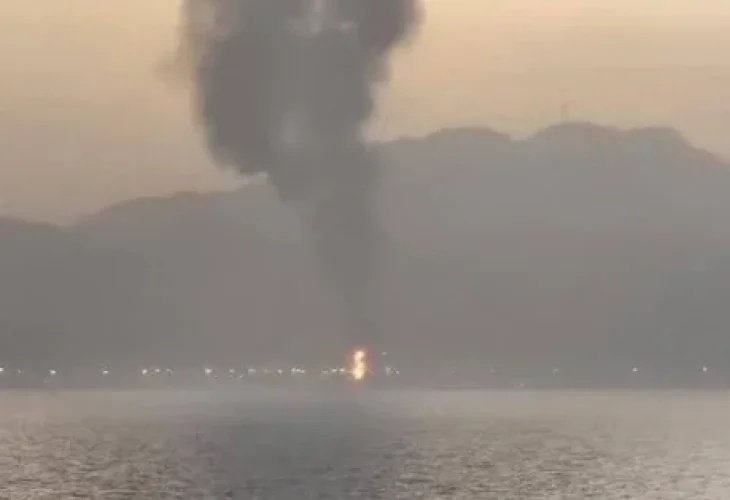 Strikes on Fujairah
Iran launched a new wave of missiles and drones at the United Arab Emirates on Tuesday, targeting multiple areas linked to oil infrastructure and shipping routes. Despite the attacks, US officials said the ceasefire with Iran remains in place and that the war has not resumed.
The situation has raised a central question: how Iran can strike a US-aligned Gulf state without triggering a broader military response. According to Washington, the answer lies in how the current escalation is being defined. Not as a renewed war, but as a limited confrontation centered on the Strait of Hormuz.
Speaking at a Pentagon briefing on Tuesday, Chairman of the Joint Chiefs of Staff Gen. Dan Caine said Iran has carried out multiple attacks since the ceasefire took effect, but they remain “below the threshold of restarting major combat operations at this point.” He added that US activity in response continues at “low-level kinetics.”
US Secretary of Defense Pete Hegseth reinforced that position, stating that “the ceasefire is not over,” even as both sides have exchanged fire in recent days. He described the US mission in the Strait of Hormuz known as Operation Project Freedom, as “defensive in nature, focused in scope and temporary in duration.”
Under that mission, US forces are escorting commercial vessels, providing what Hegseth called “24/7 overwatch,” and turning back ships attempting to move through the waterway under Iranian pressure. The Pentagon said six vessels have already been forced to reverse course since the operation began.
Part of the explanation also lies in where Iran is choosing to strike. One of the key targets, the Emirati port of Fujairah, holds strategic importance because it gives the UAE direct access to the Gulf of Oman outside the Strait of Hormuz. That makes it a critical hub for oil exports and maritime traffic.
By targeting Fujairah and related infrastructure, Iran is applying pressure on global shipping and Gulf partners without directly striking Israel or launching attacks that Washington would immediately interpret as a broader war trigger.
At the same time, both sides appear to be operating within defined limits. Iran has fired ballistic missiles, cruise missiles, and drones, while the US has responded with interceptions, naval deployments, and maritime enforcement including blockades and escort missions, without entering Iranian territory.
Maintaining that distinction allows Washington to respond to Iranian attacks in the Strait of Hormuz while continuing to define the situation as a limited maritime operation rather than a renewed full-scale war with Iran. As long as the ceasefire is formally considered intact, US forces can intercept threats, escort vessels, and enforce restrictions in the waterway without expanding the scope of the conflict beyond the current arena.
Israel has also not been directly targeted in the latest round of attacks. A strike on Israeli territory would likely prompt a different, more powerful response from Israel and the U.S., but the current focus on Gulf infrastructure allows the situation to remain contained to the maritime arena.
Taken together, the US threshold for escalation, the framing of the conflict as a Hormuz-specific crisis, and Iran’s choice of targets all contribute to a scenario in which hostilities continue but the war is not officially considered resumed.
US officials have stressed that Operation Project Freedom is temporary and expect other countries to eventually assume responsibility for securing the waterway. For now, however, the situation remains fluid, with the risk that a more severe attack or a shift in targets could quickly change the calculation.

