

Magazine
Is Israel’s Jewish Majority at Risk? Understanding the Demographic Shift
A data-driven look at immigration, population trends, and the future of Israel’s identity as a Jewish and democratic state
- Tamar Schneider
- | Updated
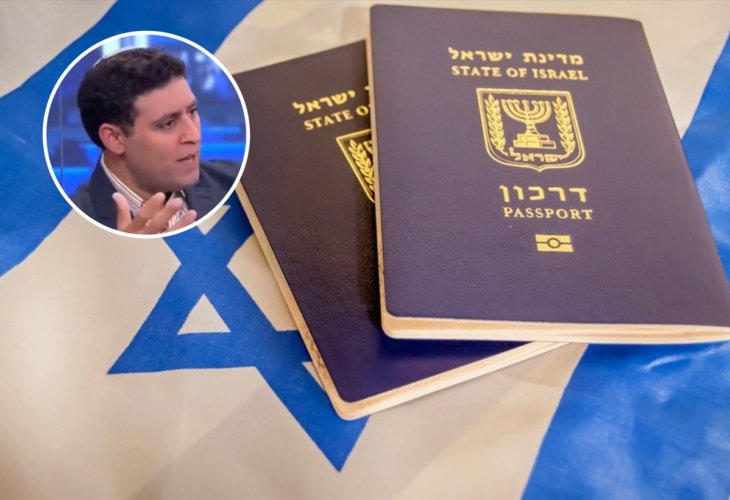 (Background photo: shutterstock)
Could Israel lose its Jewish majority in the coming years? It may not be as far off as it seems. “If in the early 1980s about 85% of Israel’s citizens were Jewish, today that number has dropped to just 73.6%,” explains Dr. Yona Sharki, director of the Israeli Immigration Policy Center. “Over three and a half decades, the Jewish majority has declined by about 10%, and each year it decreases by an average of 0.3%. Much of this is due to the current Law of Return, which allows millions of non-Jews to immigrate to Israel.”
In Recent Years: A Rise in Non-Jewish Immigration
The Immigration Policy Center, led by Dr. Sharki, originally focused on the issue of illegal immigration from Africa to Israel. “There were significant gaps in how the issue was handled, and no one was addressing it in the public arena,” he says. “We stepped in by conducting research, promoting legislation, raising awareness in the media, and filing petitions in court. Over time, our work expanded to broader immigration challenges.”
Israel’s immigration policy is defined by the Law of Return, which grants every Jew the right to immigrate. In 1970, the law was expanded to include family members — children, grandchildren, and their spouses, even if they are not Jewish according to halacha. Later court rulings further broadened eligibility, including certain non-Orthodox conversions. As a result, millions of people who are not halachically Jewish became eligible for Israeli citizenship.
Demographic Shifts and Their Impact
The demographic consequences are already visible. “The decline in the Jewish majority is not mainly due to Arab population growth,” says Sharki, “but rather due to the rise of the ‘other’ category — those without religion and Christians.” This group has grown from virtually 0% to about 5% of the population, with nearly all of that growth coming from immigration.
Data from 2022 highlights the trend: out of 77,000 people who entered Israel, only about 32,000 were Jewish. Roughly 40% of newcomers were not Jewish, and neither natural population growth nor Jewish immigration is keeping pace with this shift.
Why Natural Growth Isn’t Enough
Although Israel has a relatively high birth rate, it does not fully offset the broader demographic trend. When births and deaths are accounted for, the natural growth of the Jewish population still lags behind that of other groups. As a result, the Jewish share of the population continues to decline gradually.
What Lies Ahead?
There are currently nearly 18 million people worldwide eligible under the Law of Return, but only about 8 million are actually Jewish. This means that more than half — approximately 54%, are not Jewish according to the law. Combined with high assimilation rates in the diaspora, this trend is expected to intensify if policies remain unchanged.
Immigration patterns also vary by country. In countries like Russia, Ukraine, and Belarus, immigration rates are high, but only a minority of immigrants are Jewish. In contrast, immigration from countries like the United States and France is lower, but the vast majority of those immigrants are Jewish.
According to Sharki, several groups contribute to non-Jewish immigration. Some operate outside the law, assisting illegal migrants or foreign workers who overstay visas. Others advocate for broader humanitarian or family reunification policies. Even official institutions, such as Jewish Agency, facilitate immigration based on legal eligibility rather than religious status.
The Broader Struggle Over Israel’s Identity
The demographic question is part of a larger national challenge. “There are multiple arenas,” Sharki explains. “Territorially, we struggle over land; religiously, over the Jewish character of the state; and socially, over demographics.” Rising intermarriage rates within Israel are already being observed, influenced by the growing non-Jewish population.
In a democratic state, the majority determines identity. If the Jewish majority diminishes significantly, it could affect Israel’s ability to maintain its identity as a Jewish state.
Possible Policy Changes
Recent political agreements have included discussions about amending the Law of Return. Sharki notes that most countries allow family reunification only for spouses and minor children, but not grandchildren or extended relatives. Adjusting this policy, he argues, could significantly reduce non-Jewish immigration potentially by as much as 85%, and help preserve Israel’s Jewish and democratic character.
The question of Israel’s demographic future remains complex and sensitive. What is clear, however, is that decisions made today will shape the country’s identity for generations to come.

