

Baking Recipes
How to Tell If Your Yeast Is Still Good (Before You Bake)
A simple 10-minute test to check freshness, avoid baking fails, and get perfect dough every time
- Shira Dabush
- | Updated
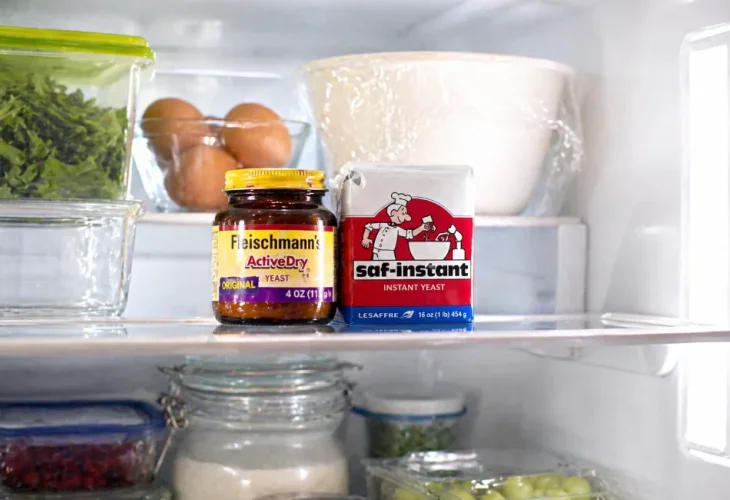
In the world of baking, yeast is a living and sensitive ingredient, and for this reason, time and storage conditions have a big impact on its quality.
The difference between dry yeast and fresh yeast lies mainly in their sensitivity. Fresh yeast is much more delicate, has a shorter shelf life, and after a long time in the fridge, it may lose its rising power, develop an unpleasant smell, or spoil.
That’s why it’s important to know exactly what you’re working with.
How to Check if Yeast Is Still Good – The 10-Minute Test
Chefs around the world recommend a simple “10-minute test”:
Pour about ½ cup of lukewarm water into a glass
Add 1 teaspoon of sugar and 1 tablespoon of yeast
Stir gently and wait 10 minutes
After 10 minutes, check if a nice layer of foam has formed. If you see bubbles and active fermentation, your yeast is still good and safe to use.
If there’s little to no reaction, or if you notice a strange or sour smell, it’s better not to take the risk.
Is Old Yeast Dangerous?
In most cases, old yeast is not harmful to your health — it simply won’t perform well in baking. If you use it, your dough may not rise properly, and the final product could turn out dense, heavy, and disappointing.
What If You’re Still Unsure?
If you’re unsure even after testing, you can use the yeast for simpler recipes like pizza, focaccia, or basic rolls, where a weaker rise is easier to manage.
For more delicate baked goods, such as braided challah or croissants, it’s best to use fresh yeast for reliable results.

