

Raising Children
When a Child Loses His Love of Learning: Rabbi Shteinman’s Insight
A worried father came to Rabbi Shteinman for advice about his son’s learning struggles and received a surprising message about the atmosphere at home.
- Rabbi Yochi Danhi
- | Updated
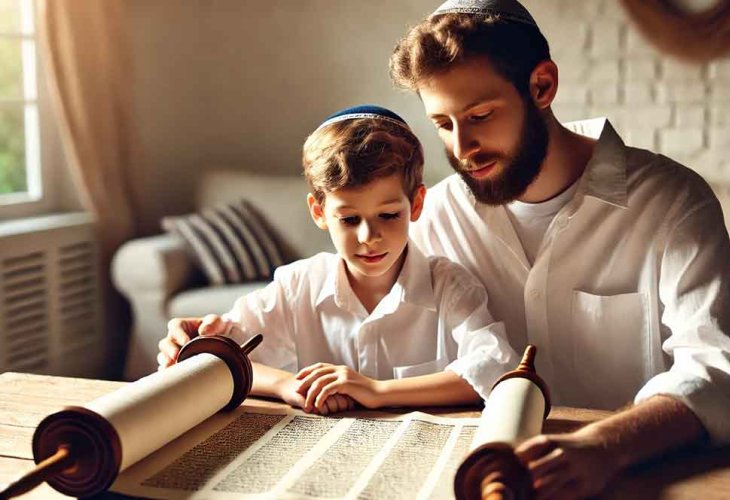
Every parent faces difficult moments while raising children. Sometimes a child suddenly changes, loses motivation, or struggles in ways that leave parents worried and searching for answers.
One powerful story about Rabbi Aharon Leib Shteinman, ztz”l, offers a striking perspective on how deeply a child can be affected by the atmosphere at home.
“My Son Lost His Desire to Learn”
On a Friday, shortly before Shabbat, a troubled father came to speak with Rabbi Shteinman.
“I have five sons,” he said, “and my fifth son has lost his taste for learning.”
The father explained that the boy had once learned with dedication and enthusiasm, but something had changed. The desire and joy were gone, and he could not understand why.
He hoped Rabbi Shteinman would offer guidance about education, discipline, or learning techniques.
Instead, the rabbi gave an answer he never expected.
Rabbi Shteinman’s Unexpected Response
Rabbi Shteinman looked at the father calmly and said:
“It seems that you hurt someone. Perhaps even someone close to you, like your wife. That alone could be the reason your son lost his taste for learning.”
The man was stunned.
At first, the connection seemed surprising. But the rabbi’s words stayed with him and forced him to reflect honestly on his home life, his recent behavior, and the atmosphere within his family.
Children Feel More Than We Realize
Rabbi Shteinman’s message highlights a truth many parents overlook: children absorb far more than we think.
They notice tension, emotional distance, criticism, and pain within the home, even when adults believe those feelings are hidden.
A child’s emotional world is deeply connected to the atmosphere around them.
When there is warmth, stability, respect, and shalom bayit, children often feel calmer, safer, and more emotionally available to learn and grow.
Looking Inward Before Looking Outward
When a child struggles, parents naturally search for external solutions: better schools, stricter discipline, tutors, or motivation strategies.
But Rabbi Shteinman’s response suggests that sometimes the first place to look is inward.
How is the atmosphere at home?
Is there respect between spouses?
Are children growing up surrounded by tension or peace?
Sometimes repairing relationships inside the home can have a powerful impact on a child’s emotional and spiritual well being.
Building a Home That Gives Strength
This story is not meant to create guilt or blame. Rather, it serves as a reminder of the enormous power parents have to shape the emotional climate of the home.
When children grow up in an environment of love, kindness, patience, and mutual respect, it gives them strength and stability that affects every area of life.
Including their learning.
A Message to Carry Into Shabbat
As families prepare for Shabbat, this story offers an important reminder: holiness begins not only with candles, food, or preparation, but with the atmosphere we create inside our homes.
Moments of peace, understanding, and warmth between family members can leave a lasting impact on children far beyond what we may realize.
Sometimes, the greatest gift we can give our children is not pressure or criticism, but a home filled with shalom bayit.

