

World News
Under Saudi Pressure, Trump Backs Off Hormuz Mission; Iran Expected to Answer U.S. Offer Today
U.S. officials told NBC that Gulf states were surprised by President Donald Trump’s social-media announcement about an operation in the Strait of Hormuz and that the move wasn’t coordinated with them in advance. Report: These are the "red lines" the United States set for Iran.
- Yuval Aviv
- | Updated
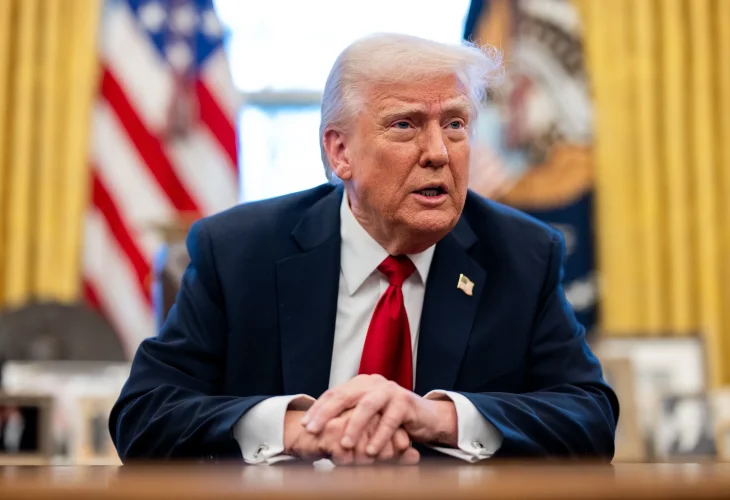 Trump (Credit: Shutterstock)
President Donald Trump has backed away from his plan to help ships transit the Strait of Hormuz as part of "Project Liberty," after Saudi Arabia suspended the option of allowing the U.S. military to use its bases and airspace for the operation, NBC reported overnight (Wednesday into Thursday). At the same time, CNN reported that Iran is expected to deliver today its response to the American proposal intended to bring the war to an end.
According to the report, Trump angered Washington’s Gulf allies when he announced the operation on Sunday via social media, without prior coordination with the Saudi leadership. Following the announcement, Riyadh said it would not allow American aircraft to use its bases and airspace for the operation.
According to CNN’s report, Iran is still reviewing the proposal sent from Washington and is expected to provide its reply during the day.
Meanwhile, The Wall Street Journal published more details about the key demands the United States has set in negotiations with Iran. According to the report, Washington is demanding that Tehran declare it does not seek to obtain nuclear weapons, dismantle the nuclear facilities in Fordow, Natanz, and Isfahan, and halt all underground nuclear activity.
It was also reported that the American offer includes a mechanism for frequent inspections, along with the imposition of sanctions if violations of the agreement are found. In addition, the United States is expected to demand a 20-year pause in nuclear enrichment activity in Iran, along with the removal of all enriched uranium from its territory.
According to the published details, the reopening of the Strait of Hormuz would be carried out gradually and in parallel with easing the American blockade on Iranian ports. A full reopening of the strait would only be possible as part of a final agreement between the sides.
The report also indicates that if Iran agrees to the conditions set by the United States, the parties are expected to launch 30 days of negotiations focused on the details of a final agreement. Under the emerging framework, the more of the understandings Iran implements, the more the United States would gradually lift some of the sanctions imposed on it. In addition, unfreezing Iranian assets is being considered already in the early stages of the negotiations.

