

Israel News
Israel Tightens Access to Home-Front Mapping System Over Iran Data Fears; Northern Officials Warn of 'Operational Blindness'
Home Front Command restricted access to the civilian 'Shu'al' platform amid fears of sensitive data leaks. Northern mayors and security chiefs warn it will slow lifesaving response during rocket barrages: "Hezbollah knows where it's firing, and we don't."
- Yuval Aviv
- | Updated
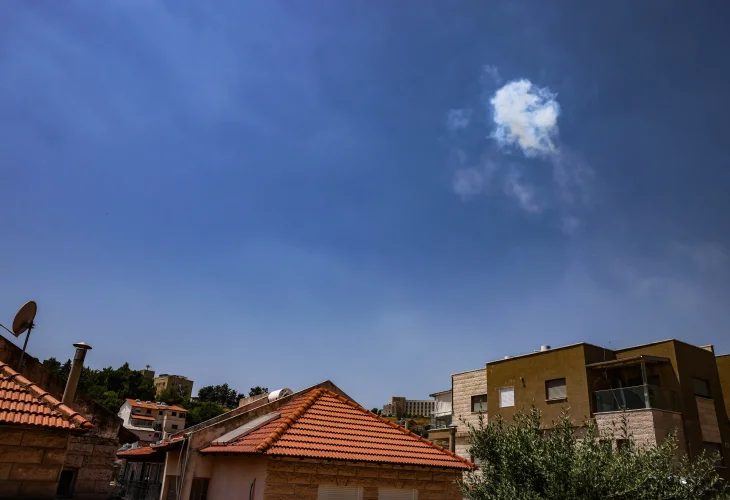 Interception in the north, archive (Photo: David Cohen, Flash90)
Israel's Home Front Command has in recent days shut down civilian access to the 'Shu'al' (National Home-Front Command-and-Control) system for local authorities and reserve officers in the liaison units (יקל"ר). The platform is considered a core emergency tool, syncing all rescue agencies and displaying expected impact locations using 'polygons'—ellipses that mark potential strike zones and help quickly direct rescue and search teams to the scene.
According to a report on ynet and in 'Yediot Aharonot,' the decision followed serious concerns about a leak of sensitive data from the system and assessments that Iranian actors are trying to track impact data and Home Front Command alerts to improve the accuracy of rocket fire at Israel. As a result, authorities decided to limit permissions and lock parts of the system for civilian officials in local governments.
On the ground, the move drew sharp criticism from mayors, security coordinators, and other security officials in the Galilee and the Golan, who say a basic work tool has been taken from them precisely during a sensitive period of sustained fire on northern communities. They say the Shu'al system has let them quickly locate life-threatening impact sites, determine whether there are casualties, and steer emergency teams directly to the strike areas.
Asaf Langelben, head of the Upper Galilee Regional Council, sent a strongly worded letter to Home Front Command chief Maj. Gen. Shai Kalper warning of 'operational blindness' created by the decision. He described 'a deep sense of frustration and shock at the arbitrary decision.' Speaking to the media, he added: 'It is absurd that Hezbollah knows where it is firing—so at least we should also know and be able to deal with the incidents and the responses we are required to provide.'
Kiryat Shmona officials were also furious. Mayor Avihai Stern argued that restricting access to the system could endanger lives. 'Shu'al is a critical, life-saving tool,' he said. 'Leaving us without it means abandoning even more lives in an area where most residents don't have protection as it is. Most of our residents are not protected, and now we're also not being given the ability to go out and rescue them under fire.'
Security officers in northern border communities also joined the criticism, calling it a unilateral step taken without adequate explanations to field teams. One said: 'Instead of having an information-security officer handle the leak and restore the system within three days with new confidentiality procedures, they take the easy route and shut it off for everyone.' Without the system, they say, it's harder to rapidly conduct searches, understand the scope of damage, and provide an initial response in the field.
The IDF Spokesperson responded: 'The permissions and layers of information displayed in the civilian Shu'al system are reviewed and updated according to operational needs and information-security considerations. The system contains sensitive information, and during the war, cases were identified that required adjusting procedures to prevent harm to information security. As part of these adjustments, a transition was made to an alternative display method that enables more precise delivery of relevant information. We emphasize that alerts and information relevant to the public are disseminated through official channels.'

