

Dreams
“Please Go Back There”: The Chilling Dream of a ZAKA Volunteer
An emotional account from the aftermath of October 7 tells of a dream that led to the discovery of four bodies.
- Shira Dabush (Cohen)
- | Updated
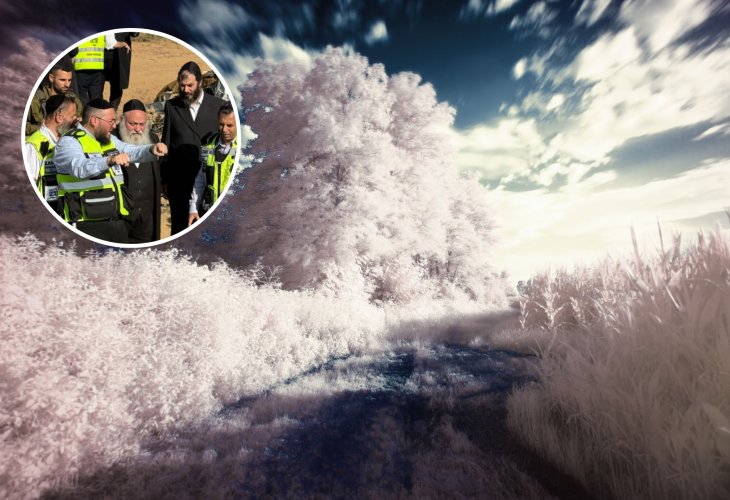
After the October 7 massacre, ZAKA volunteers carried out some of the most difficult and heartbreaking work imaginable, locating, recovering, and identifying victims in the devastated Gaza border communities.
Many of the scenes they witnessed are beyond what most people could emotionally endure.
One extraordinary story, later shared publicly by Rabbi Ravid Nagar during a Torah class, tells of a ZAKA volunteer who experienced something he himself struggled to explain.
A Face He Could Not Forget
According to Rabbi Nagar, the volunteer had spent long days working in Kibbutz Be’eri and nearby communities following the massacre.
During one recovery effort, he cared for the body of a murdered woman whose face remained deeply etched in his memory.
That night, after returning home exhausted, he saw her in a dream.
“She begged him, ‘Please go back there. There are four bodies there,’” Rabbi Nagar recounted.
The volunteer woke up shaken and disturbed. He immediately tried dismissing the experience.
“I’ve seen too many terrible things,” he told himself. “Maybe I’m imagining things. Maybe the trauma is affecting me.”
He chose to ignore the dream.
The Dream Returned Again
But the following night, the woman appeared again.
This time, she pleaded with him once more to return and search for the missing victims.
According to Rabbi Nagar, in the dream she guided him through a yard, past piles of leaves, into a specific house, and finally toward the exact location where bodies were hidden underground.
Still, the volunteer struggled to believe what he had seen.
He convinced himself it was simply the result of emotional exhaustion after witnessing so much horror.
Then the dream came a third time.
“This Time He Understood”
Rabbi Nagar described the third dream as impossible for the volunteer to ignore.
“This time she practically begged him not to let it go,” the rabbi said. “She asked him to help bring the victims to a Jewish burial.”
At that point, the volunteer felt he could no longer remain silent.
Without fully explaining why, he approached an officer working in the area and told him he believed there might be additional bodies hidden near one of the homes in Be’eri.
The officer asked where exactly.
The volunteer answered honestly: “Come with me. I’ll show you.”
Following a Place He Had Never Seen
As they drove into Be’eri, the volunteer himself did not fully understand where he was leading them.
He was simply trying to retrace what he had seen in the dream.
Then suddenly, he recognized the house.
“That’s it,” he said. “That’s the place.”
The two began searching the yard while the volunteer quietly tried remembering every detail he had seen during the dream. He was deeply embarrassed to reveal the true reason for his certainty and tried to appear calm and rational throughout the search.
Then he saw it.
A pile of leaves exactly where the woman had shown him.
The Hidden Shelter Beneath the Leaves
The volunteer pushed the leaves aside with his foot, just as he had done in the dream.
Underneath them was a concealed underground shelter with a hidden door.
When they opened it, they discovered four bodies inside.
Later, it became clear that terrorists had trapped the victims there for hours before murdering them.
One of the men at the scene reportedly told the volunteer:
“If you hadn’t brought us here, we never would have found this place. Everything was covered by leaves and destruction after the fires and bombings.”
Thanks to the discovery, the victims were finally brought to Jewish burial.
A Story That Left a Deep Impression
Rabbi Nagar concluded the story emotionally, saying the volunteer himself remained overwhelmed by what had happened.
For many who heard the account, it became another painful yet powerful reminder of both the unimaginable tragedy of October 7 and the sacred work carried out by those who dedicated themselves to honoring the victims afterward.

