

Jewish Law
Do You Make a Blessing on Coffee or Tea Served With Cake?
A clear halachic guide to whether coffee and tea require a separate “Shehakol” blessing when eaten alongside cake or pastries
- Halacha Yomit / Mipiskei Maran
- | Updated
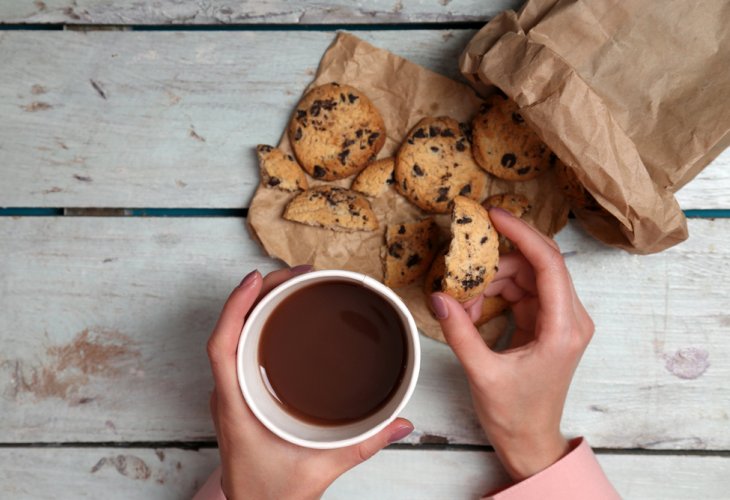 (Photo: shutterstock)
Question: If someone eats cake and drinks coffee or tea together with it, should a separate blessing be recited on the drink?
Answer:
Someone who drinks water or another beverage (besides wine) during a bread meal does not recite the blessing of “Shehakol Nihyeh Bidvaro” on the drink. Since drinking naturally accompanies eating, the beverage is considered secondary to the meal and does not require its own blessing.
Regarding coffee or tea served with cake, one might initially think that no blessing should be recited on the drink, because the coffee could be viewed as secondary (tafel) to the cake, which is the more significant item. We have already learned that when two foods are combined and one is secondary to the other, the blessing on the primary food exempts the secondary item.
Even though the coffee and cake are consumed separately — for example, taking a bite of cake and then sipping coffee — one could still argue that the coffee is covered by the blessing on the cake. After all, the concept of primary and secondary foods also applies when the foods are not physically mixed together.
The Gemara in Talmud discusses a person who eats very sweet fruits and then eats a small amount of bread afterward merely to reduce the sweetness. In that case, no blessing is recited on the bread because it is secondary to the fruit. This shows that even separate foods can be considered secondary and exempt from their own blessing.
Rabbi Ovadia Yosef’s Ruling
However, Ovadia Yosef writes in his responsa Yabia Omer (Vol. 5, 17) that coffee or tea served with cake is not considered secondary to the cake when drunk on its own.
Only if the cake is dipped into the coffee and eaten together with it can the coffee be considered secondary to the cake. But when a person drinks the coffee separately, even while eating cake alongside it, the beverage retains its own importance and requires its own blessing of “Shehakol Nihyeh Bidvaro.”
He brings several proofs to support this ruling.
A Possible Concern
Rabbi Ovadia Yosef notes another possible reason one might think no blessing should be recited on the coffee or tea.
There is a disagreement among early authorities regarding the proper blessing for certain cakes and pastries. Some opinions hold that cake should actually require the blessing “Hamotzi Lechem Min Haaretz,” like bread.
If so, according to those opinions, the coffee would be considered part of a bread-type meal, similar to drinks consumed during a regular bread meal, which do not require a separate blessing.
Even though in practice we rule that cake receives the blessing “Mezonot,” that ruling itself is partially due to uncertainty regarding its status.
The Practical Conclusion
Nevertheless, Rabbi Ovadia Yosef ultimately rejects this concern.
He explains that even authorities who compare cake to bread would still agree that beverages consumed with cake require their own blessing. Only during a true established bread meal do we say that drinks are secondary to the meal itself.
Cake, however, does not create the same status as a full bread meal, even according to stricter opinions. Therefore, coffee and tea remain independent beverages and require the blessing of “Shehakol.”
Final Ruling
Someone who drinks coffee or tea while eating cake should recite the blessing “Shehakol Nihyeh Bidvaro” on the coffee or tea, even though they are being consumed together with the cake.

