

Behind the News
What Visa And Mastercard Activation Really Means For Syria
Damascus launched international Visa and Mastercard payments for the first time in more than 15 years, signaling a push to reconnect its economy
 Shutterstock
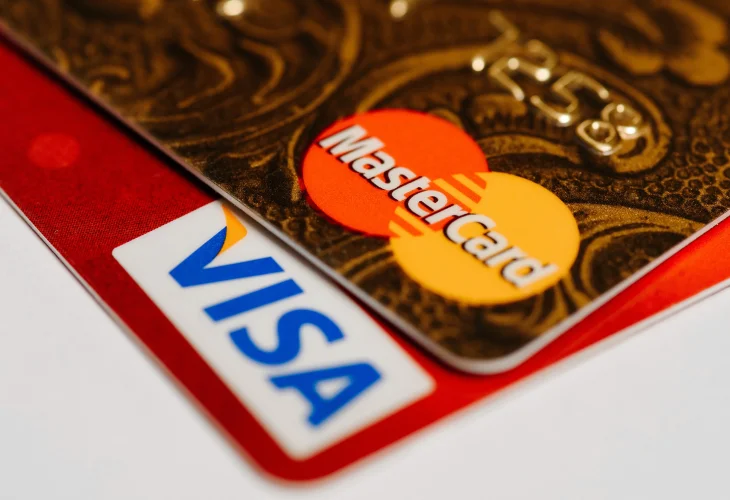
Syria has begun electronic payment operations, allowing Visa and Mastercard transactions for the first time in more than 15 years, according to the country’s Ministry of Communications.
The system is being launched in major cities including Damascus, Halab, Homs and Idlib, and is expected to support international cardholders. For Syria, the move is more than a technical update. It is one of the clearest signs yet that Damascus is trying to reconnect to the global financial system after years of war, sanctions, isolation and dependence on cash.
For ordinary users, the change could eventually make it easier for visitors, aid workers, businesspeople, returning Syrians and foreign cardholders to make payments inside the country without relying only on physical currency. For businesses, it could open the door to more formal payment tools, online commerce and transactions linked to customers or partners abroad.
But the launch does not mean Syria’s financial system is now fully normalized. Card use may remain limited at first, and acceptance will depend on banks, businesses, payment infrastructure and international compliance approvals. Still, the decision carries weight because Visa and Mastercard are not only consumer payment brands, but are part of a wider international financial network built on banking relationships, fraud controls, anti-money-laundering systems and global trust.
That is why the announcement matters. A country cut off from international finance cannot easily attract investors, support tourism, process outside payments or rebuild a modern private sector. By bringing back Visa and Mastercard, Syria is trying to show that it can once again handle basic international banking and business activity.
The move fits into a wider effort by Damascus to move away from a wartime, cash-heavy economy and toward a more formal system. Electronic payments can help governments track commerce, reduce the role of unrecorded cash transactions and support banking activity. They can also help businesses operate more normally in sectors such as retail, travel, hospitality and online services.
For Syria, this is part of the message: the country wants reconstruction, investment, outside capital and returning economic activity. It is trying to show that it is open for business after years in which foreign companies, banks and governments treated the country as too risky, too restricted or too unstable.
For Israel, the issue is not whether Syrians can pay by credit card. The larger question is what Syrian reintegration could mean strategically. A more stable Syria could reduce chaos near Israel’s northern border and possibly limit Damascus’s dependence on Iran. At the same time, renewed access to financial systems could strengthen a government that remains hostile to Israel.
That is why the development should be read carefully. It is not proof that Syria’s economy has recovered, and it does not erase the country’s political, security or infrastructure problems. Foreign banks and companies are likely to move cautiously, and the practical rollout may be uneven.
Still, the symbolism is significant. Syria is not simply adding a new payment option. It is trying to show that it can become financially usable again after more than a decade of isolation.

