

Israel News
Netanyahu: Israel Must “Wean Ourselves” Off U.S. Military Aid
The prime minister says Israel should begin cutting the $3.8 billion annual aid package now, while expanding domestic arms production over the next decade
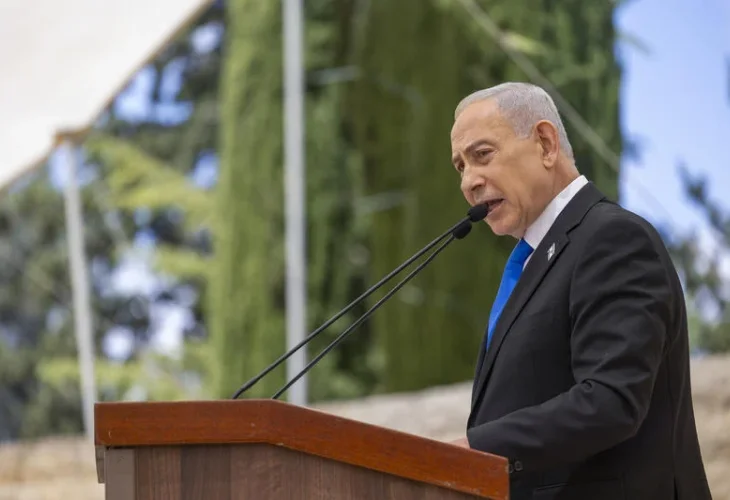 Benjamin Netanyahu (Dor Pazuelo/Flash90)
Prime Minister Benjamin Netanyahu said Israel should begin reducing U.S. military aid to zero, telling CBS’s 60 Minutes that the time has come to change the financial side of the U.S.-Israel defense relationship.
“I want to draw down to zero the American financial support, the financial component of the military cooperation that we have,” Netanyahu said in the interview, which aired Sunday. He said Israel receives $3.8 billion a year in American military aid and should begin the process now, rather than wait for the next U.S. Congress.
Netanyahu’s comments do not mean Israel is seeking to end its military alliance with Washington. His intention is that Israel should continue strategic and security cooperation with the United States, but without relying on annual American defense funding. In February, Netanyahu gave that policy a shorter formula, saying, “We want to move with the United States from aid to partnership.”
The current U.S.-Israel military aid agreement provides $38 billion over 10 years, running through fiscal year 2028. The package includes $33 billion in foreign military financing and $5 billion for missile defense programs.
Netanyahu told CBS that he wants the transition to begin immediately. “I don’t want to wait for the next Congress,” he said. “I want to start now.” The current aid framework is approaching its final years, and the next long-term agreement would normally be discussed with Washington before the existing one expires.
In January, told The Economist that he hoped to taper Israel off U.S. military aid within a decade as well. Asked whether that meant reducing the aid to zero, Netanyahu answered, “Yes.” He argued then that Israel has “come of age” and developed major economic and military capabilities.
During Netanyahu’s first term, Israel began reducing its dependence on U.S. economic aid. A 1998 agreement gradually phased out that economic assistance while military aid continued. By 2008, Israel was no longer receiving U.S. economic aid, though military assistance remained a central part of the relationship.
Netanyahu is now presenting military aid as the next stage of that process. “I think that it's time that we weaned ourselves from the remaining military support,” he told CBS.
Israel has already begun preparing for a more independent defense industry. In December, Netanyahu announced a 350 billion shekel plan, about $110 billion, to develop domestic arms production over the next decade. The goal, he said, is to produce as much as possible inside Israel and reduce reliance on foreign suppliers.
“Our goal is to build an independent arms industry for the State of Israel and reduce the dependency on any party, including allies,” Netanyahu said at the time.
One example came in January 2025, when Israel signed deals worth about $275 million with Elbit Systems to produce heavy bombs and raw materials domestically. The agreements were described as part of an effort to reduce reliance on imports after the war exposed supply vulnerabilities.
For Netanyahu, the policy is also tied to a changing political environment in the United States, where support for Israel has faced growing pressure since the Gaza war began. He told CBS that the deterioration in American support “correlates almost 100%” with the rise of social media, while also acknowledging that in war, “armies sometimes miss and civilians die.”
The question now is whether Israel can replace the financial aid without weakening its defense planning or its long-standing security coordination with Washington. Netanyahu is presenting the move as a step toward independence, but the current aid framework remains one of the pillars of U.S.-Israel defense cooperation until 2028.

