

Facts You Didn't Know
5 Fascinating Ways Trees Communicate With Each Other
From “mother trees” to underground fungal networks, researchers are uncovering a hidden world of cooperation and connection beneath our feet.
- Shira Dabush
- | Updated
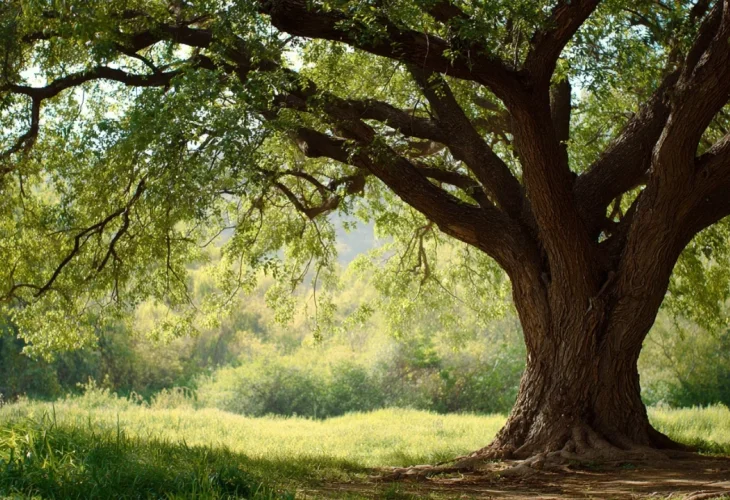
Trees may not speak the way humans do, but scientists now understand that forests are far more active and interconnected than they once believed.
Modern research shows that trees can sense danger, respond to environmental changes, share resources, and even send signals to nearby trees. Beneath the quiet surface of a forest exists a hidden network that scientists are still working to fully understand.
Here are five fascinating discoveries about how trees communicate and support one another.
1. Trees Are Connected Underground
Beneath the soil, trees are linked through a vast underground fungal network known as mycorrhiza. Mycorrhiza
This microscopic system connects tree roots and allows water, minerals, nutrients, and chemical signals to move between trees, even between different species. Some scientists describe it as a kind of natural underground communication network.
What appears above ground to be separate individual trees may actually function as part of a much larger connected system.
2. Trees Can Warn Each Other About Danger
Research suggests that trees under attack from insects or disease can release chemical warning signals through the underground network.
Nearby trees detect those signals and begin activating their own defense systems before the threat reaches them. In some cases, trees increase production of protective chemicals that make their leaves less attractive to insects.
Though trees do not “communicate” consciously the way humans do, scientists have observed remarkably sophisticated forms of chemical signaling inside forests.
3. Stronger Trees Support Weaker Ones
Studies also show that older or healthier trees sometimes transfer nutrients to weaker trees nearby.
Young saplings growing in shaded areas, for example, may receive support from larger trees that have greater access to sunlight and resources.
This sharing behavior helps parts of the forest survive together rather than functioning as isolated competitors.
4. “Mother Trees” Really Exist
Scientists use the term “mother trees” to describe large, mature trees that act as major hubs within the underground network.
These older trees maintain extensive root and fungal connections with surrounding trees and play an important role in distributing nutrients and supporting younger growth.
Because of their central role, removing these large trees can sometimes damage the health and stability of the entire surrounding ecosystem.
5. Scientists Still Do Not Fully Understand the System
Despite major discoveries, researchers continue debating how far these communication systems actually go.
Scientists agree that trees transfer nutrients, chemicals, and warning signals. However, experts caution against describing trees as “thinking” or “conscious” in the human sense.
Much about forest networks remains mysterious, and researchers are still uncovering how complex these systems truly are.
The Forest Is Not as Silent as It Seems
When people walk through a forest, each tree appears to stand quietly on its own.
But beneath the surface, something far more dynamic may be happening.
The forest is not simply a collection of separate trees. It is a living system filled with connections, exchanges, signals, and cooperation taking place constantly out of human sight and hearing.
The deeper scientists look into nature, the more they discover that even the quietest parts of creation may be far more alive and interconnected than we once imagined.

