

Raising Children
How to Truly Connect With Your Children During Vacation
A powerful reflection for parents and educators on using vacation time to strengthen emotional connection, discover children’s hidden talents, build trust, and move from simply teaching children to truly understanding and guiding their souls
- Rabbi Yisrael Azulai
- | Updated
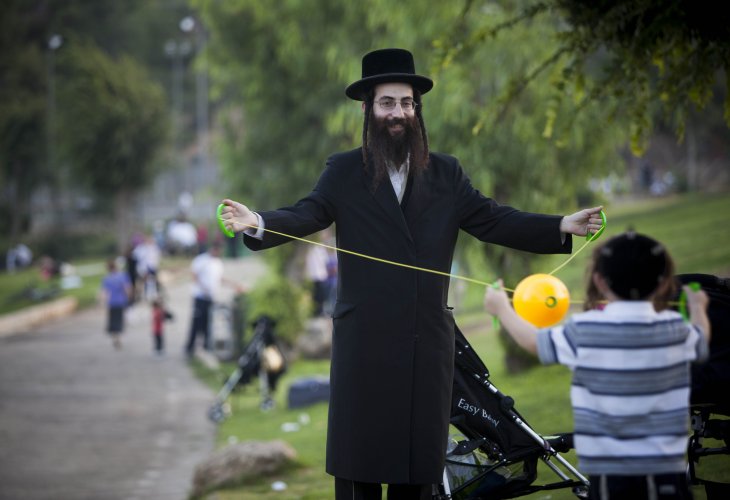 (Illustrative photo: Yonatan Sindel / Flash 90)
Every year, when summer vacation arrives, parents and educators find themselves entering a unique and often challenging season.
On one hand, it is a time filled with enjoyable experiences, family trips, and opportunities for rest and renewal. On the other, many parents also find themselves pulled into emotional struggles and complicated interactions with their children and students.
Summer has a powerful pull. Like a magnet, it draws everyone outward toward hotels, attractions, vacations, and endless activities. The goal becomes simple: make the most of every moment of vacation.
Much of this is truly important.
Rest, recreation, and joyful experiences are healthy for both body and soul. People need time to recharge emotionally and mentally before returning to the pressures of routine life and the spiritual intensity of the coming months.
As the verse says: “Those who hope in God shall renew their strength.”
But while we sit around planning vacations, hotels, and attractions, perhaps it is worth pausing for a deeper question.
What else can this precious time become?
More Than Vacations and Attractions
Without giving up the enjoyable experiences we long for, we can also use this period as a rare opportunity to discover ourselves, our children, and the inner world quietly growing inside them.
Many of us, especially parents, spend most of the year trapped inside survival mode of work, schedules, responsibilities, financial pressure, school systems, and endless daily demands.
Even during vacation periods, we rarely stop long enough to truly observe something that stands at the center of life itself: the soul of the child.
If we did stop and pay attention, we might discover that vacation is important for more than trips and adventures.
The Difference Between Teaching and Educating
Parents and educators must understand something fundamental: The pace of life often prevents us from truly knowing ourselves.
What strengths did God place inside me?
What talents are uniquely mine?
What path was designed specifically for me?
If this is true about ourselves, it is certainly true about our children and students. What is our real responsibility as parents and educators?
The first step is realizing that there is a profound difference between a “teacher” and an “educator.”
A teacher often focuses mainly on instruction, discipline, routines, expectations, and directing the child toward a predefined path.
But an educator does something deeper. An educator first tries to enter the inner world of the child: to understand the child’s soul, personality, emotional structure, strengths, sensitivities, and unique gifts.
Only afterward can guidance truly succeed.
Educating According to the Child’s Nature
The holy Kalonymus Kalman Shapira, author of Chovat HaTalmidim taught that a true educator must humble himself enough to enter the emotional world of the student, to reach the hidden spark inside the child’s soul and help it grow.
Education does not simply mean giving orders or enforcing habits. True education means helping bring out the hidden potential already placed within the child.
As King Solomon taught: “Educate the child according to his way.”
Not according to the parent’s ego, to social pressure, or to comparison with others, but according to the child’s own path.
Do We Really Know Our Children?
How many parents can truly say they deeply know the soul of their child?
Families eat together, travel together, and spend time together. But even while living physically close, many parents still do not truly know:
Their child’s inner struggles
Their emotional world
Their deepest fears
Their hidden talents
Their unique strengths
Much of this remains covered beneath the noise and speed of ordinary life.
Vacation as a Time for Emotional Connection
Vacation can therefore become such a powerful opportunity.
While traveling together, sitting by the pool, walking through nature, or relaxing in quiet moments, parents can finally slow down enough to truly talk with their children.
Not only about grades, behavior, or responsibilities, but about the child himself.
Questions like:
How are you really feeling lately?
What excites you?
What hurts you?
What are your dreams?
What do you feel you are truly good at?
What kind of life do you imagine for yourself?
These conversations can reveal entire worlds parents never realized existed.
Every Child Has a Different Stage
Every child has a different “stage” on which they shine and each child has unique strengths and talents.
The role of a parent or educator is to help discover where that child truly comes alive, and then help develop those abilities until the child can eventually stand confidently on their own.
One of the most painful parenting mistakes is placing children into educational systems or life paths based mainly on parental ego, social image, or external pressure rather than the child’s actual personality and needs.
When children are forced onto the wrong stage, the results can sometimes become emotionally devastating.
Children Are Hungry for Real Conversations
Children are thirsty for genuine emotional conversations from their parents, teachers, and the important adults in their lives.
Sometimes one sincere phone call from a teacher during vacation can strengthen a student more than months of ordinary classroom instruction.
Revealing the Hidden Diamond
Ultimately, vacation is not only a break from routine, but an opportunity to uncover the hidden diamond inside every child and perhaps inside ourselves as well.
When children feel deeply seen, understood, valued, and guided according to their unique strengths, they gain the confidence to eventually spread their wings and walk their own path through life with strength, purpose, and inner peace.

