

Magazine
Five Years After Meron: A Mother’s Powerful Lessons of Faith and Letting Go
Mira Hayut opens up about loss, emunah, and appreciating every moment with our children after the tragedy that changed her life forever.
- Hidabroot
- | Updated
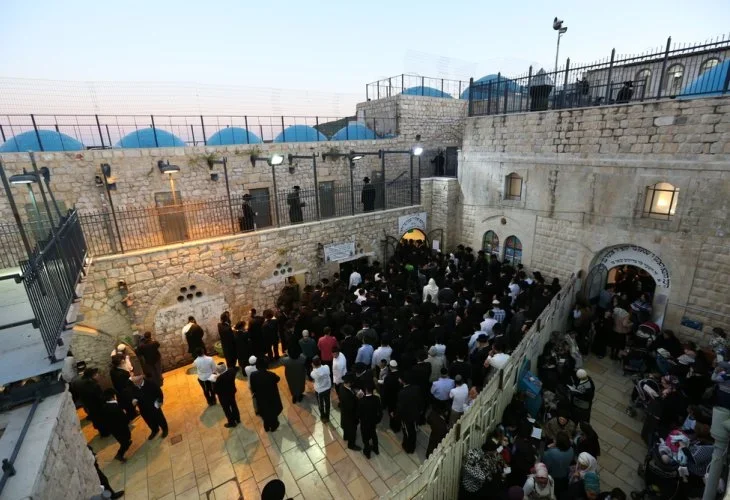 (Photo: Shutterstock)
“These days, everything is bubbling up,” begins Mira Hayut, who lost her son, Yedidya Moshe z”l, in the Meron tragedy five years ago.
“All the debates and conversations about how the lighting at Meron should be done take me back,” she writes. “Back to the moment when, as his afikoman request, Yedidya asked to go to Meron for Lag BaOmer. Back to the decision to go and buying the tickets that same day. Back to the willingness to bring along Shmuel, his younger brother, who by Hashem’s kindness survived, even though he was among those trampled in the chaos. And back to the moment we decided not to send Avishai, who was eight years old.”
The Final Goodbye
“What I see most vividly are the final moments of parting from Yedidya,” Mira recalls. “It happened after they had already left the house. We said goodbye downstairs, near the bonfire area. Suddenly, Yedidya came back into the house looking a little confused.”
“I asked him if he had forgotten something, and he told me, ‘Yes… no… I’m going up to check something.’ When he came down two minutes later without taking anything, I asked if everything was okay. He said yes. We exchanged a few more parting words and wishes for the road.
“I also remember speaking with him from the train. He said there was a special, uplifting atmosphere, and that he was especially happy.”
Then came the moment that changed everything.
“The next memory is terror and fear, a little after midnight, when my brother called and asked whether I had been in touch with my husband and the kids because something had happened in Meron,” she writes.
“In those moments there was no answer on the phone, and the anxiety rose. Then came the update that my husband was on his way to the hospital and did not know where the children were. At that point, I already understood the situation was severe.”
A Deeper Connection to Rabbi Shimon Bar Yochai
Mira explains that Meron and Rabbi Shimon Bar Yochai now hold a much deeper meaning for her family.
“Yedidya was supposed to enter yeshiva, and the way we speak at home after the disaster is that Yedidya went up to study in Rabbi Shimon’s yeshiva,” she shares.
“When my husband goes to Meron, which happens often, he goes to ‘listen’ from his rabbi about him. We feel a deep connection to Rashbi, and on Shabbat nights we regularly sing ‘Bar Yochai’ with excitement and uplift.”
She says that Lag BaOmer has also taken on a completely different meaning.
“It is the anniversary of Yedidya’s passing,” she writes. “Though it is not a day of mourning, it is a meaningful and auspicious day. And somewhere between those two feelings is where I stand.”
“Everything Is in Hashem’s Hands”
Mira reflects on the lessons that have become clearer to her over the years.
“One thought beats strongly within me,” she writes. “And most important of all is to let go and release. Everything is in Hashem’s hands, even matters that seem to be under our control.”
“How many plans we had before Lag BaOmer that suddenly became irrelevant,” she continues. “Even Yedidya’s plans about which yeshiva he would attend and where he would learn.”
“The strongest feeling I have is the verse: ‘Many are the thoughts in a person’s heart, but Hashem’s counsel, it will stand.’”
Mira emphasizes that this does not mean people should stop planning or striving.
“But if we’ve done all we can and Heaven leads otherwise, I feel we need to loosen our grip, because what do we really understand?” she writes.
She explains that she tries to apply this message in everyday life as well.
“I planned? I tried? It didn’t work? Release,” she says. “It’s difficult and not simple, but there is a direction and an aspiration here.”
Cherishing Every Moment With Our Children
Another lesson that has deeply affected her is the way parents relate to their children.
“During shiva, I found myself saying: Appreciate them,” Mira writes. “In moments of challenge and struggle with them, think that this is your last day with them. They are a trust placed in your hands, without knowing until when.”
She admits that this mindset is difficult to maintain constantly.
“We’re human. We forget. We can’t fully internalize messages this deep all the time, and I myself do not manage it 24/7,” she writes honestly.
“But every time I manage to overcome, to let go with the children and appreciate every moment with them despite everything, I dedicate it to the elevation of Yedidya’s soul.”

