

Raising Children
You Are Not a Tree: When a Change of Environment Can Transform a Family
A powerful reflection for Tu BiShvat on parenting, emotional growth
- Rabbi Dan Tiomkin
- | Updated
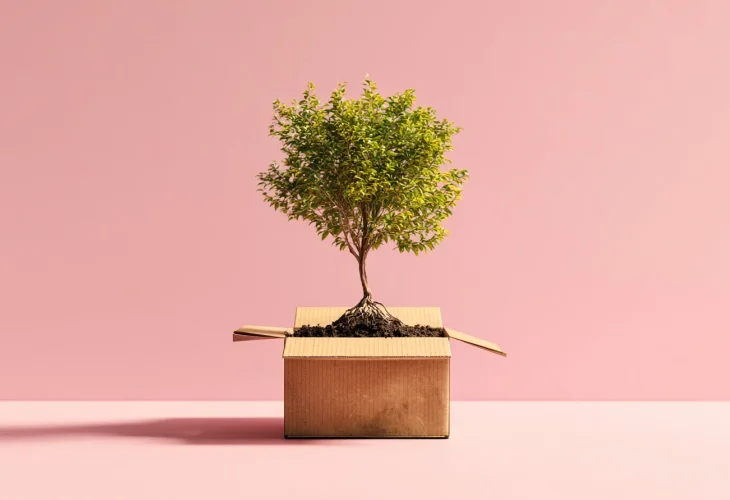
As Tu BiShvat approaches, many people reflect on the beautiful comparison between human beings and trees. We speak about the importance of nurturing with patience, watering with love even before seeing results, respecting different seasons of growth, and understanding that meaningful development takes time.
All of that is true.
But perhaps there is another side to the discussion that deserves attention — not the similarities between people and trees, but the differences.
The verse says: “For man is a tree of the field.”
Yet on a simple level, the Torah’s wording can also be read almost as a question: “Is a person really a tree of the field?”
The answer is: No, human beings are not trees. Trees remain rooted in one place. People can move, change environments, and begin again.
Sometimes, in difficult situations, that is exactly what needs to happen.
When Staying in the Same Place Becomes Part of the Problem
The Talmud teaches that there are certain people who cry out in prayer but are not answered. One of them is a person who suffers in the place where they live yet refuses to leave.
It is as though Heaven responds: “Why are you crying out to Me? Move forward. Change your place.”
Elsewhere, the Talmud teaches that one of the things capable of transforming a person’s destiny is a change of location.
Rabbi Avigdor Nebenzahl explains that a new place creates new opportunities. He points to the example of Abraham. Despite Abraham’s extraordinary spiritual greatness, he could not fully become who he was meant to become while remaining in Aram Naharaim.
He needed to leave. He needed a new beginning in a new environment.
Sometimes growth requires more than effort and inner work. Sometimes it requires stepping into a different atmosphere altogether.
A new place can affect a person emotionally, spiritually, and psychologically. Human beings draw strength from the environment in which they live, and changing that environment can open the door to becoming a new version of oneself.
Not Every Environment Nourishes the Soul
Challenges in parenting and education exist everywhere. There is no perfect community and no “safe zone” completely free of temptations, trauma, or unhealthy influences.
And yet, parents still carry the responsibility of asking an important question: Is the environment we are living in helping our family grow, or quietly harming us?
Every community contains a mixture of people and personalities. But what truly matters is the overall atmosphere:
Is there warmth?
Kindness?
Genuine friendship?
Emotional openness?
Healthy support?
Or is the environment dominated by judgment, pressure, labeling, comparison, and emotional rigidity?
Sometimes parents manage to survive difficult environments because they personally draw strength and vitality from outside sources. But the rest of the family — especially children, may still be deeply affected by the emotional climate surrounding them.
Some Children Need a Different Environment to Thrive
Sometimes a struggling child requires more than additional discipline, lectures, or motivation. Sometimes they need a different environment entirely.
Just as everyone understands that a child in a wheelchair may require an accessible apartment or a building with an elevator, emotionally struggling children may also require surroundings that are truly suited to their emotional and educational needs.
A healthy environment is one that recognizes not only a child’s difficulties, but also their strengths, sensitivities, gifts, and inner potential.
Rabbi Uri Zohar often emphasized that children should never be viewed primarily through the lens of disorders, diagnoses, or deficiencies.
A child is first and foremost a unique soul with a specific light meant to shine into the world.
Even when a child’s “tools” are currently broken — when their inner light is not emerging in healthy ways, parents and educators must continue believing in that goodness, not as a slogan or cliché, but as a consistent and enduring truth.
Sometimes the Healthiest Choice Is to Move
Of course, if an existing environment can be improved, that is usually the ideal solution. Life requires resilience, and no place is perfect.
But there are times when habit causes people to tolerate environments that are quietly damaging their family’s emotional well-being. When the damage outweighs the benefits, it may be time to make a difficult but healthy decision to move. To find a healthier environment and a place that allows your family to breathe, connect, and grow.
Because human beings are not trees. We are capable of movement and change. And sometimes, the path toward healing and growth begins with the courage to leave an unhealthy place behind.

