

Raising Children
Let Them Do It: How Independence Helps Children Grow
The urge to jump in comes from love, but stepping back lets kids practice, stumble, and build real independence.
- Tehila Cohen
- | Updated
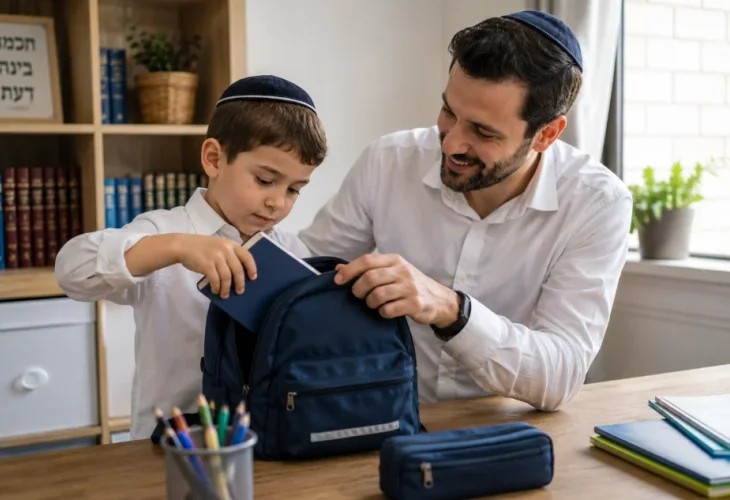
These scenes play out in every home: a child wants to pour their own water, get dressed by themselves, pack their bag, or help in the kitchen. We stand nearby, watching it happen slowly and not quite the way we would do it. Sometimes it is messy. Sometimes it feels inefficient. Naturally, we step in to fix it.
Our intentions as parents are good. We want to help, save time, and make things easier. But without realizing it, we can sometimes slow our children's development and make it harder for them to build independence.
When children do things on their own, even if the result is not perfect, they are building something far more important than efficiency. They are building confidence and capability.
Learning Through Experience
When a child completes a task independently, they discover that they can try, make mistakes, fix them, and eventually succeed. That process cannot happen when someone else does everything for them.
Children learn by doing. Explanations alone are not enough. Only when they hold, try, experiment, and even get confused do they truly understand. Every experience helps develop important skills such as motor coordination, thinking abilities, problem solving, and patience.
Those small daily moments carry much more value than we often realize.
Let Go of Perfect
One of the greatest parenting challenges is learning how to relax in moments like these.
To let go when the shirt is not buttoned perfectly because what matters is that your child dressed themselves.
To stay calm when a little water spills.
To accept that packing a bag may not happen exactly the way we would do it.
From a child's perspective, these are not failures. They are steps in the learning process.
Children do not see mistakes the way adults do. For them, every attempt is part of growing and figuring things out.
Trust Builds Confidence
Beyond learning practical skills, there is an even deeper message children receive.
When we allow them to do things on their own, we communicate trust. We show them that we believe in their abilities and see them as capable.
That trust strengthens self confidence.
A child who feels trusted is more willing to try new things, face challenges, and keep growing. They become more comfortable taking healthy risks and more confident in their ability to handle life's obstacles.
Creating Space to Grow
Allowing independence does not mean stepping away completely. Our role as parents is still to guide, create boundaries, and provide structure.
But within that structure, there should also be room for children to experiment and learn through experience.
Instead of asking, "Did it come out perfect?" try asking, "Did my child learn something along the way?"
In most cases, the answer will be yes.
Children do not need a perfect world around them. They need opportunities to grow, practice, and discover what they are capable of.
The next time your child says, "I can do it myself," consider stepping back for a moment. You may be giving them something much bigger than completing a task. You may be helping them build confidence, independence, and belief in themselves.

