

Raising Children
Shavuot's Hidden Parenting Lesson: Why Failure Is Not the End
What can sour milk teach us about parenting? A meaningful Shavuot lesson about mistakes, resilience, and helping children rise after they fall.
- Rabbi Dan Tiumkin
- | Updated
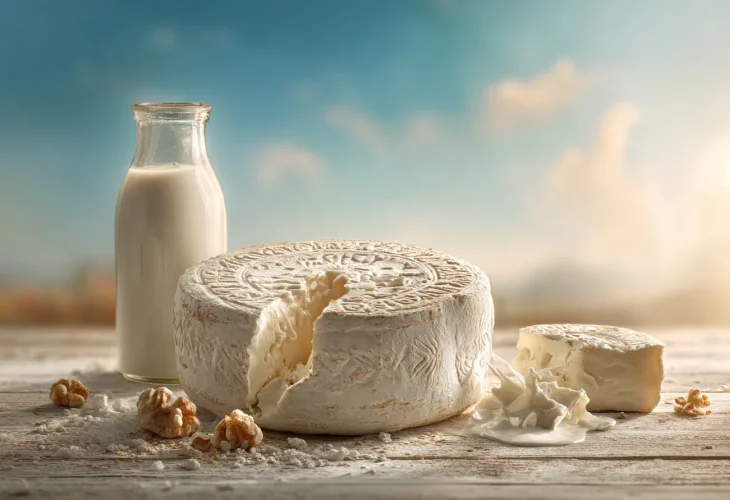
These days, the Jewish people are preparing for Shavuot. One of the holiday's most beloved customs is eating dairy foods, and there are many explanations for this tradition.
One reason was especially dear to Rabbi Uri Zohar, zt"l, whose fourth yahrzeit falls this week on 3 Sivan. He often shared a beautiful lesson hidden within the custom itself.
To make certain dairy products, such as some cheeses, milk first has to sour. Only after that process can it become cheese, butter, or cream. In that sense, milk is different from most other drinks. If orange juice turns sour, it is simply thrown away. But milk is unique. Sometimes its "souring" becomes part of a transformation that leads to something even better.
Rabbi Uri Zohar saw a powerful message in this: people can be the same way.
When a Setback Becomes a Step Forward
Sometimes a mistake, disappointment, or failure is not proof that we are stuck. Sometimes it is part of the process that helps us grow.
Rabbi Elimelech Biderman explains that this idea is almost a prerequisite for receiving the Torah: even if you missed the mark, do not give up.
That, he says, is one of the messages behind eating dairy on the holiday of the giving of the Torah. Even if, in the results column, we fell short, made mistakes, or failed, we should still value the effort and continue moving forward with hope.
Our sages taught: "A person does not truly grasp words of Torah except after he has stumbled in them" (Gittin 43). Sometimes the very place where a person stumbles becomes the place where deeper understanding begins.
That difficult moment can become the opening through which a person becomes a vessel to receive Torah, understand it, and live it.
The Message Our Children Need to Hear
This principle applies not only to Torah learning, but also to education and parenting.
Many educators hesitate to emphasize this idea. Perhaps they worry that talking too much about recovery after mistakes will make children take wrongdoing less seriously.
Yet many of the great sages of recent generations specifically strengthened this message, because despair after a fall can sometimes be even more dangerous than the fall itself.
The logic is simple. For a mistake or transgression, there is teshuvah. A person can repair, correct, and even transform failure into growth. But when a person gives up on themselves completely and loses hope, that becomes far more destructive.
As parents, we have a powerful role to play. We need to shine a light on this truth for our children: there is never a reason to despair.
There is always room to repair. There is always room for hope.
And perhaps there is no more important moment to teach this lesson than immediately after a child falls short.
When a child fails, struggles, or makes a mistake, that is the moment to help them see a path forward. That is the moment to strengthen their confidence and remind them that they can rise again.
After all, that is exactly how we would want others to treat us when we stumble.
A Message for Parents Too
This lesson is not only for our children. It is also for us.
Parents make mistakes too. That is unavoidable.
We all have moments we wish we could redo. We all look back and think, "I should have handled that differently."
But endlessly replaying mistakes does not help us move forward.
Of course we should learn from our experiences and continue growing. We should seek out better tools and keep improving. But there is no benefit in becoming trapped by guilt or self criticism.
On Shavuot, as we enjoy dairy foods, we can remember the deeper message hidden within the custom.
Even when there is souring, it is not the end of the story.
From setbacks we can grow. From difficulties we can develop. From challenges we can become more refined.
As Rabbi Nachman famously taught: "There is no despair in the world at all."

