

Israel News
Range Boost: Israel Taps Elbit to Add External Fuel Tanks to F-35 'Adir' Jets
The deal is valued at more than 100 million shekels and will let 'Adir' jets stay aloft longer without aerial refueling.
- Hidabroot
- | Updated
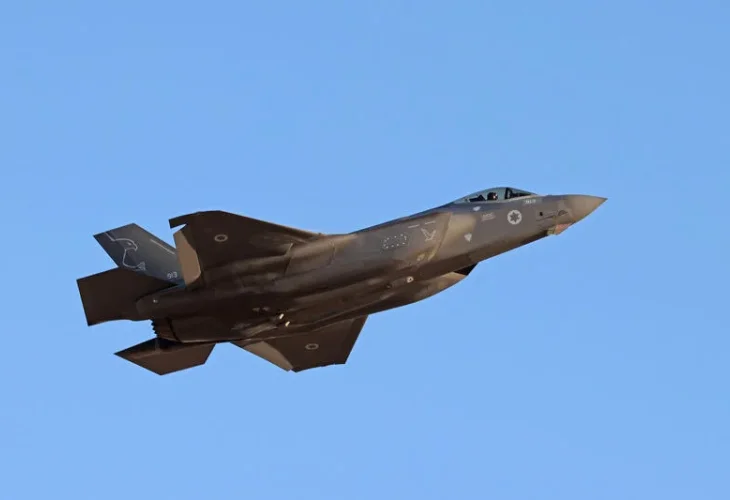 F-35 'Adir' jet (Photo: Ofer Zidon, Flash 90)
Israel's Defense Ministry signed a contract with Elbit Systems to develop a new system that will increase the flight range and time on station of F-35 ('Adir') jets in service with the Israeli Air Force. The deal, valued at more than 100 million shekels, follows operational lessons from Operation 'Lion's Roar' and the Air Force's growing need to operate at long ranges with high availability. The project will be led by Elbit Systems' Cyclone division, which specializes in developing and manufacturing aerostructures.
Under the contract, Elbit Systems will develop custom external fuel tanks that attach to the fuselage rather than the wings. That design choice is meant to limit disruption to the stealth jet's aerodynamics, preserve its maneuverability, and minimize its radar signature. The program is not starting from scratch; it builds on a design Cyclone previously developed for F-16s. Adapting that know-how to the F-35 platform is expected to significantly shorten the project's timelines and reduce the risks inherent in complex technology development.
Defense officials say the new capability is vital for increasing the Air Force's operational independence. Today, long-range missions require reliance on Israel's aerial refueling fleet. Tankers are limited in number, sensitive and vulnerable assets that require close protection while operating. Adding conformal fuel tanks to the Adir jets will enable the Air Force to carry out more distant, more complex missions while reducing dependence on tankers, giving IAF commanders broader real-time flexibility.
The project is part of a broader strategy led by Defense Minister Israel Katz and the ministry's director general, Maj. Gen. (res.) Amir Baram, to strengthen Israel's defense-industrial independence. The Defense Ministry notes that the goal is to reduce dependence on foreign suppliers and establish independent development and production of critical systems. The move has gained added urgency amid global supply-chain disruptions and preparations for what defense officials call a 'decade of intense security,' in which uncompromising technological superiority is required.
Beyond the immediate operational need, defense industry sources point to significant export potential. About 20 countries operate the F-35 today, with more than 1,300 aircraft delivered to customers. Many of those nations face range challenges similar to Israel's, and demand for upgrade solutions that extend flight range without relying on tankers is considered especially high. Elbit Systems' ability to offer a proven system could make it a sought-after product in the global defense market.
This deal joins a series of procurement and force build-up moves the Defense Ministry has advanced in recent months. About two weeks ago, the Ministerial Committee on Procurement approved the purchase of two new fighter squadrons: a fourth F-35 squadron and another F-15IA squadron, with deals totaling tens of billions of shekels. In parallel, the ministry is moving ahead with the induction of new KC-46 ('Gideon') refueling aircraft, which are expected to integrate into Israel's air fleet in the coming months.

