

World News
Saudi Arabia Is Floating a Middle East 'Non-aggression' Pact With Iran
Riyadh is exploring a regional 'non-aggression' agreement with Iran for the postwar landscape, as European backers signal support, according to the Financial Times.
- Yuval Aviv
- | Updated
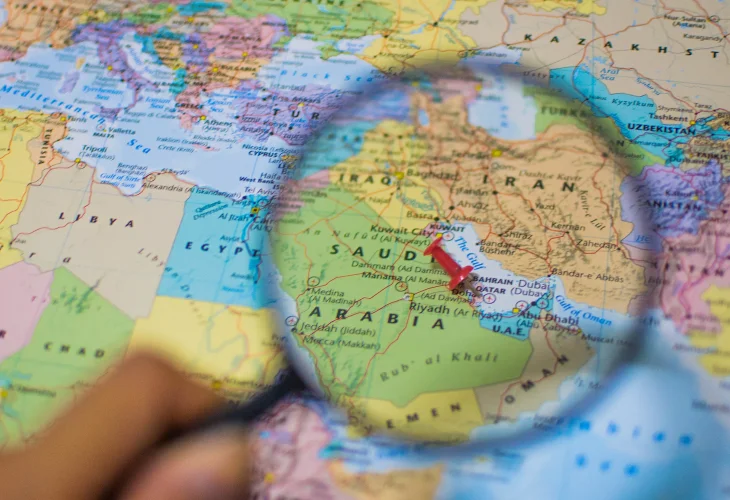 (Credit: Shutterstock)
Saudi Arabia is holding discussions about the possibility of advancing a non-aggression agreement between Middle Eastern countries and Iran. This is part of broader contacts with its allies on how to manage regional tensions after the war of the United States and Israel against Iran ends, the British Financial Times reported today (Thursday), based on Western diplomatic sources.
According to the report, Riyadh is trying to prepare for the new strategic reality that could take shape in the region after the war, on the assessment that even if Iran emerges from the confrontation weakened, it will still pose a significant threat. Against this backdrop, several diplomatic ideas intended to reduce the potential for future flare-ups are being considered — including the possibility of a 'non-aggression' agreement.
According to the diplomats quoted, Saudi Arabia is looking to the 1970s 'Helsinki Process' — the diplomatic initiative aimed at reducing East–West tensions in Europe during the Cold War — as a source of inspiration.
In the Gulf states, there is growing concern that the region will be left to contend with a wounded but more defiant Iranian regime, especially if the extensive American military presence in the area is reduced further. That concern, according to the report, underpins the diplomatic conversation Saudi Arabia is conducting with its partners.
It was also reported that various European capitals, as well as institutions in the European Union, have expressed support for the Saudi initiative, and have even worked to encourage additional states in the Persian Gulf to join the idea. According to the diplomats, in Europe the move is seen as a practical way to reduce the risk of another confrontation in the future, alongside creating certain assurances for Tehran that another offensive will not be launched against it.
An Arab diplomat quoted in the report expressed doubts about the feasibility of the move: 'It all depends on who participates. In the current climate you cannot include Iran and Israel, and without Israel it could be counter to the purpose, because after Iran, it is perceived as the largest source of conflict.'

