

World News
UAE Fast-Tracks New Oil Pipeline to Bypass the Strait of Hormuz
Abu Dhabi Crown Prince Khaled bin Mohamed bin Zayed has instructed the national oil company ADNOC to speed up a project that would double the UAE’s oil export capacity.
- Yoav Dagan
- | Updated
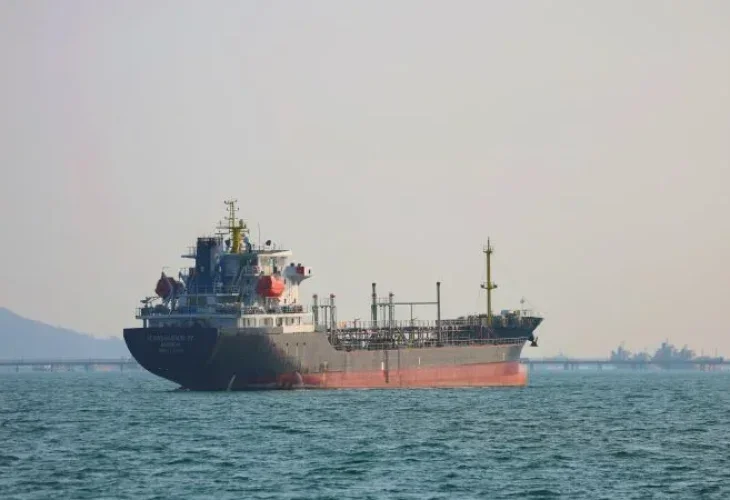 The Strait of Hormuz (Photo: shutterstock)
The United Arab Emirates announced yesterday (Friday) that it will accelerate construction of a new oil pipeline that would allow it to bypass the Strait of Hormuz and double the pace of oil shipments to the port of Fujairah. According to Abu Dhabi’s government media office, the project is expected to be operational as early as 2027, increasing the transport capacity of the national oil company ADNOC from 1.5 million barrels per day to 3 million barrels per day.
The directive to speed up the project was issued by Abu Dhabi Crown Prince Khaled bin Mohamed bin Zayed. According to reports, he instructed ADNOC to move the project forward as quickly as possible in response to rising global energy demand driven by regional instability.
The new pipeline, known as the "West-East Pipeline," will complement the existing Habshan-Fujairah pipeline, which stretches about 406 kilometers and connects the country’s desert oil fields to the port on the eastern coast. The existing pipeline, with a capacity of about 1.5 to 1.8 million barrels per day, has already proven itself to be a vital route during the current war, after Iran effectively restricted passage through the Strait of Hormuz.
The strait is considered one of the key chokepoints in the global energy market. According to estimates, about 20 percent of the world’s seaborne oil and gas passes through it. When traffic there is limited, as it has been since the fighting began, Gulf states struggle to export oil to global markets, pushing up prices in various countries around the world.
For the UAE, the existing pipeline has become a strategic lifeline, but its current capacity is not enough. According to reports, because of export restrictions and pressure on infrastructure, Emirati production has fallen to a range of 1.8 to 2.1 million barrels per day, compared with more than 3 million per day before the war. That represents a significant economic gap for a country that has set a target of 4.9 million barrels per day in the coming years.
The existing infrastructure has not emerged untouched from the fighting either. Iranian drones struck a gas processing facility near Habshan, the starting point of the existing pipeline. At the other end, the port of Fujairah experienced temporary disruptions following additional attacks in the area. The pipeline itself was not directly hit, but the damage at both ends poses infrastructure protection challenges for the UAE.
The move comes close on the heels of another dramatic UAE decision: to leave OPEC after about 60 years of membership. The significance of the withdrawal is that the UAE is no longer bound by the organization’s production quotas and can increase output independently. The new pipeline is the practical tool that would make that increase possible in real terms, because without a secure export route, even oil that is produced cannot reach the market.
According to market estimates, the current daily shortfall in the global oil market stands at about 8 to 10 million barrels per day. The new pipeline would add capacity of about 2 million barrels per day. At the same time, other Gulf states are considering expanding additional oil pipelines in an effort to spread risk and reduce dependence on Hormuz. If these moves materialize, they could narrow the existing supply gap.
In Abu Dhabi, officials stress that this is a permanent infrastructure project, not a temporary emergency fix. Even if the Strait of Hormuz reopens in the future, the pipeline will remain a strategic asset that gives the UAE flexibility in dealing with Iran and with swings in the global energy market. However, until the project is completed next year, the oil market will remain exposed to the difficulties of passage through the Strait of Hormuz.

