

Magazine
The Bomb Shelter That Became a Place of Torah Study
Between sirens and uncertainty, one family in Kiryat Shmona turned their building shelter into a place of Torah learning, faith, and resilience.
- Michal Arieli
- | Updated
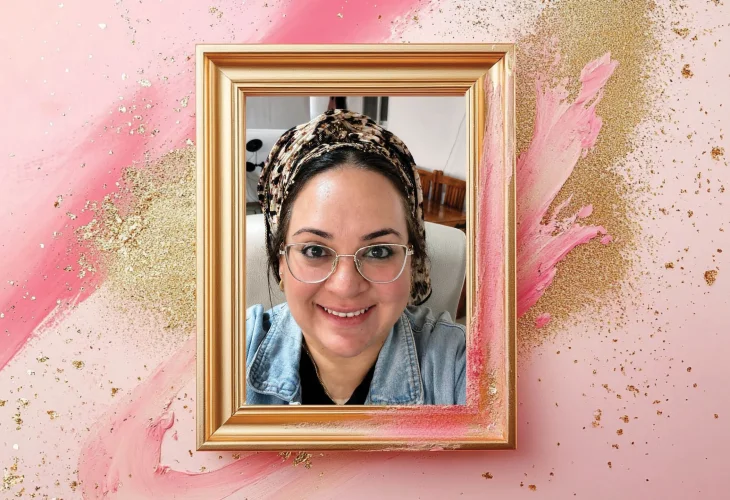 Chen Lilienthal
When Chen Lilienthal, a resident of Kiryat Shmona, snapped a photo of neighbors sitting in their building’s shelter and studying halacha between rocket sirens, she never imagined it would spread across social media.
She also never imagined that the war would last long enough for them to move from learning the laws of Passover to the laws of Sefirat HaOmer, and eventually begin preparing for Shavuot together in the shelter.
But for Chen and her family, what began as a frightening emergency slowly became something else as well: a story of resilience, faith, community, and finding meaning even under fire.
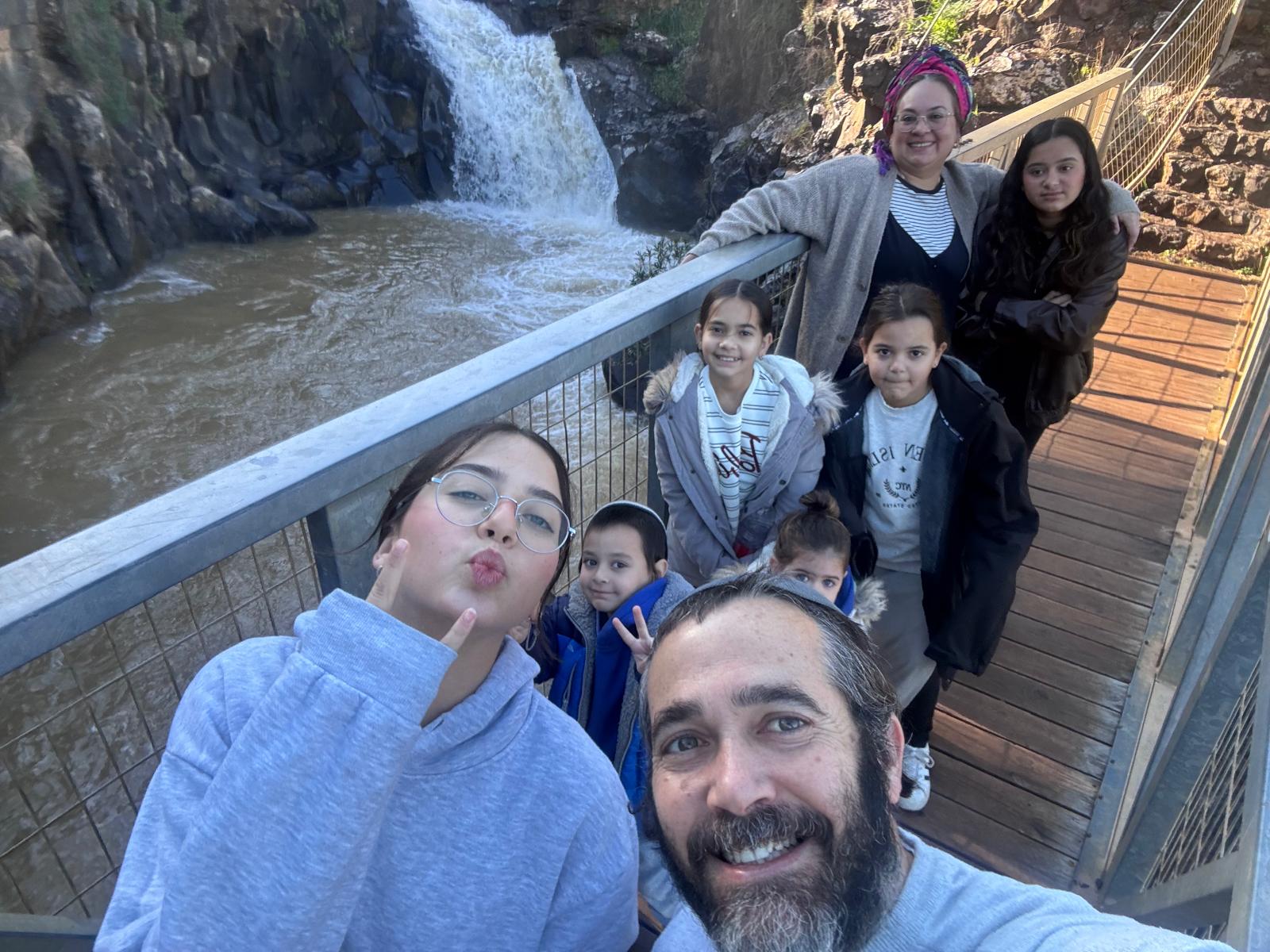 Chen and her family at a beautiful stream in northern Israel
Turning the Shelter Into a Place of Learning
“Our dear neighbors, the Schwartz family, decided that every time there was a siren, we would learn one halacha,” Chen explains. “That’s how the shelter in our building became a shelter for Torah learning.”
Of course, she adds honestly, that was not all that happened there.
“There were also moments of boredom, scrolling on screens, and complaining. But then we sat at the Seder table, and suddenly the children started discussing the halachot we had learned in the shelter. That was when I understood how meaningful it had been for them.”
Speaking with Chen, a mother of six, it is impossible not to notice the optimism in her voice. Despite the reality forced upon her family, she refuses to see Kiryat Shmona only through the lens of war and sirens.
Instead, she insists on recognizing the beauty of living in the north and says she has no intention of leaving permanently.
“Hashem Brought Us Here”
“I never imagined I would live in Kiryat Shmona,” Chen says.
Neither she nor her husband grew up in northern Israel. For years, they lived in the community of Eli and felt completely settled there. Their work was nearby, life was comfortable, and there seemed to be no reason to move.
Then COVID changed everything.
“Suddenly remote work became possible, and we realized we could live farther from the center of the country,” Chen recalls. “We always loved the Galilee and envied people who lived there.”
Around that same time, a close friend who had grown up in Kiryat Shmona moved back to the city, stirring nostalgic memories for Chen.
“I remembered visiting her when I was younger, and I especially remembered how she once told me she was studying for exams while floating in the Jordan River with an inflatable ring. I thought to myself: I want my children to grow up with experiences like that too.”
About six years ago, the family made the move north.
“At the time, everything was still quiet,” Chen says. “Actually, we were deciding between Sderot and Kiryat Shmona. We worried more about rockets in the south, while people in Kiryat Shmona told us, ‘It’s been quiet here for twenty years.’”
Today, she sees their move differently.
“It’s clear to me that Hashem brought us here. There’s no other explanation.”
A Mission They Never Expected
After moving to Kiryat Shmona, the family quickly built a new life.
Chen, who lectures and leads workshops on mental health through the lens of Judaism, rebuilt her business and developed a strong client base. The children settled happily into their schools and social circles.
“My husband and I had a tradition,” she says. “Once a week we would go out together to a different stream in the north.”
During one of those outings, Chen remembers telling her husband that although life in Kiryat Shmona felt wonderful, the distance from extended family was difficult.
“I said, ‘Fine, if we had some kind of mission here, maybe it would make sense. But we just moved here for the lifestyle and the experience.’”
Today, her husband jokes: “You wanted a mission? You got a mission.”
Since the war began, Chen says they now deeply understand why they were brought to Kiryat Shmona.
“We truly feel there is a mission simply in living here.”
Nine Months Away From Home
Like many residents of northern Israel, the Lilienthal family evacuated shortly after October 7 and moved into Chen’s parents’ home.
“At first we thought it would only be for a short time,” she says. “In the end, we stayed there for nine months.”
Later, the family rented an apartment nearby for another year.
“It was a very unusual period,” Chen reflects. “On one hand, the children had an incredible opportunity to live with their grandparents and build meaningful memories together. On the other hand, we had to switch schools, freeze my business, and live with complete uncertainty.”
Still, Chen tries to focus on the positive.
“Since I wasn’t working much, I was able to spend far more time with the children. We also became much closer with our extended family. Looking back, I can honestly say our family experienced tremendous growth during that period.”
Returning Home Under Fire
When it finally became possible to return to Kiryat Shmona, the decision came surprisingly quickly.
“It wasn’t necessarily logical,” Chen admits. “We simply felt that Hashem was leading us back.”
One daughter temporarily remained with Chen’s parents because she had become so attached to her new school and friends.
“She practically begged to stay until the end of the school year,” Chen says. “We even celebrated her bat mitzvah there with all the friends she had made. For us, it was another reminder that Hashem truly knows what is best for us.”
Life With Sirens and Uncertainty
Today, the family still deals with regular sirens and disruptions.
“Yes, there are still many sirens,” Chen says. “Sometimes schools operate normally, and sometimes classes move into protected spaces.”
But she says the hardest part is the uncertainty.
“No one really knows what will happen next.”
So the family developed their own coping mechanism.
“Thank God, we’ve adopted humor,” she says with a smile. “We try to stay happy, laugh at ourselves and the situation, and remain optimistic. Of course there are also moments of sadness and frustration, but we try not to stay there.”
Why She Encourages People to Move North Even Now
Although many residents have returned to Kiryat Shmona, Chen says many apartments still stand empty, and some schools have reduced class sizes because families have not yet come back.
Yet surprisingly, she actively encourages people to move there now.
“I truly believe that after this crisis, tremendous growth will come,” she says. “Right now there are affordable homes available, and I think this is actually one of the best times to invest in Kiryat Shmona.”
More importantly, she believes the city offers something deeper.
“If you want to raise children with values without constantly talking about values, and if you want to feel part of something bigger than yourself, Kiryat Shmona is the right place.”
Choosing Faith Over Anger
Many residents of northern Israel have expressed frustration and anger toward the government over the ongoing security situation. But Chen says she tries not to live with anger.
“I don’t know exactly what the leaders should have done differently,” she says. “But I do know that anger will not help me.”
Instead, she says the war has only strengthened her belief that Hashem is guiding everything.
“That doesn’t mean I don’t expect our leaders to do their best,” she clarifies. “I vote, I care, and I speak up when necessary. But I refuse to waste emotional energy on things outside my control.”
For now, the family continues trying to focus on gratitude, faith, and resilience.
“With Hashem’s help,” Chen says, “we’ll all come through this stronger.”

