

Magazine
Raising a Daughter With Down Syndrome: One Family’s Story
After their daughter was born with Down syndrome, Lee and Shlomo Adri faced fear and uncertainty. Today, they share how Shachari transformed their lives in ways they never expected.
- Michal Arieli
- | Updated
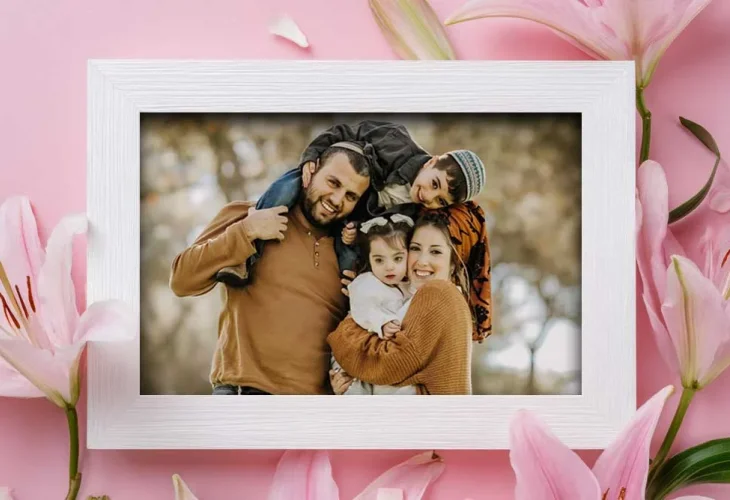
“It’s not us, it’s Hashem. We didn’t do anything,” says Lee Adri simply as she shows videos of her daughter, Shachari.
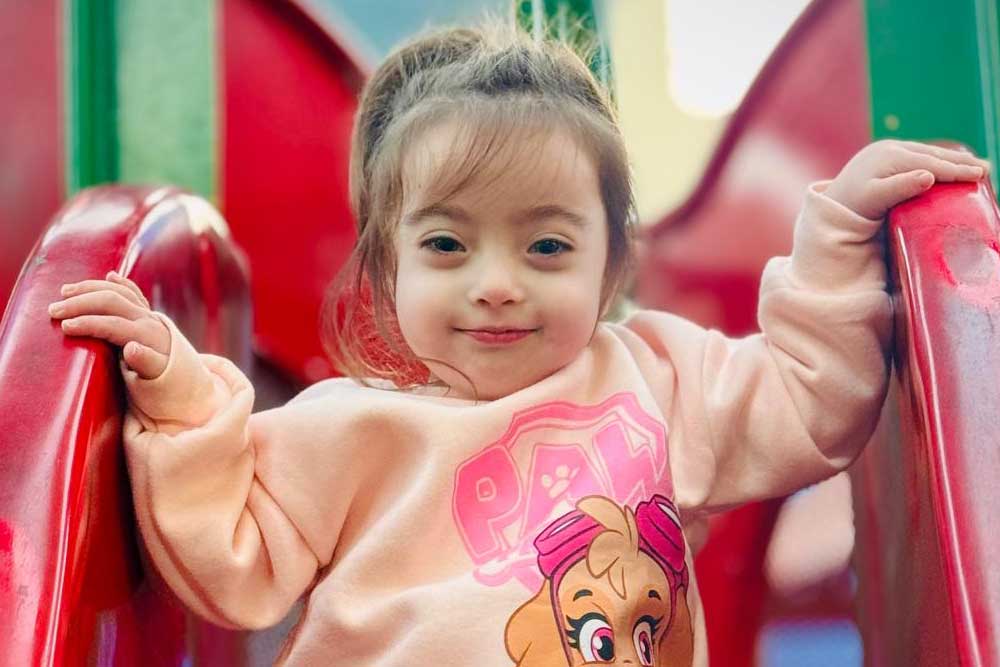
Watching the smiling little girl, it is impossible not to notice the joy radiating from her and the warmth surrounding her. Shachari, who was born with Down syndrome, has transformed her family’s life in ways they never expected.
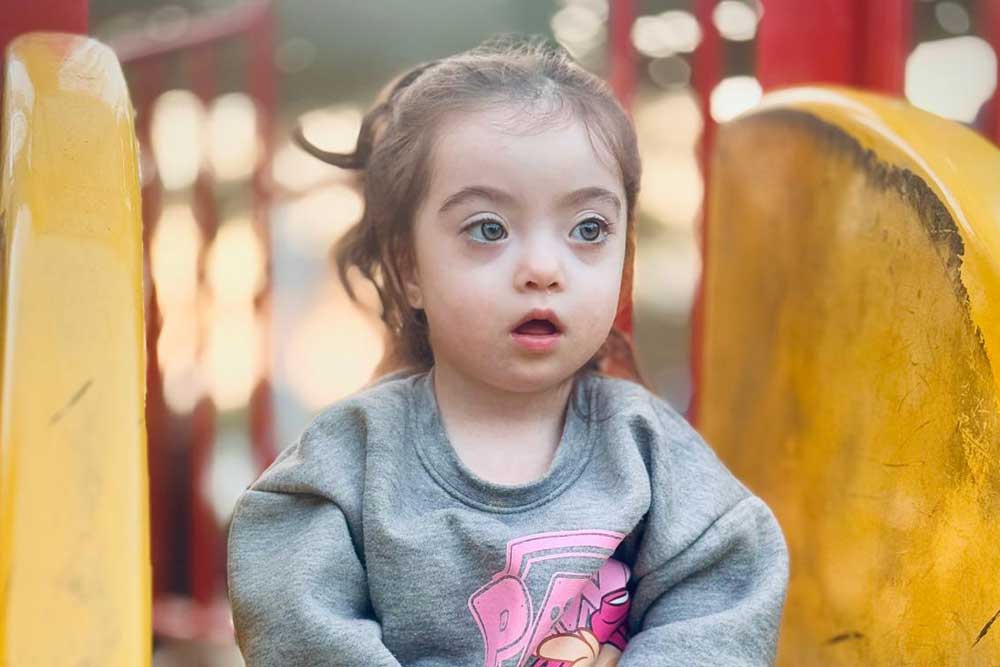
Today, at three-and-a-half years old, she fills their home with happiness, gratitude, and love. But the journey to get there was not simple.
The Birth That Changed Everything
Lee remembers her pregnancy as smooth and joyful from beginning to end.
“We were so excited,” she recalls. “After our oldest son, Benaiah, we found out we were expecting a girl. All the tests were normal, I felt great, and I was waiting for the birth with so much anticipation.”
The due date even fell on the eighth night of Chanukah, exactly as she had hoped.
“Everything seemed perfect.”
The labor went smoothly, and immediately after the birth, the baby was briefly placed in Lee’s arms before being taken by the medical staff.
As far as Lee was concerned, everything was normal.
But hours passed, and no one brought the baby back.
“By eight in the morning, I started worrying,” she says. “But honestly, I still never imagined something like this.”
The Moment Their World Changed
Looking back, Lee says her husband noticed almost immediately that something seemed different.
“He told the midwives that the baby looked like she might have features of Down syndrome,” Lee says. “But they told him only doctors could determine something like that.”
Even then, family members reassured him that he was probably imagining things.
Still, Lee remembers that when her husband came to visit her in the maternity ward, he hesitated when she suggested announcing the birth publicly.
“It was like he already sensed something,” she says quietly.
A short while later, a large group of doctors entered the room.
“At first I smiled at them,” Lee recalls. “I had no idea my life was about to change.”
But when they sat down around her bed, she immediately understood something was wrong.
“I don’t remember exactly what they said,” she says. “I only remember putting my head down on my knees and not lifting it for hours. It was total shock.”
“I Begged Hashem Not to Do This to Me”
A definitive diagnosis of Down syndrome requires blood testing, and it took about a day and a half before the family received final confirmation.
“During those hours, I prayed nonstop,” Lee says. “I begged Hashem not to do this to me.”
In her pain, she found herself asking difficult questions.
“I said, ‘I try so hard to be a good person. Why are You giving me this challenge?’”
Lee explains honestly that part of the difficulty was personal.
“I always cared very much about appearance and intelligence,” she says. “Those things were important to me, and Down syndrome affects both physical appearance and development.”
But even within that painful moment, another prayer emerged.
“I suddenly said to Hashem: ‘If this is really happening, then let it be in the best way possible. Make her beautiful, and let her develop well.’”
Today, when Lee looks at Shachari, she believes that heartfelt prayer accompanied her daughter from the very beginning.
“She truly is a child of prayer.”
The Blessing That Gave Them Strength
The first months after the birth were extremely difficult.
“Today I understand I was probably experiencing some kind of depression,” Lee says.
One source of strength came through a blessing from Rabbi Meir Mazuz zt”l, the head of Yeshivat Kissei Rachamim.
Before they had chosen a name, the family approached the rabbi for a blessing for the baby.
“He encouraged us and told us everything would be okay,” Lee remembers.
Then he asked what the baby’s name was.
Lee and her husband explained that they were still undecided. During the pregnancy, Lee had wanted to name the baby “Shachari,” but after the diagnosis she began reconsidering.
The rabbi surprised them.
“He asked, ‘What was the first name you wanted?’”
When they answered “Shachari,” he immediately began blessing the baby using that name.
“That’s how she received her name,” Lee says emotionally. “Shachari means ‘to dawn for Hashem.’ A name completely connected to prayer and closeness to the Creator.”
The Place That Changed Everything
Another major turning point came through the Shalva organization in Jerusalem.
The family joined Shalva’s baby support program and began traveling weekly from northern Israel to Jerusalem.
“For me, it became a lifeline,” Lee says. “It was the only place where nobody pitied us.”
Instead, she says, the staff celebrated every small milestone together with them.
“They were endlessly excited over every tiny thing Shachari accomplished. They gave her so much love and helped her develop in incredible ways.”
At Shalva, Lee also met other mothers navigating similar experiences.
“For the first time, I felt I belonged somewhere.”
The family continued attending for a year and a half, including during the war, when Lee often traveled alone with Shachari while her husband served in reserve duty.
Choosing Joy, One Day at a Time
Today, Shachari attends a regular daycare program close to home.
The family debated whether to place her in a specialized rehabilitative framework or a standard daycare setting.
“In the end, we chose the regular daycare because she loves being around other children and learns so much by copying them,” Lee explains.
The warmth they have received from caregivers deeply moves her.
“When she still wasn’t walking, one caregiver told me, ‘The day Shachari walks, we’re making a thanksgiving party.’”
Even now, Lee says she sometimes feels overwhelmed by the amount of love their family receives.
Faith, Support, and Letting Go of Perfect Plans
Life changed dramatically after Shachari’s birth.
Lee stopped her software engineering studies shortly before graduating and instead opened an independent graphic design business that allowed her more flexibility.
“There are still nights when I cry,” she admits. “Moments when I realize life looks completely different from what I once imagined.”
But she says the support of family and especially her husband, Shlomo, carried her through.
“He embraced this mission from the first moment,” she says. “He kept telling me: ‘We’re not just accepting this. We’re going all in with it.’”
Shlomo says his strength came from faith.
“As believing Jews, we know Hashem is the source of all good,” he explains. “From the beginning, I understood there would be dreams and plans we might need to give up, and that was okay.”
Instead of focusing on distant fears about the future, he chose to focus on the present.
“I avoided constantly thinking about what would happen years from now,” he says. “I preferred to live one day at a time.”
“She Brings Us More Nachat Than We Ever Imagined”
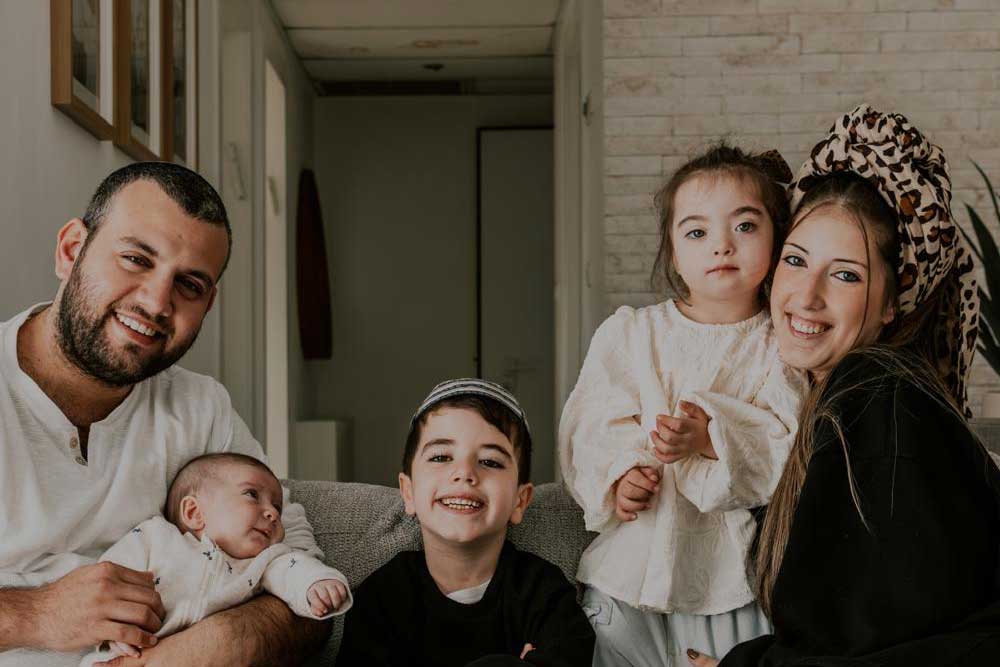
The family’s older son, Benaiah adores his little sister.
“On his birthday, he gave blessings to all of us,” Lee says. “And for Shachari he said from the bottom of his heart: ‘That you should know how to walk.’”
Recently, the family welcomed another daughter, Aluma, whom Shachari absolutely adores.
“She takes care of her and loves her so much,” Lee says.
When asked whether Shachari understands that she is different, Lee pauses thoughtfully.
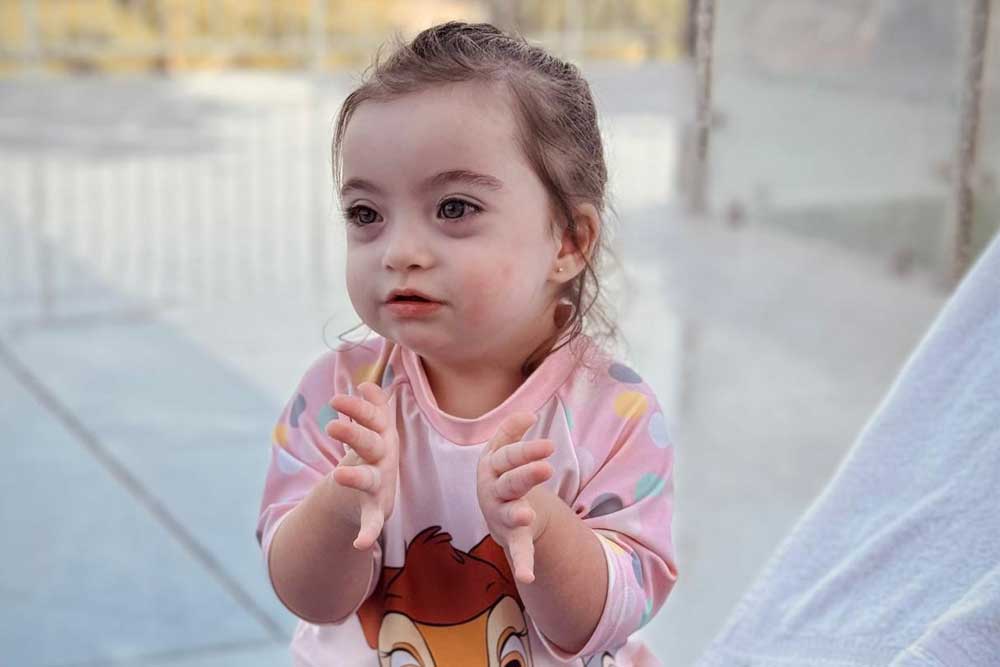
“I honestly don’t think it occupies her,” she says. “Her life is filled with joy. Every little thing makes her happy.”
Then she smiles.
“She never stops thanking people. And she brings us so much nachat, more than we ever could have imagined.”
For now, Lee says, their family simply continues growing together with her daughter, one day at a time.

