

Behind the News
Why Trump Let Qatar Take Credit For Delaying An Iran Strike
Qatar hosts America’s largest Middle East base, shares a giant gas field with Iran and has built influence by keeping channels open to both sides
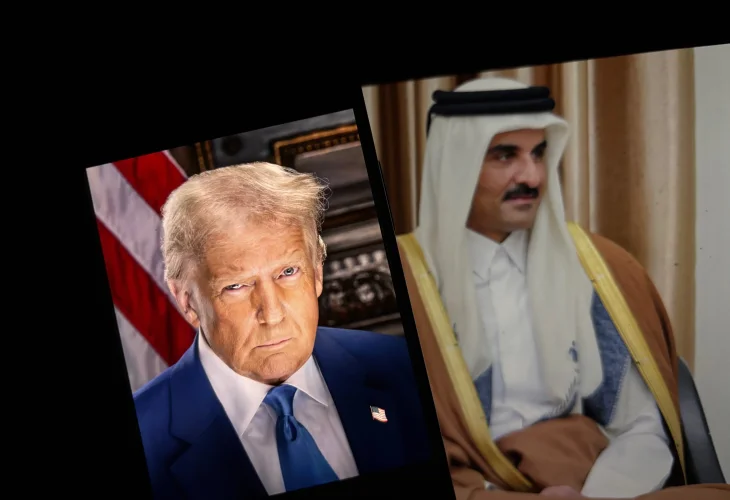 Shutterstock
President Donald Trump’s decision yesterday to delay a planned U.S. strike on Iran placed Qatar at the center of the latest diplomatic effort to prevent a wider regional war, after he said Doha and other Gulf states asked Washington for a short window to pursue a possible deal with Tehran.
“We will NOT be doing the scheduled attack of Iran tomorrow,” Trump wrote on Truth Social, saying he had instructed Defense Secretary Pete Hegseth, Joint Chiefs Chairman Gen. Dan Caine and the U.S. military to remain ready for “a full and massive attack” if no acceptable agreement is reached. Trump said any deal must include “zero nuclear weapons for Iran.”
According to Trump, Qatar, Saudi Arabia, the United Arab Emirates and others requested two or three more days, arguing that talks with Iran were close enough to justify postponing military action. The claim immediately raised a larger question: why would Qatar, a small Gulf state with ties to both the U.S. and Iran, have such a big influence on Trump’s decision to strike?
The answer is not that Qatar controls Trump. Qatar’s leverage comes from its unusual position at the center of U.S. military power, Gulf energy security and indirect diplomacy with Iran, Hamas and other actors that Washington or Israel often cannot engage directly. In this case, Qatar did not stop the strike by force. It helped create a diplomatic off-ramp Trump could present as a temporary pause, not a retreat.
Qatar hosts Al Udeid Air Base, the largest U.S. military base in the Middle East and a key hub for American operations across the region. That means any direct U.S. war with Iran would immediately put Qatar on the front line. Iranian retaliation could threaten American forces stationed on Qatari soil and turn Doha into a target, even if Qatar itself is trying to avoid the fighting.
Qatar also has a direct economic reason to fear escalation with Iran. It shares the world’s largest natural gas field with Iran. Qatar’s side is known as the North Field, while Iran’s side is South Pars. Qatar’s wealth and global energy status depend heavily on liquefied natural gas exports, most of which move through the Strait of Hormuz.
That is why Qatar has strongly opposed using Hormuz as a weapon in the crisis. Qatar’s Foreign Ministry has said it rejects preventing ships from passing through the strait or using it as a pressure card in military or political conflict. For Qatar, a U.S.-Iran war could threaten its gas exports, its airspace and the American base on its territory.
At the same time, Qatar maintains working relations with Iran. The two countries share energy interests, sit across the Gulf from one another and have reasons to prevent a war from spreading.
That balancing act has long drawn suspicion in Israel. Qatar has hosted Hamas’s political office and played a central role in Gaza hostage mediation, while also maintaining ties with Washington. Doha presents this as mediation. Its critics see it as playing both sides. Either way, that access gives Qatar value when messages need to move between actors that do not speak directly.
Trump’s decision to publicly credit Qatar and the other Gulf states also served his own interests. First, it made the delay look like strength rather than hesitation. Trump said the military was ready, the strike was planned and he paused only because regional allies believed a deal was close.
Second, it shifted responsibility onto the Gulf states. Trump was not simply saying that he changed his mind. He was saying that Qatar, Saudi Arabia and the UAE had asked for a final diplomatic window because they believed a deal was close. If the talks fail, the burden moves back onto them, and onto Iran. Trump can say he gave the mediators the time they requested, while Iran failed to deliver a serious agreement.
Third, it kept pressure on Iran while diplomacy continued. The public message was not that the strike had been canceled. It was that Washington had paused the operation while keeping forces ready to move. That distinction matters: Iran could not easily frame the delay as American weakness if Trump was also warning that a full attack remained available at a moment’s notice.
Trump made that point clearly when he spoke to reporters. “We were ready to carry out a very major attack tomorrow,” he said. “I delayed it for a short time — hopefully, maybe forever, but maybe for a short time — because we had very serious discussions with Iran, and we will see where they lead.”
He added that Saudi Arabia, Qatar, the UAE and others asked for “two or three days” because they believed a deal was close. “If we can do that without bombing the hell out of them, I would be very happy,” Trump said.
The pause does not remove the threat of a strike. It turns the coming days into a test. Qatar and the Gulf states now have to show whether they can produce a real Iranian concession. Trump, meanwhile, has kept the military option open while making clear that if diplomacy fails, he gave the delay at their request, not because he backed down.

