

Magazine
The Mother of Five Leading Israel’s Fight Against Human Trafficking
She received Israel’s President’s Award for extraordinary public service, but for Orly Dahan, the true driving force is her deep sense of mission.
- Miri Ben-David Levi
- | Updated
 (In the circle: Orly Dahan)
The moment when the President of Israel, Isaac Herzog, presented her with a certificate of appreciation for her extraordinary contribution was a major highlight in Orly Dahan’s life.
But awards are not what drive her nonstop, around the clock work on behalf of others.
Orly Dahan, 46, is married and the mother of five. She lives in Givat Shmuel and was born in Yokneam. At age five, she moved with her family to New Jersey because of her father’s work as a contractor. Her mother grew up in a religious home, while her father was traditional at the time.
Before the move, her mother made two conditions: the children would attend a Jewish day school, and the family would live near a synagogue.
Shortly after arriving in New Jersey, the family found a warm and meaningful Jewish community that transformed their lives. “We moved homes specifically to be part of the community,” Dahan recalls. “Our house became the center of community gatherings. Dozens of teens stayed with us on Shabbat.
I was blessed with a childhood filled with love for Torah and a sweetness that is hard to describe. From first grade, I was immersed in a rich Torah environment and developed a deep love for Torah and yirat Shamayim.”
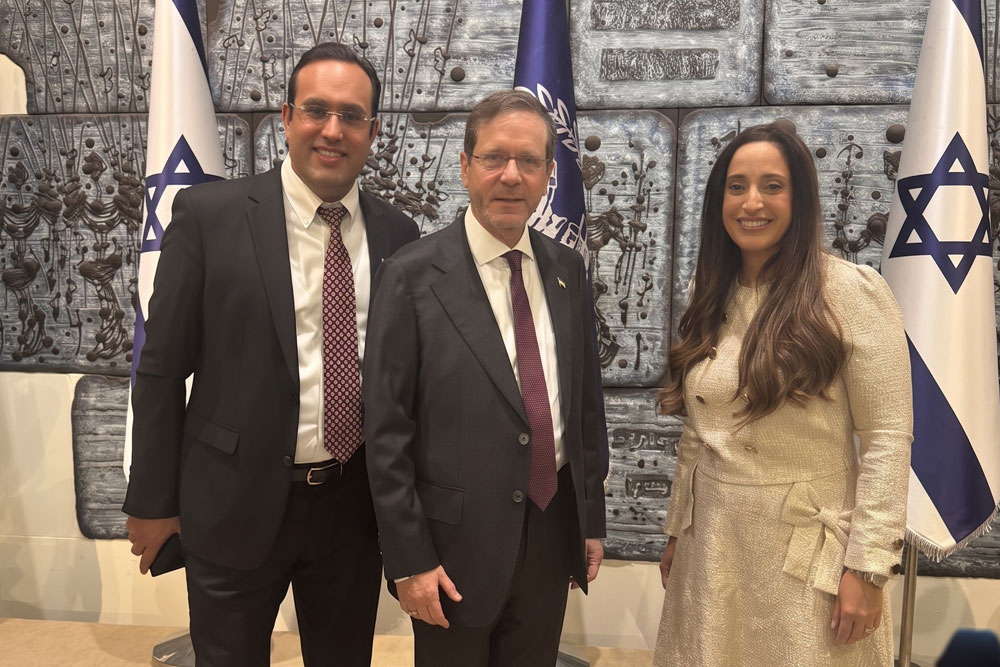 Orly and Harel Dahan with Israeli President Isaac Herzog
Growing Up Between Two Worlds
Dahan became active in the Orthodox youth movement NCSY. She participated in national programs, organized Shabbatons and seminars, and spent summers in Torah study programs in Israel.
“I lived a very unique blend of worlds,” she says. “On one hand, there were American rabbis, and on the other, a very deep connection to Israel.”
Over the years, her father also became more observant. “The first time, we drove together to synagogue,” she remembers. “After that, I asked that we only walk, and that’s what we did.”
Eventually, her father became the head of the local community. After the family returned to Israel, he became a prominent public figure in Yokneam, serving on municipal committees and later as deputy and acting mayor.
“My father is a rare person,” she says. “A man of peace, action, and giving. His entire life revolves around helping others, and that is what all four of us sisters absorbed at home.”
Her mother also played a major role in shaping her values. “My mom is like a walking gemach. During all those years in the United States, she cared for our home and helped the local rebbetzin. We always had guests. Every Israeli who came to the area eventually ended up at our house. She also empowered us daughters, and thanks to her, each of us reached meaningful leadership roles in Israel.”
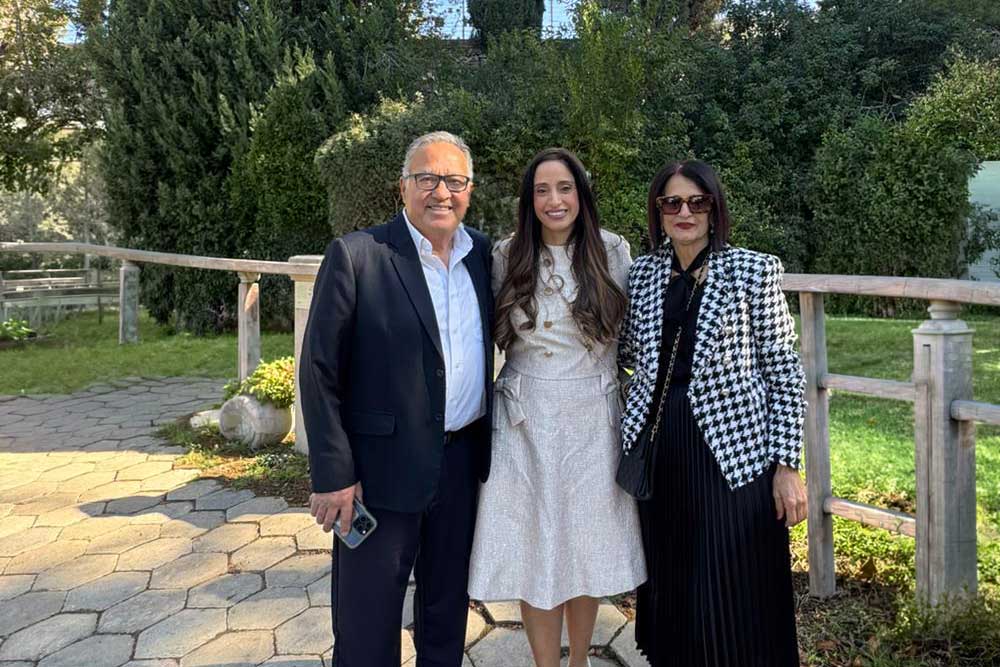 Orly with her parents
A Career Built on Mission and Purpose
Toward the end of high school, Dahan planned to study medicine. But then her parents made a life changing decision to move back to Israel.
“Dad told Mom that we were such a close family that if I started college in the United States, we would probably stay there forever. Baruch Hashem, they understood that returning to Israel was the right decision.”
After spending a year in a midrasha program combined with volunteer work, she began studying law at Bar-Ilan University. She balanced demanding studies with a strong spiritual environment.
“It was an amazing period in my life,” she says.
Following her clerkship at a major law firm, she entered public service through the Wexner program and later worked in the International Department at Israel’s Ministry of Justice.
Over the years, Dahan became one of Israel’s leading activists in the fight against human trafficking. She worked with Knesset committees, government ministries, international organizations, and law enforcement agencies to combat trafficking in women and forced labor.
“This field requires cooperation from everyone,” she explains. “The Ministry of Justice, police, welfare services, health authorities, the Population and Immigration Authority, and human rights organizations. You cannot fight it alone.”
As part of her work, she helped establish a special system at Ben Gurion Airport that integrated social workers into border interviews to identify trafficking victims upon arrival in Israel. For these efforts, she and her team received the President’s Award.
“It has always been important to me to remember that behind the statistics are real people,” she says. “Even when we stood before American delegations or officials from the U.S. State Department, I always tried to bring the human story.”
She represented Israel before senior officials at the U.S. State Department, which ranks countries on their efforts to combat human trafficking.
“I often feel that my role is to connect worlds,” she says. “Between Americans and Israelis, between the periphery and the center, between religious and secular communities, and between donors and families in need.”
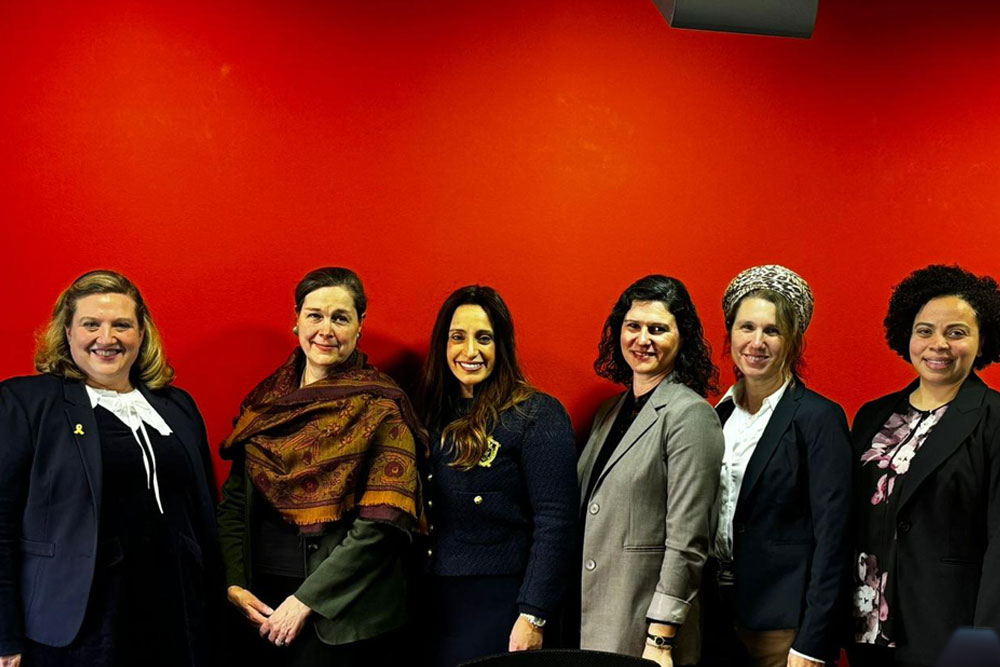 The Israeli delegation together with the team in Washington
Building a Torah Centered Home
Dahan married her husband Harel, an attorney and deputy battalion commander in the Golani Brigade reserves, when she was 28 years old. Together they have five children: Yair, Shira, Talia, Amitai, and Hillel.
The couple first met through a mutual friend three years before they got married. During that period, Dahan devoted herself to volunteer work, helping terror victims during the Intifada and supporting children with cancer.
“I finished my clerkship and told myself I was taking one summer just for volunteering,” she says. “I simply felt that was what I needed to do.”
Three years later, another friend reconnected them. At the time, she and a group of friends were participating in a special 40 day prayer initiative at the Western Wall.
“On the 40th day, Harel went to Rabbi Mordechai Eliyahu, ztz”l, who told him: ‘Call her now.’ I remember standing at the Kotel at that exact moment, in the middle of the prayers. The rest is history.”
The rabbi who officiated their wedding was Rabbi Egozi, Harel’s former rosh yeshiva from his years studying in Hispin.
The couple eventually settled in Givat Shmuel. “Baruch Hashem, we built a home centered on Torah,” Dahan says. “There is no television, the children only use simple phones, and our education is rooted in Torah, warmth, and joy.”
Harel is also deeply involved in Torah learning and teaching. “Even during reserve duty, he continued his daily Torah classes on Zoom,” she says. “People call him ‘the mall rabbi.’ He has completed Shas twice, and I deeply admire the way he balances everything. It allows our home to function like a true center of chesed.”
Family First
Despite her demanding career, Dahan says she never compromised on family life.
“My career has always been important to me, and I never gave it up,” she explains. “For years I commuted daily to Jerusalem for work, but I always returned in time to pick up the children. When they were younger, I would leave home very early in the morning just to make sure I could spend afternoons with them.”
Since October 7, however, the family’s life has taken on an entirely new dimension. While her husband was called up for reserve duty, Dahan began leading large scale aid initiatives for commanders’ wives, evacuee families, wounded soldiers, and families of reservists.
She organized support evenings, raised funds, connected overseas donors with urgent local needs, accompanied wounded soldiers and their families through complicated bureaucracy, and coordinated countless volunteer efforts.
“I feel like I’m on a mission,” she says. “I constantly ask myself where I am needed most right now. As soon as the war broke out, I understood that this was what I needed to do.”
One of her first wartime projects was arranging a bar mitzvah celebration for a boy whose original celebration had been canceled after his family was evacuated from their home because of the fighting.
Later, she organized support events for commanders’ wives, activities for soldiers, assistance for wounded soldiers, and tours to communities near the Gaza border.
“I found myself simply connecting people,” she says. “I have friends in the United States asking how they can help, and families here who need support. So I connect them. I found myself organizing hafrashat challah evenings and producing events. Anyone who knows my family background understands that this is simply part of who I am.”
Dahan concludes with the message that guides every part of her life.
“I truly believe we are here to repair the world and sanctify Hashem’s Name,” she says. “That is what motivates me in everything I do.”

