

Shavuot
Thank God for Circuit Breakers
Between Exodus and Sinai, the Jewish calendar builds in a pause to prepare for receiving Torah anew
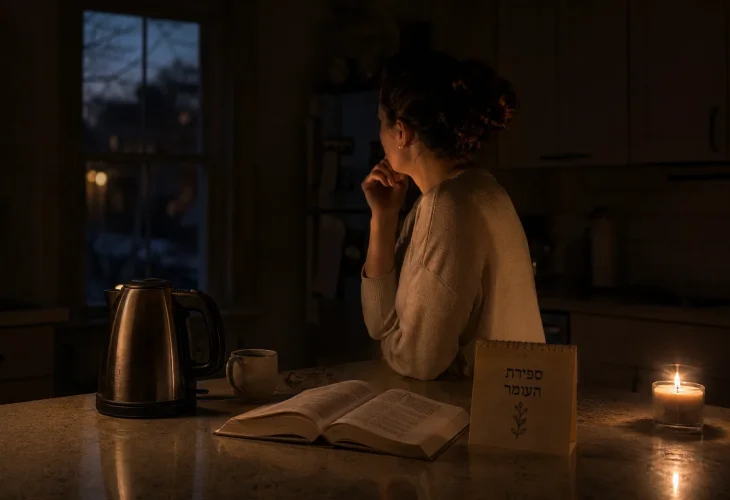
The other night, I went to boil some water towards making dinner. I flipped the switch of the electric kettle, turned to the counter to chop some parsley, and then nearly lost a finger when I got startled as the electricity in the house blew. My immediate thought was that it was the kettle (it certainly wasn’t the parsley), and thank God for circuit breakers because otherwise I would have burned down the entire building. It turned out to be the light fixture in the kitchen; it’s old and apparently needs to be replaced. And still, thank God for circuit breakers because otherwise we still would have burned down the entire building.
This was not my first foray into circuit breakers. That happened when I was fourteen. I was getting ready for bed, and I went to do the same thing I did—and still do—every night: turn on my bedside lamp. I didn’t notice that apparently the wires had been steadily fraying, and when I flipped the switch that night, there was a loud pop, sparks flew out from the wire, and all of the electricity in that zone shut down. Very shakily, I went downstairs to tell my dad what happened, including the fact that I thought I had broken something important in the house. He reassured me it was an easy fix, which it was, and then said, “Thank God for circuit breakers, or you might not have been here now.”
For as long as I had the nightstand that lamp was on, there was a burn mark from the sparks. I probably could have cleaned it really well, or at least painted over it, but I thought it served as a good reminder for two things: first, that I was grateful to be alive, and second, thank God for circuit breakers.
The circuit breaker is essentially an interrupter. It’s a safety mechanism, kicking in when a fault in the flow of electricity is detected and cutting off that flow to protect electrical circuits. When it does kick in, you have to be the one to reset the circuits, flipping the switch to institute the flows once again.
The Jewish calendar has a few circuit breakers built into them. The High Holidays quickly come to mind as a time when we interrupt our flow, examine our flaws, and reset ourselves to begin the Jewish year. And this time period, this stretch between Passover and Shavuot, in which we literally count every single day, is perhaps my favorite circuit breaker within our calendar.
Passover is the holiday when we left Egypt, when we became a nation bonded by shared experience and memory. Shavuot, seven weeks later, is the commemoration of the giving of the Torah at Sinai, the moment in which we became builders of a moral existence. Each year, as we move through our calendar, we are gifted the opportunity to re-accept the Torah again, and again, and again.
We take seven weeks, counting every day in anticipation of this life-changing—really, world-altering—event. There is a beautiful custom, as well, to read one chapter of the Ethics of our Fathers each Shabbat afternoon in the weeks between Passover and Shavuot. Six chapters, one for each week, filled with pithy maxims and timeless wisdom to live by. This custom is connected to the fact that these seven weeks are meant to be a time of preparation, working on ourselves to ensure that we are ready to stand at the foot of Sinai and listen to the word of God.
And then Shavuot comes and goes, and life goes on. We eat cheesecake, some of us stay up all night and then sleep all day, and then we go back to regular life. I’ll be honest, I always feel a little bit of a void following Shavuot when we have finished our counting. It’s not something that dominates my day, but when we are in that seven week stretch, the counting elevates it. Life does not flow as it normally does, because there’s a circuit breaker, every day, reminding me to pause, to contemplate, to improve myself as a person, to put in the work to reinstitute the flow.
It’s a wonderful time of year. The most wonderful, some might argue. And while I’m disappointed when it’s over, I also recognize that it is important that this counting not be year-round, because then it would simply turn into habit. Instead, I thank God for circuit breakers. I thank Him for the opportunities we have in our calendar for reflection, for self-improvement, for pausing, and for readying ourselves to re-accept the responsibility and privilege of the Torah.
And I’ll get a new light fixture for the kitchen, because circuit breakers only do half the work. The rest is up to me.

