

Raising Children
More Than a Game: Teaching Children to Cope With Losing
Learning how to lose gracefully isn't just about games. It's a life skill that helps children navigate disappointment and adversity.
- Tehila Cohen
- | Updated
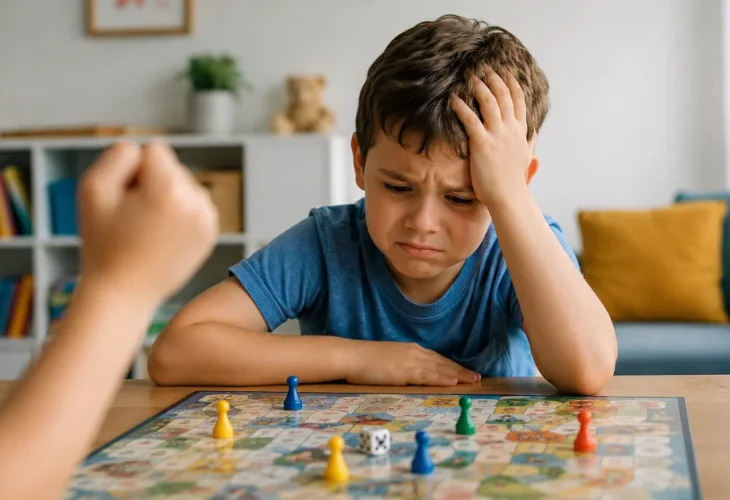
Every parent has seen it happen. The game ends, someone else wins, and suddenly the tears begin. Your child may get angry, blame others, insist the game wasn't fair, or refuse to keep playing.
For young children, losing can feel much bigger than it appears to adults. They invested effort, hoped for a certain outcome, and imagined success. When things don't go the way they expected, the disappointment is very real.
The good news is that learning how to lose gracefully is a skill, and like any skill, it can be taught.
Start by Validating Their Feelings
One of the most common parenting mistakes is rushing to minimize a child's disappointment.
Phrases like "It's just a game," "It's not a big deal," or "There's no reason to cry" are usually well-intentioned. Parents want to help their children move on. But often, these responses leave children feeling misunderstood.
Instead, acknowledge what they're experiencing.
You might say:
- "I can see that you're disappointed."
- "You really wanted to win."
- "That doesn't feel good, does it?"
- "It's hard when things don't go the way we hoped."
When children feel understood, they are much more likely to calm down and process their emotions in a healthy way.
Losing Is Part of Life
Children naturally enjoy succeeding. So do adults.
The goal isn't to prevent children from ever losing. The goal is to help them learn how to handle disappointment when it happens.
This is a good opportunity to explain that everyone loses sometimes—even highly successful people. Athletes lose games. Musicians face rejection. Scientists make mistakes. Entrepreneurs experience setbacks.
In many cases, the most important lessons come from moments when things don't go as planned.
When children begin to understand that losing is a normal part of life rather than a personal failure, it becomes far less frightening.
Focus on Effort, Not Just Results
If winning receives all the attention, children may begin to believe their worth depends on the outcome.
Instead of focusing solely on the result, recognize the qualities that helped them participate.
Try saying:
- "I saw how hard you worked."
- "You kept trying even when it got difficult."
- "You played with great sportsmanship."
- "I'm proud of the effort you put in."
This teaches children that persistence, determination, and character matter just as much as victory.
Be the Example They Learn From
Children pay close attention to how adults handle disappointment.
When parents become angry after losing, blame others, or refuse to accept mistakes, children absorb those behaviors. On the other hand, when a parent responds calmly and says, "I lost this time, but I'll try again next time," they model resilience and emotional maturity.
Often, children learn more from what we do than from what we say.
Don't Always Let Them Win
Many parents are tempted to let their children win in order to spare them disappointment.
While this may provide temporary comfort, it can actually prevent children from developing important coping skills.
Experiencing both success and failure helps children build resilience. They learn that disappointment is uncomfortable but manageable—and that they can recover from it.
Of course, not every family game needs to become intensely competitive. But children benefit from opportunities to experience genuine wins and genuine losses.
Shift the Focus to the Experience
Once emotions have settled, try helping your child reflect on the experience itself rather than the final score.
Ask questions such as:
- "What was your favorite part of the game?"
- "What did you enjoy most?"
- "What did you learn this time?"
- "What would you like to try differently next time?"
These conversations encourage children to value growth, enjoyment, and learning rather than focusing solely on winning.
A Life Skill That Lasts Forever
Learning how to handle losing isn't just about board games, sports, or playground competitions.
It's preparation for life.
Children who learn to cope with disappointment are better equipped to handle academic challenges, social setbacks, career obstacles, and life's inevitable ups and downs. They develop confidence that isn't dependent on constant success and learn that failure does not define their worth.
As parents, we cannot ensure that our children will always win.
What we can do is give them something even more valuable: the ability to recover from disappointment, learn from setbacks, and continue believing in themselves no matter the outcome.

