

World News
Latest Escalation: Iran Hits Kuwait Airport As U.S. Strikes Qeshm Island
CENTCOM says U.S. forces defeated Iranian missiles and drones, but Kuwait reported airport damage and injuries as fighting widens
 Shutterstock
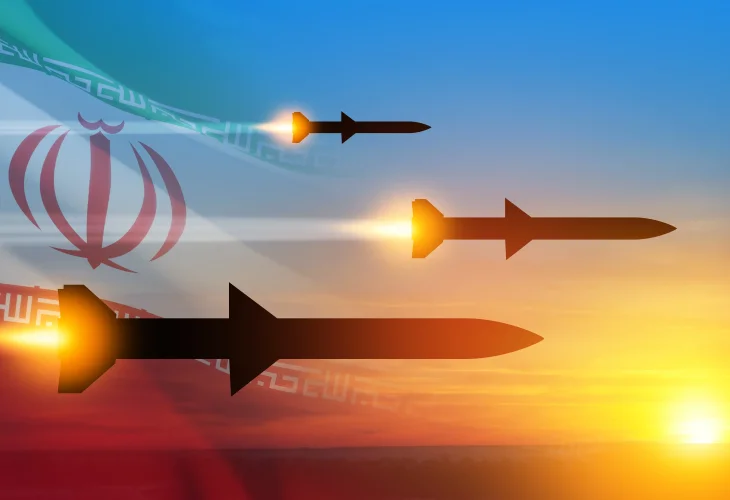
Iran launched a new round of missile and drone attacks toward Kuwait and Bahrain, while the U.S. military said it carried out strikes on Iran’s Qeshm Island in response to attempted attacks across the region.
CENTCOM said no American personnel were harmed and that U.S. and partner forces intercepted or defeated Iranian missiles and drones. But Kuwaiti authorities later reported that an Iranian drone and missile attack struck Kuwait International Airport, damaging Terminal 1, injuring several people, and forcing commercial flights to be suspended or diverted.
The latest exchange appears more serious than the escalation in previous days. Earlier incidents centered mainly on Iranian missiles near Kuwait, drones near the Strait of Hormuz, U.S. strikes on Iranian radar and drone-control sites, and American enforcement of its naval blockade. This round widened to Kuwait, Bahrain, Qeshm Island, civilian maritime traffic, U.S. forces in Kuwait, and a civilian international airport.
According to CENTCOM, Iran fired two ballistic missiles toward Kuwait, which fell short or broke apart before reaching their targets. Three additional missiles launched toward Bahrain were intercepted by U.S. and Bahraini air defenses. U.S. forces also downed Iranian drones, including a later wave that CENTCOM said targeted American troops in Kuwait.
“No U.S. personnel were harmed. CENTCOM forces remain vigilant and ready to defend against unwarranted Iranian aggression during the ongoing ceasefire,” Central Command said.
Kuwait Defense Ministry spokesperson Brig. Gen. Saud Abdulaziz Al-Otaibi said “a number of hostile drones” targeted Kuwait International Airport’s passenger building, severely damaging the site and wounding several people. Kuwaiti officials said air-defense systems were operating and that explosion sounds heard in the area came from interceptions.
CENTCOM said U.S. forces also conducted self-defense strikes against an Iranian military ground control station on Qeshm Island, a strategic Iranian island in the Strait of Hormuz near the entrance to the Persian Gulf, after what it described as attempted Iranian attacks in several parts of the Middle East. Iranian media reported explosions on the island late Tuesday, including in its southern area.
The maritime front also remained active. CENTCOM said U.S. forces disabled the Botswana-flagged oil tanker M/T Lexie after it tried to sail toward Iran’s Kharg Island in violation of the American blockade of Iranian ports. The U.S. military said the ship was unladen and that its crew ignored repeated warnings over a 24-hour period.
“The ship’s crew ignored repeated warnings, failing to comply with directions from U.S. forces multiple times over a 24-hour period,” CENTCOM said. “A U.S. aircraft ultimately disabled the vessel by firing a Hellfire missile into the ship’s engine room, preventing the tanker from reaching Iran.”
CENTCOM said the Lexie was the sixth vessel disabled since the U.S. began blocking maritime traffic entering and leaving Iranian ports in April.
Iran’s Revolutionary Guards presented a different account. The IRGC claimed its attacks were retaliation for what it described as a U.S. strike on an Iranian tanker near the Strait of Hormuz and a communications tower south of Qeshm Island. Iranian media cited the Guards as saying they targeted the U.S. Fifth Fleet headquarters, an airbase in a regional country, and helicopters using missiles and drones.
The IRGC also claimed its navy targeted a vessel it identified as Panaya. CENTCOM identified the vessel it disabled as M/T Lexie, and the reports do not establish that the two are the same ship.
“Disrupting the security of the Strait of Hormuz will carry a heavy price for the U.S. military,” Iranian media quoted the IRGC as saying.
The latest fighting follows several days of rising tension. On May 27, CENTCOM said Iran launched a ballistic missile toward Kuwait and five one-way attack drones near the Strait of Hormuz. Over the weekend of May 30–31, the U.S. struck Iranian radar and drone command sites in Goruk and Qeshm after Iran shot down an American MQ-1 drone over international waters.
But this round marked a broader escalation. Bahrain was directly named in the U.S. account, Kuwait reported airport damage and injuries, and American forces in Kuwait faced another Iranian drone wave.
CENTCOM framed its response as defensive and said its forces remain prepared during the ongoing U.S.-Iran ceasefire. The latest attacks show that the ceasefire is still under heavy strain, as both sides continue trading strikes.

