

Parashat Korach
The Hidden Power of Nefilat Apayim: Why Falling on Your Face After Prayer Is So Powerful
Discover how this ancient practice expresses awe of God, deep humility, and complete trust in Divine guidance, and why it has the power to transform difficult decrees into mercy
- Amitai Haniah
- | Updated
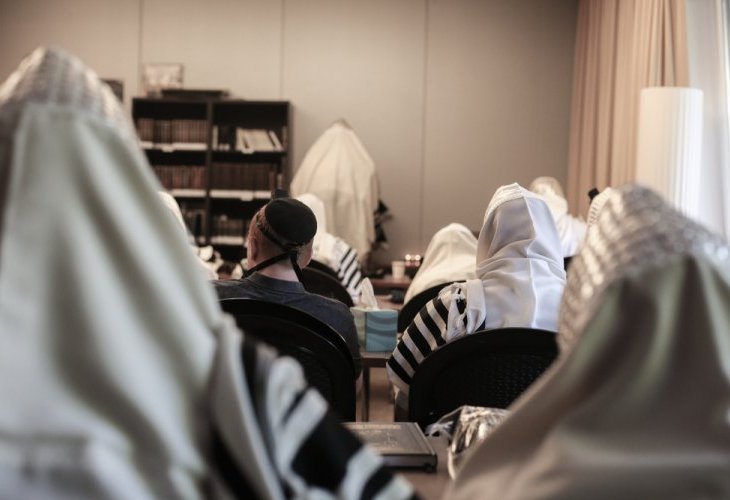 (Photo: shutterstock)
“They fell on their faces and said, ‘O God, the God of the spirits of all flesh, shall one man sin, and You be angry with the entire congregation?’” (Numbers 16:22)
This verse describes Moses and Aaron falling on their faces and praying that God forgive the entire nation rather than punish everyone because of the sin of a single individual. Through the power of their prayer, offered while falling on their faces, the decree was annulled.
From here we learn the significance of Nefilat Apayim — the supplication recited after the Amidah prayer. It possesses tremendous power, especially in times of distress.
Three Purposes of Nefilat Apayim
Rabbeinu Bachya explains that Nefilat Apayim serves three primary purposes. In his words:
“They fell on their faces — to pray. From here we learn the practice of falling on one's face during prayer. Know that there are three intentions in this act: first, reverence for the Divine Presence; second, expressing sorrow and humility; and third, demonstrating the restraint of one’s senses and the nullification of one’s feelings.”
He then elaborates on each of these three purposes.
1. Reverence for the Divine Presence
Covering the face symbolizes humility and modesty. Through Nefilat Apayim, a person expresses a sense of shame and awe before Heaven, feeling deeply aware of God's presence.
Rabbeinu Bachya connects this idea to the verse: “I have set the Lord before me always” (Psalms 16:8),
and to Moses, who concealed his face because he was afraid to gaze upon God.
“The first purpose is reverence for the Divine Presence, so that a person may be clothed in modesty and humility. Covering the face is a practice of humility and shame. Since the intention of the one praying is that the Divine Presence stands before him — as it is written, ‘I have set the Lord before me always’ — the sages established the covering of the face within the structure of prayer. All of this is for the fear of God, as it is written regarding Moses: ‘Moses hid his face, for he was afraid to look upon God’” (Exodus 3:6).
2. Expressing Sorrow and Humility
Bowing down expresses pain, submission, and humility — qualities that are fundamental to repentance.
When a person humbles himself before God, his prayer becomes more acceptable, and God takes his suffering into account and responds to his requests.
Rabbeinu Bachya writes: “The second purpose is to show sorrow and humility. One who falls on his face is distressed and humbled, and humility is one of the foundations of repentance. Then his prayer is accepted, and God is concerned with his suffering and fulfills his request.”
The Sages taught that when a righteous person is pained and humbled, God responds to his prayers and even sends rain because of his anguish. “Our sages said regarding a righteous person who suffers: ‘His spirit became weakened, and rain came; he was humbled, and rain came.’”
3. Demonstrating Total Dependence on God
The third purpose is to express the complete surrender of one’s senses and personal will before God.
By covering the eyes and closing the mouth during prayer, a person symbolically acknowledges that he does not truly know what is best for him. He recognizes that his welfare and direction in life are entirely dependent upon God's guidance.
Rabbeinu Bachya explains: “The third purpose is to demonstrate the restraint of one’s senses and the nullification of one’s feelings. One who falls on his face covers his eyes and closes his mouth, agreeing in his thoughts that he does not truly see what is beneficial or harmful for him, nor does he know his own path and affairs. He has no power to achieve his desires unless God agrees to it.”
This reflects the verse: “It is not in man to direct his own path” (Jeremiah 10:23).
It is as though a person's senses are suspended and unable to pursue their own desires. His eyes are covered and his lips are closed, symbolizing that he can neither see nor speak except through God's will.
Rabbeinu Bachya concludes that this parallels another aspect of prayer: standing with one's feet together as though bound, symbolizing that a person's destiny and success do not ultimately depend upon himself. “This is similar to the intention behind keeping one’s feet together during prayer, as though they are bound, demonstrating that one’s will and success do not depend upon oneself.”
A Profound Lesson
According to Rabbeinu Bachya, Nefilat Apayim is far more than a physical posture. It is a spiritual declaration that combines:
Awe before God's presence
Humility and repentance
Recognition of complete dependence upon God
Through this act, a person acknowledges that God alone directs his life, hears his prayers, and has the power to transform even the harshest decree into mercy.

