

Raising Children
Honoring Parents While Following Your Path: A Powerful Lesson for Baalei Teshuvah
How to navigate family tension, respond to criticism with dignity, and strengthen both your faith and your relationship with your parents
- Noa Harel
- | Updated
I have been a baal teshuvah (someone who has returned to religious observance) for seven years. Thank God, we have built a home, our children attend Torah-based schools, and we are doing our best to grow in our service of God.
Recently, however, I have been struggling with my relationship with my parents. They are good and loving people, but at every family gathering they make comments about our lifestyle. I feel hurt, I pull away, and I feel that they do not respect the choices I have made.
How can I deal with this in the right way?
What you are describing is a struggle familiar to many baalei teshuvah.
On the one hand, you have found a path that gives your life meaning and fulfillment. On the other hand, you feel that your parents do not support that path and may even criticize it.
It is natural that when we encounter resistance to something important to us, we feel that the resistance is directed at us personally and at the choices we have made. But often the pain comes from a very different place.
When a son or daughter changes direction in life, it is natural for parents to feel challenged by that change. Even if that is not the child's intention, parents may experience the new path as criticism of their own worldview and life choices.
Perhaps the Question Is Different
Perhaps the question is not, "How can I get them to accept me?" but rather, "How can I learn to accept them?"
Your parents' reaction suggests that a dynamic has developed between you. And every dynamic involves two people.
Their comments may indicate that they feel threatened, criticized, or somehow not good enough in your eyes. Whether that perception is accurate or not, it may be influencing how they respond to you.
The Unique Bond Between Parents and Children
There is something unique about the relationship between parents and children, regardless of age.
When a child becomes confused about his place, a parent will often — consciously or unconsciously, try to restore that balance. Sometimes this feels painful, but when viewed more deeply, it can be part of a person's growth.
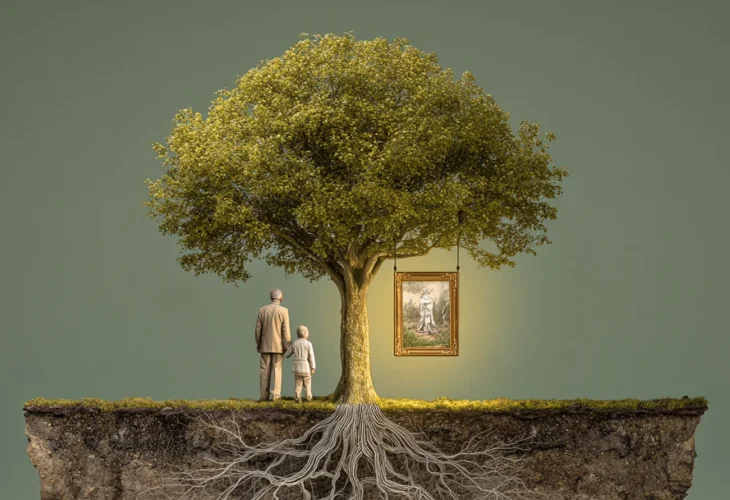
A person's development takes place within very clear circles of influence. Your parents came before you. They were partners with God in bringing you into the world. They played a central role in shaping who you are.
Everything you have become was built, at least in part, upon foundations they helped create.
This is a simple truth that modern culture often overlooks, but many baalei teshuvah encounter it with great intensity.
Focus on What You Can Control
We have no control over what our parents think or feel, but we have complete control over how we relate to them.
The more you recognize the good you received from them, appreciate where you came from, and remember that the path you have chosen was built upon values they themselves gave you — such as honesty, integrity, perseverance, and the ability to face challenges, the easier it will be to meet them with respect and humility.
Strengthening Faith Does Not Contradict Honoring Parents
Honoring one's parents does not conflict with spiritual growth. On the contrary, it is one of the most beautiful expressions of that growth and it reflects a deep and genuine transformation.
When your parents encounter a son who is calmer, more respectful, more joyful, and filled with gratitude, their resistance may naturally soften.
And even if it does not, do not focus on proving that you are right. Instead, focus on being a good son without conditions.
That is not a compromise of the path you have chosen. It is the best way to walk it.

