

Interesting
Field of the Gods: Mexico's Volcano Soccer Stadium
Built inside a volcanic crater and cared for by local residents, this unique Mexican soccer field is unlike anything you've ever seen.
- Shira Dabush
- | Updated
Modern soccer stadiums are engineering marvels. Around the world, billions of dollars are invested in state-of-the-art arenas featuring cutting-edge technology, striking architecture, and every comfort fans could imagine.
But one remarkable soccer field in Mexico proves that the beautiful game doesn't need luxury to inspire awe.
Sometimes, all it takes is an extinct volcano.
The Soccer Field Inside a Volcano
Hidden in the mountains of central Mexico, in the small village of Santa Cecilia, lies one of the most unusual soccer fields on Earth.
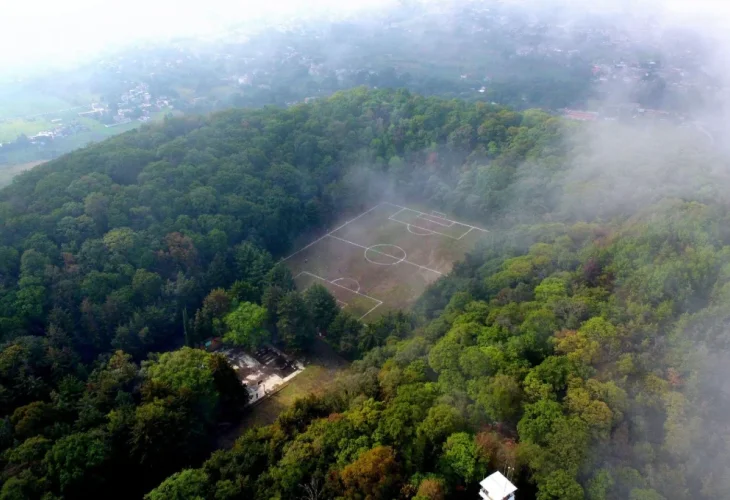
Known as the "Field of the Gods," this extraordinary pitch sits inside the crater of an extinct volcano. Surrounded by steep volcanic walls and breathtaking scenery, it creates a setting unlike any other soccer field in the world.
From above, the sight is almost surreal. The perfectly shaped crater forms a natural stadium, with the field resting at its center as though nature itself designed the venue.
The Heart of the Community
Every Sunday, the field comes alive as local residents gather for matches in the amateur Tauca League.
The league consists of ten teams, each representing a different family from the village. Matches are more than sporting events—they are community gatherings that bring generations together.
Teenagers share the field with fathers, uncles, and even grandfathers. Age is no barrier. What matters most is the love of the game and the tradition that has united the village for decades.
For many residents, these weekly matches are among the most important social events of the year.
Why a Volcano?
The field's spectacular location wasn't chosen to attract tourists or create a world-famous attraction.
The reason was much more practical.
Santa Cecilia is surrounded by steep mountain terrain, leaving very little flat land suitable for a soccer field. The crater of the extinct volcano happened to provide one of the largest level spaces in the area.
What began as a practical solution eventually became one of the most unique sports venues anywhere in the world.
Built and Maintained by the Community
Unlike professional stadiums with large maintenance budgets, the Field of the Gods remains a community project.
The playing surface is simple dirt rather than manicured grass, but local residents take great pride in keeping it in good condition. Volunteers rotate responsibilities, prepare the field before matches, clean the area, and carry out repairs whenever necessary.
Their dedication has helped preserve the field for generations.
Why They Refuse Government Help
Perhaps surprisingly, the villagers have repeatedly declined offers of assistance from local authorities.
Their reason reflects the deep connection they feel to the field.
Residents worry that outside investment could eventually lead to outside control.
"The moment the government invests in the site, it may claim ownership of it in the future," one resident explained.
For that reason, the community prefers to maintain the field themselves, ensuring that it remains a place that truly belongs to the people who built it and continue to care for it.
A Reminder of What Sports Are Really About
The Field of the Gods may lack luxury suites, giant video screens, and multimillion-dollar facilities.
Yet it offers something many modern stadiums cannot: a powerful sense of community, tradition, and connection.
Nestled inside the crater of an ancient volcano, this remarkable field serves as a reminder that soccer's greatest magic has never depended on money or architecture. It comes from the people who gather to play, cheer, and share the game together.

