

The Revolution
Why Is Honey Kosher? The Ancient Talmudic Insight Confirmed by Modern Science
Discover the fascinating connection between honey production, Jewish law, and scientific discoveries about the bee's remarkable anatomy
- Rabbi Zamir Cohen
- | Updated
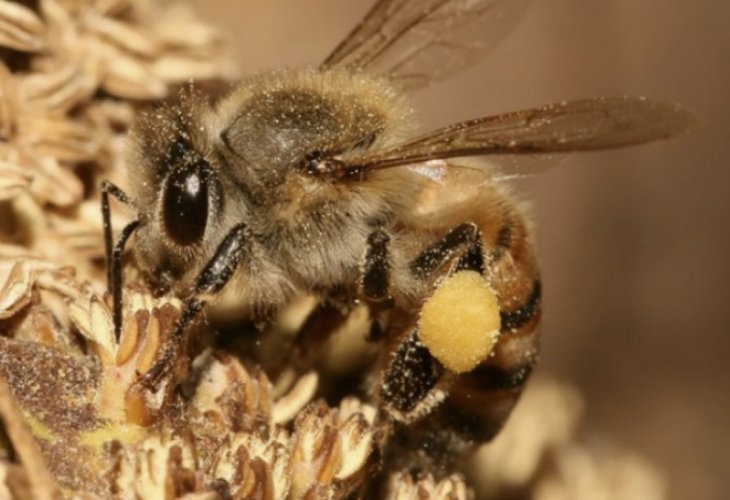
Every Rosh Hashanah, Jewish communities around the world dip apples into honey and wish one another a sweet new year. It is the perfect time to explore the fascinating story of honey and the remarkable way it is produced.
The Kashrut Question: Why Is Honey Kosher?
At first glance, honey seems similar to milk. Both are substances produced by animals from the food they consume and then released from their bodies.
An ancient observer watching bees collect nectar might naturally assume that honey is created much like milk. Just as a cow digests grass and transforms it into milk, it would seem logical that a bee digests flower nectar and transforms it into honey.
This creates a serious question in Jewish law.
One of the fundamental principles of kashrut states: "That which comes from an impure animal is impure, and that which comes from a pure animal is pure."
For example, the milk of a camel is forbidden because it comes from a non-kosher animal. Since bees themselves are not kosher, one would expect honey to be prohibited as well.
So why is honey permitted?
Modern scientific research has revealed two astonishing facts about bees and honey production.
Bees Have Two Separate Stomachs
A bee possesses two different stomachs.
Although nectar enters the bee through its mouth, it does not enter the digestive stomach. Instead, it is stored in a special organ known as the honey stomach, which is completely separate from the digestive system.
A one-way valve prevents the nectar from mixing with digestive materials. No digestive juices are present in this chamber.
Honey Is Produced Through Enzymes
The transformation of nectar into honey occurs through the action of enzymes.
Enzymes are proteins found in plants and animals that help break down and rearrange molecules. In the bee's honey stomach and mouth, enzymes convert the complex sugars found in nectar into the primary sugars that make up honey:
Glucose
Fructose
The amount of enzyme involved in this process is extremely small. After completing their work, most of these enzymes break down and disappear.
As a result, honey is essentially processed nectar that never becomes part of the bee's body through digestion or absorption.
The Principle of "Nullified in Sixty"
Jewish law contains another important concept known as batel b'shishim ("nullified in sixty").
If a forbidden substance accidentally mixes into a kosher food, the mixture remains permissible if the kosher portion is at least sixty times greater than the forbidden substance.
For example, if one liter of non-kosher milk falls into sixty liters of kosher food, the non-kosher element is considered halachically nullified.
Even the tiny traces of enzymes involved in honey production are present in amounts far below this threshold. Furthermore, most of the enzymes disappear after completing their task.
The Talmud's Remarkable Statement
Long before microscopes, chemistry, or modern biology existed, the Sages of the Talmud taught: "Bee honey is permitted because the bees bring it into their bodies, but do not produce it from their bodies."
In other words, the Sages understood that honey differs fundamentally from milk. The bee does not digest nectar and then create honey from its own bodily substances. Rather, it stores and processes the nectar in a separate system before releasing it.
This distinction forms the basis for honey's kosher status.
How Could the Sages Have Known?
Without modern scientific tools, it would have been natural to assume that honey was produced through digestion, just as milk is produced by mammals.
Yet the Talmud accurately describes honey as something that is brought into the bee, processed separately, and then released without becoming part of the bee's body.
Modern discoveries about the bee's unique anatomy and honey-production process have revealed just how precise this ancient understanding was.
A Sweet Lesson for Rosh Hashanah
Every spoonful of honey carries with it not only sweetness, but also a fascinating intersection of science and Jewish tradition. What appeared for centuries to be a mystery of kashrut turns out to reflect a remarkable biological reality hidden within one of nature's smallest creatures.
As we dip apples into honey and pray for a sweet year ahead, we can also appreciate the extraordinary complexity and wisdom found in the natural world — and the timeless insights preserved in Jewish tradition.

