

World News
An Award-Winning Restaurant Owner Revealed: "We’ve Been Frying in the Same Oil for 66 Years"
A storm erupted in Japan after the owner of an award-winning restaurant said he has been using the same frying oil for 66 years. How did he respond when people online called for the place to be shut down?
- Shira Dabush
- | Updated
 Illustration
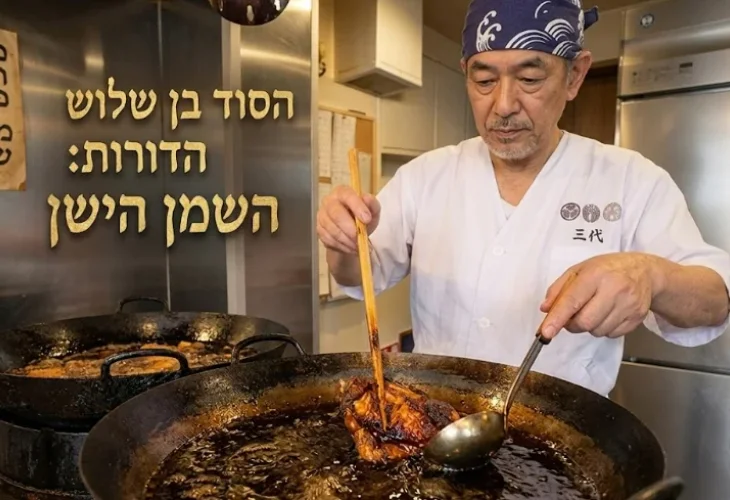
 A recently headline-making restaurant in Japan, an award-winning spot called 'Wakatori,' managed to astonish even seasoned food lovers when its owner, Yoshihiro Tsuchiya, declared that the secret to its success is the frying oil. Tsuchiya told the media that the fried chicken that became the restaurant’s signature dish—and even earned it prestigious awards—has been fried in the same oil for 66 years. The revelation naturally sparked a major uproar on local social media, especially since this is a restaurant that won a gold medal in Japan’s prestigious fried chicken competition.
While stunned users rushed to promise they would never go near the restaurant again, Tsuchiya said the old oil gives the chicken a deep aroma and a flavor that cannot be recreated with brand-new oil alone. "I’m the third generation in this restaurant, and for decades my family has used the same method, passed from father to son and now to me, the grandson," Tsuchiya explained.
That, of course, brought a wave of attacks against the restaurant, and many argued—understandably—that this was a health risk and that the restaurant should be shut down immediately. Only then did Tsuchiya decide to explain his position in depth, saying that the restaurant is not actually frying today in the exact same oil that was used in 1960. "At the end of every workday, the staff carefully filters the oil, removes crumbs, food residue, and dirt from it, and keeps only a small amount of the old oil," he finally revealed. "That amount serves as the base for the new mixture, to which completely fresh oil is added, and this process has been repeated every day for decades."
In other words, the oil is constantly renewed, but it always contains a small trace of the previous batch.
Why does that matter at all? According to Tsuchiya, the chicken simply does not taste the same when it is fried in completely new oil, and the truth is, he is not the only one using this method. Many bakeries around the world, for example, use starters that are decades old, with a small portion of old dough added each time to a new batch. Certain traditional restaurants also preserve sauces, broths, and seasoning blends for many years, using the exact same principle. "The goal is to preserve the depth, complexity, and character of flavors that develop over time," he concluded.
So What Does the Science Say?
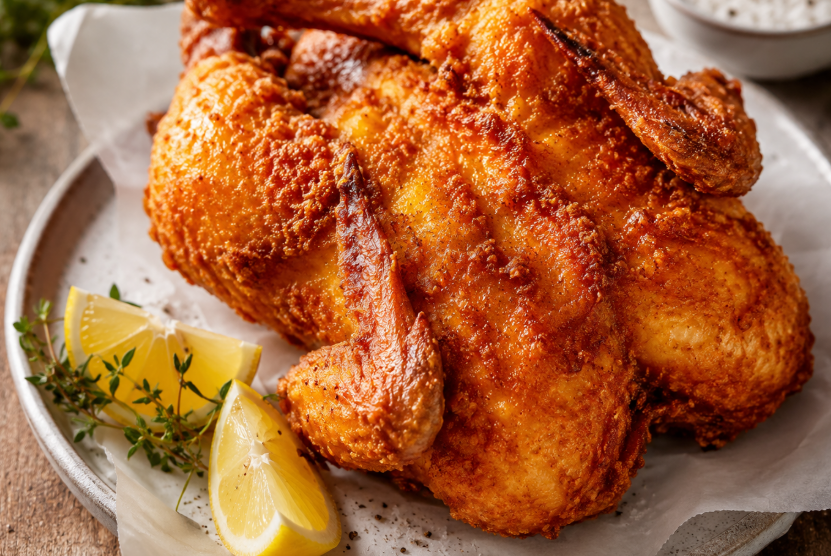
According to experts, it is possible that the oil mixture still contains tiny molecules from the original oil used back in the 1960s, but the overwhelming majority of the oil the restaurant uses is new oil. So what is actually happening there? When chicken is fried, particles of fat, proteins, spices, sugars, and meat juices are released into the oil. Under high heat, they undergo chemical reactions—especially the Maillard reaction, the same reaction that gives roasted meat, toasted bread, and fried chicken their browned color and deep flavor. Some of those aromatic compounds remain in the oil and give it a kind of “flavor memory.”
Put simply: the old oil functions a bit like a “starter” for frying.
But there is also a less pleasant side: oil that is heated again and again breaks down and oxidizes, creating undesirable substances such as fat oxidation products, polar compounds, and sometimes burnt off-flavors. That is why a restaurant has to filter it, clean it, remove burnt crumbs, and keep adding new oil all the time. If that is not done, the oil becomes dark, bitter, foul-smelling, and potentially more harmful.
And What Does That Mean for Health?
Health authorities in many countries recommend that restaurants monitor oil quality and replace it when it begins to break down.
On the other hand, if it is indeed true that the restaurant:
- filters the oil every day,
- removes burnt food residue,
- regularly adds large amounts of new oil,
- and replaces significant portions of the oil over time,
then in practical terms this is not really "66-year-old oil," but rather a mixture that is constantly being renewed, and there is no real danger here of the kind claimed on social media.

