

World News
Colombia Elects Right-Wing Abelardo de la Espriella as President
De la Espriella wins runoff with 49.7%, pledges embassy in Jerusalem and cartel bombing.
- Hidabroot
- | Updated
 Shutterstock
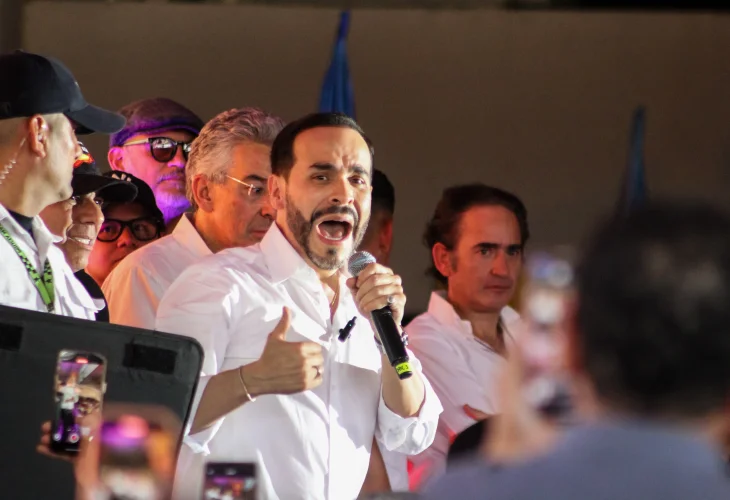
Colombia's right-wing populist Abelardo de la Espriella, known by his nickname "The Tiger," claimed victory in the country's presidential runoff election on Sunday night. With more than 99 percent of votes counted, de la Espriella secured approximately 49.7 percent against left-wing rival Senator Ivan Cepeda's 48.7 percent, a margin of roughly 250,000 votes. The result ends four years of leftist rule under outgoing President Gustavo Petro and carries significant implications for Colombia's relationship with Israel.
De la Espriella has pledged to immediately restore diplomatic ties with Israel, which Petro severed in 2024 over the war in Gaza, accusing Israel of committing genocide against Palestinians - a charge Israel vigorously denies. During his tenure, Petro imposed sanctions on Israel, banned coal exports to the country, joined South Africa's case against Israel at the International Court of Justice in The Hague, and called for the formation of "a large army to liberate Palestine." The president-elect has promised to go further than merely restoring relations, declaring his intention to open a Colombian embassy in Jerusalem. In a message to the country's Jewish community, he wrote: "In my government, Colombia will take a clear step in its foreign policy - we will establish our embassy in Jerusalem and strengthen our direct, strong and strategic relationship with Israel."
The 48-year-old criminal defense lawyer and millionaire businessman, who holds dual Colombian and American citizenship, had been considered an underdog before the first round of voting three weeks ago. His first-round lead over Cepeda prompted Petro and his ally to cast doubt on the results without presenting evidence. De la Espriella owns property in Miami and until recently lived in Florence, Italy, with a lifestyle that included private jets and a business in rum and wine. He describes himself as a political outsider and "The Tiger who has awakened."
His campaign took clear inspiration from other right-wing leaders in the region. De la Espriella has expressed admiration for Salvadoran President Nayib Bukele and Argentine President Javier Milei and promised to apply similar approaches in Colombia. On security, he pledged to abandon Petro's "Total Peace" policy - which attempted to negotiate simultaneously with all armed groups and was widely seen as having emboldened them - and instead launch an aggressive 90-day aerial bombing campaign against narco-terrorist camps. "We will immediately begin bombing narco-terrorist camps and spraying drug crops. This cannot be done without a strategic alliance with the United States and the State of Israel," he said in February. He also vowed to build ten jungle "mega-prisons" in the style of Bukele's model and to declare a state of emergency granting himself expanded executive powers. On the economy, he promised to cut government spending by around 40 percent, extract fuel from oil shales, and adopt the US dollar as Colombia's official currency.
The election took place against a backdrop of surging violence. Colombia recorded 14,780 homicides last year, the highest figure since at least 2015, driven by clashes among illegal armed groups, while extortion cases more than doubled since 2015 to reach 13,417 in 2025. The country accounts for roughly two-thirds of global cocaine supply. The campaign was also marked by guerrilla attacks, hundreds of threats against candidates, and the assassination of conservative senator Miguel Uribe, shot dead at a Bogota rally approximately one year ago.
De la Espriella's campaign made heavy use of social media and culture-war messaging emphasising traditional family values. He has drawn criticism for remarks widely described as homophobic and sexist, and for his legal career representing controversial figures including militia members, drug traffickers, and Alex Saab, a close associate of ousted Venezuelan President Nicolas Maduro. He has not apologised for those representations, insisting they were purely professional.
Washington's response was swift and warm. De la Espriella said he spoke by phone with President Donald Trump, who congratulated him. Trump posted online: "He won, big!" Secretary of State Marco Rubio also posted: "I just spoke with Colombia's President-elect, Abelardo de la Espriella, to congratulate him on his electoral victory. The Trump Administration looks forward to working closely with your incoming administration to advance regional security cooperation, end illegal immigration to the United States, and strengthen our economic ties. Colombia's best days are ahead." Argentine President Javier Milei and Ecuadorian President Daniel Noboa were also among the first foreign leaders to offer congratulations. Celebrations erupted in Bogota's streets, with crowds chanting "Petro out! Petro out!"
His rival, Cepeda - a 63-year-old senator and philosopher whose father, a Communist leader, was assassinated in 1994 - refused to concede. His campaign announced it would challenge results from more than 33,000 voting stations and said it would not recognise the outcome until a final official count is completed. Petro similarly vowed to contest the results. However, no presidential election recount has ever reversed an outcome in Colombian history.
Last November, de la Espriella met in Buenos Aires with Israeli Foreign Minister Gideon Saar and told him that Colombia had "an urgent need" to restore ties with Israel, adding: "A strategic alliance with Israel and the United States will not only make us stronger but will place us on the right side of history."
His victory fits into a broader rightward shift across Latin America, where right-leaning leaders have recently come to power in Chile, Argentina, Costa Rica, and Ecuador, Bolivia ended two decades of leftist rule, and Peru's Keiko Fujimori is expected to take power. Voter concerns over rising crime and deteriorating economic conditions have been the primary drivers, with Trump's open endorsements of right-wing candidates accelerating the trend. De la Espriella is set to take office in August, when Petro's term expires under a constitutional provision barring the outgoing president from seeking re-election.

