

Shabbat
The Hidden Meaning of the Shabbat Meal: More Than Food and Tradition
Why the Shabbat table is comparable to the holiest moments of Yom Kippur, and how enjoying physical pleasures can become a powerful act of Divine service
- Naama Green
- | Updated
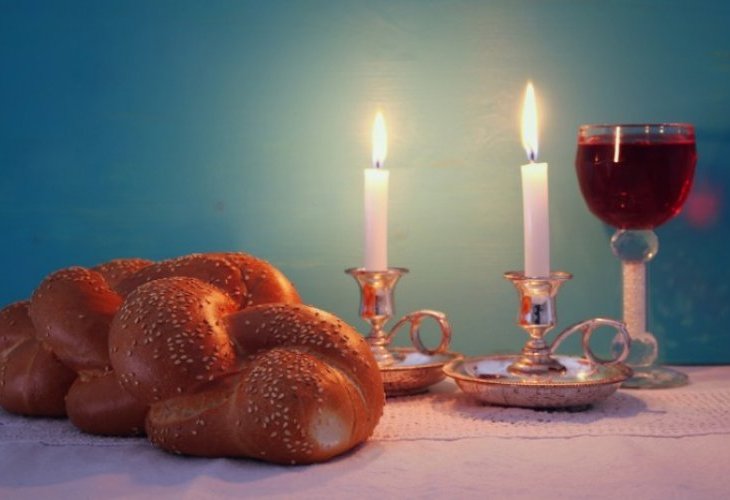
What should a Shabbat meal look like?
Rabbi Shimshon Dovid Pincus, in his book Shabbat Malchata, offers a remarkable perspective. He writes that a person should approach Kiddush with the awareness that it is comparable to the Mussaf prayer of Yom Kippur — an experience that demands concentration, reverence, and awe. The Shabbat meal itself, he explains, should be viewed like the pre-fast meal eaten on the eve of Yom Kippur: a mitzvah of immense holiness and profound spiritual benefit. A person sitting at the Shabbat table should see himself as a High Priest engaged in the sacred service of the Temple.
Yet, Rabbi Pincus emphasizes, achieving this mindset does not require unusual behavior or outward displays of spirituality.
Everything should be done naturally, with joy, warmth, and a pleasant countenance toward every member of the household. When approached in this way, the Shabbat meals become hours of spiritual growth and elevation. Just as the High Holy Days influence and shape the entire year, so too does Shabbat bring blessing and spiritual strength to all the days that follow.
A Surprising Question
Rabbi Pincus raises an intriguing question.
One of the central mitzvot of Shabbat is oneg Shabbat — taking delight in the holy day through enjoyable foods and physical pleasures. At first glance, this seems puzzling.
Shabbat is a day of holiness, closeness to God, and spiritual elevation. Would it not make more sense for such a day to be devoted to restraint, simplicity, and self-denial? After all, there is a well-known principle that excessive focus on physical pleasures can come at the expense of spiritual growth.
How, then, can bodily enjoyment and spiritual holiness coexist? How can indulgence in delicious food be part of a day dedicated to connecting with the Divine?
A Meal With a Great Sage
To answer this question, Rabbi Pincus offers a beautiful parable.
Imagine that a person is invited to the home of one of the greatest Torah sages of the generation — someone of the stature of the revered Chatam Sofer.
The sage warmly welcomes his guest and says, "Please honor me by joining me for lunch."
He then instructs his household to prepare an elaborate and generous meal in honor of the visitor.
Imagine that the guest responds: "I cannot eat such a meal. I live a life of self-denial and simplicity. I permit myself only bread with salt and a cup of water."
Would such a response make any sense?
Certainly not.
Standing in the presence of a great and holy Torah giant, the guest's personal calculations become irrelevant. He is no longer focused on his own spiritual programs or private standards. His sole concern is fulfilling the wishes of his distinguished host.
If the sage desires that he eat, then he eats. If the sage wishes to honor him with a festive meal, he gratefully accepts.
His own preferences, whether physical or spiritual, are set aside in deference to the will of his host.
Shabbat Belongs to God
Rabbi Pincus explains that this is precisely the secret of Shabbat.
If we were evaluating the day solely according to what seems spiritually beneficial for us, we might conclude that Shabbat should resemble Yom Kippur — a day of fasting, abstinence, and complete separation from physical pleasures.
But Shabbat is not primarily our day. It is God's day.
God Himself desires that we delight in His creation. He wants us to enjoy delicious foods, festive meals, and physical pleasures in honor of His holy day. He wants us to rejoice together with Him.
On Shabbat, our personal calculations and spiritual theories are secondary. The focus is not what we think is best for our own spiritual development, but rather what God asks of us.
We celebrate because He wants us to celebrate, we feast because He wants us to feast, and we enjoy His gifts because that is His will.
The Highest Form of Service
Paradoxically, Rabbi Pincus concludes, we ultimately gain far more spiritually by surrendering ourselves to God's will than we would by inventing our own forms of holiness and self-denial.
A person might imagine that he could achieve lofty spiritual heights through private acts of asceticism. Yet true spiritual greatness comes not from pursuing our own ideas of holiness, but from aligning ourselves with the Divine will.
This is the essence of Shabbat.
The holiness of the day lies not merely in the food, the songs, or the atmosphere, but in the willingness to set aside our own agenda and embrace God's.
Shabbat is an exercise in joyful surrender. It is a weekly opportunity to declare that our greatest pleasure is not simply enjoying the blessings God has given us, but fulfilling His desire that we enjoy them.
And in that act of self-nullification, we discover one of the deepest forms of closeness to Him.

