

Home Styling
What's Eating Your Plants? The Reasons Leaves Develop Holes
Explore the most common causes of damaged leaves, including pests, watering mistakes, wind damage, and nutrient deficiencies, with expert care tips
- Shira Dabush
- | Updated
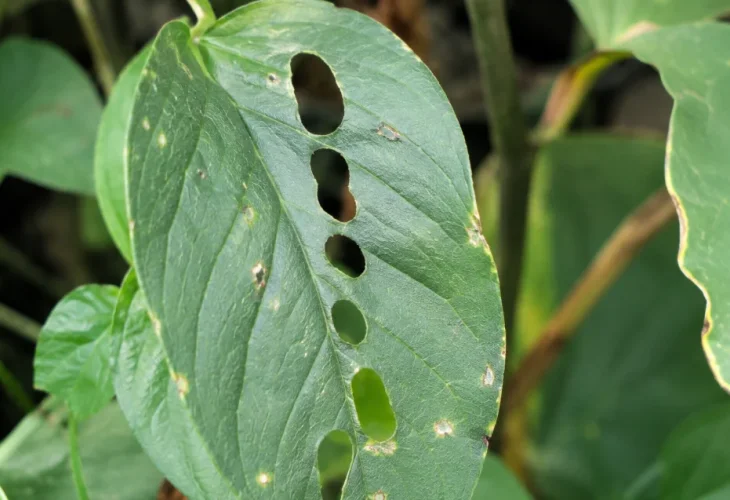
Few things are more frustrating than watching your healthy, well-cared-for plants suddenly develop holes in their leaves. The first thought that usually comes to mind is, "There must be caterpillars or snails!" But gardening experts say pests aren't always to blame. Before treating the plant, it's important to identify the real cause of the damage.
What Caused the Holes? The Most Common Possibilities
Insects and Pests
Caterpillars, beetles, snails, and slugs commonly feed on leaves. A telltale sign is holes that look like bite marks along the edges of the leaf. If you inspect your plants early in the morning or in the evening, you're likely to catch the culprits in action or spot tiny droppings left behind on the leaves.
Sunburn
If you've recently moved a plant to a location with much stronger sunlight, its leaves may become scorched. The damage often begins as pale or brown patches. As the affected tissue dries out, it can crumble and fall away, leaving holes behind.
Wind Damage
Strong winds can cause leaves to rub against one another or against nearby objects. Plants with large, delicate leaves are especially vulnerable, and the resulting tears can easily be mistaken for insect damage.
Mineral Deficiencies
When the soil lacks essential nutrients such as potassium or calcium, leaves become weaker and more susceptible to damage. Dry patches may develop, eventually falling out and leaving holes in the foliage.
Diseases and Fungal Infections
Certain fungal diseases cause spots to form on leaves. As the infection progresses, the affected tissue dries up and falls away, giving the leaves a perforated appearance.
Improper Watering
Both overwatering and underwatering can weaken a plant. A stressed plant is far more susceptible to diseases, pests, and environmental damage.
How to Keep Your Plant Leaves Healthy
Inspect your plants regularly. Check them at least once a week, including the undersides of the leaves, where many pests like to hide.
Prune damaged foliage. Remove dry, diseased, or severely damaged leaves to help keep the plant healthy.
Water appropriately. Give each plant the amount of water it needs, avoiding both excessive and insufficient watering.
Fertilize when needed. Feed the soil according to the plant's requirements and the season.
Provide the right location. Place the plant where it receives the appropriate amount of sunlight and shade for its specific needs.
Control pests promptly. Treat snails, slugs, and other pests as soon as they appear to prevent further damage.
Allow adequate spacing. Keep enough distance between pots or plants to promote good air circulation, which helps reduce the risk of fungal diseases.
If only one or two leaves have a hole or two, there's usually no need to worry.
However, if the damage spreads rapidly, numerous spots begin appearing, or the plant stops growing, it's time to identify the underlying cause and address it without delay.

