

Health and Nutrition
Can a Gut Microbiome Test Really Tell You What to Eat?
Gut microbiome tests promise personalized nutrition and weight loss, but do they really work? Here's what doctors and the latest research say.
- Shira Dabush
- | Updated
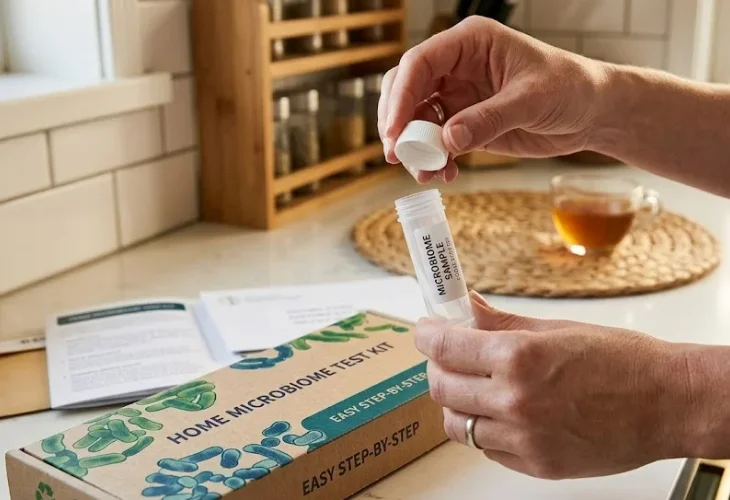
Recently, I was scrolling online when I came across an ad that sounded almost too good to be true. It promised that with a simple gut bacteria test, I could find out exactly which foods suit me, which ones harm me, and even receive a personalized plan to help me lose weight without giving up the foods I love.
I have to admit, it caught me at exactly the right moment. My curiosity got the better of me, even the cautious part of me that usually avoids jumping to conclusions. I left my details, and before long, a kit arrived at my home for collecting a stool sample.
Then came the real surprise.
After speaking with the company's representatives, I learned that completing the process and receiving full guidance would cost about 4,500 shekels.
That made me stop and wonder: Can science really provide such precise answers from a test like this today, or is this mostly clever marketing? To find out, I looked into what gastroenterologists and microbiome researchers actually say, and their answers were far more cautious than the advertisements.
I'm exactly the kind of person who can fall for promises like these. In fact, I already did once. A scammer convinced me to spend 6,000 shekels on dozens of supplements that supposedly would relieve a health issue. Not only did they fail to help, but two years later they ended up in the trash. That's why these ads concern me. They promise nothing less than a revolution in personalized nutrition.
How do these tests work?
Most companies mail you a collection kit for either a stool sample or, in some cases, a small blood sample. After you send it back to the lab, your microbiome, the trillions of microorganisms living in your digestive tract, is analyzed.
The companies then claim they can tell you which foods are best for your body, which foods may be harming you, and even how to lose weight while continuing to enjoy many of your favorite meals.
Why is everyone talking about the microbiome?
Trillions of bacteria, viruses, and fungi live in our digestive system, together forming what is known as the microbiome.
Over the past decade, researchers have discovered that these microorganisms play important roles in digestion, vitamin production, immune function, and inflammation. Studies have also linked differences in the microbiome to conditions such as obesity, diabetes, liver disease, and inflammatory bowel disease. Other research is exploring possible connections between gut bacteria and mental health, including anxiety, depression, and mood disorders.
But there's an important distinction: a connection does not necessarily mean cause and effect.
In many cases, scientists still don't know whether changes in gut bacteria contribute to disease or whether illness itself alters the microbiome.
What do the experts say?
Many gastroenterologists emphasize that the issue isn't the microbiome research itself. It's that science still doesn't fully understand how to interpret the enormous amount of data in a way that can produce reliable, personalized medical advice.
Every person's microbiome is unique, almost like a fingerprint. But even within the same individual, it can change based on diet, illness, medications, age, stress levels, and even the time of day.
That makes it extremely difficult to define what a "healthy" or "ideal" microbiome should actually look like.
Experts also point out that commercial microbiome tests are not regulated in the same way as standard medical laboratory tests. Different companies use different testing methods, databases, and algorithms, meaning the same sample could produce different recommendations depending on where it is analyzed.
Can these tests really help you lose weight?
Weight loss is one of the biggest selling points of commercial microbiome tests.
Some companies suggest they can identify exactly which foods make you gain weight and which ones will help you lose it. However, experts say there is currently insufficient scientific evidence to support those claims.
Research in this field is advancing rapidly, but it has not yet reached the point where commercial microbiome tests can reliably create personalized diets that consistently lead to better weight loss outcomes.
So how can you actually protect your gut health?
Despite the marketing promises, digestive health experts continue to recommend the same evidence-based habits:
Eat a wide variety of fruits and vegetables.
Include plenty of fiber-rich foods, such as legumes and whole grains.
Choose high-quality protein sources.
Limit ultra-processed foods.
Get enough sleep.
Exercise regularly.
Avoid unnecessary use of antibiotics.
The future looks promising, but it isn't here yet
There is no doubt that microbiome research is one of the most exciting areas of modern medicine. It's entirely possible that one day doctors will be able to tailor nutrition and treatments to each person's unique gut bacteria.
But for now, researchers and physicians agree that our understanding is still limited, and many commercial claims have moved ahead of the science.
Before spending hundreds or even thousands of shekels on a microbiome test that promises to transform your health, it's worth remembering that the most effective ways to support your gut are also the simplest: eat a balanced diet, get enough sleep, stay active, and maintain healthy daily habits. These recommendations may not be as flashy as the ads, but unlike many of the promises, they are backed by solid scientific evidence.

