

Raising Children
Drowning Is Silent: Essential Water Safety Tips Every Parent Should Know
Experts explain why drowning deaths are rising after years of decline and share essential water safety tips that could save a child's life
- Shira Dabush
- | Updated
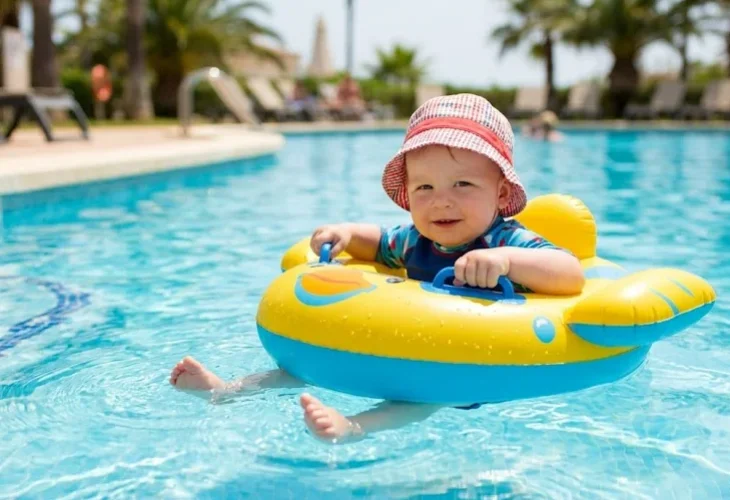
Drowning is one of the deadliest accidents affecting children, and it often happens in complete silence, without screams or obvious signs of distress. Pediatricians in the United States are warning that after years of steady improvement, child drowning deaths are once again on the rise.
According to U.S. authorities, between 4,000 and 5,000 people drown each year. Most are adults who drown in lakes, rivers, or the ocean. For children, however, the picture is far more alarming.
Drowning is the leading cause of death among children between the ages of one and four. It is also one of the leading causes of death among children aged five to fourteen. Dr. Rohit Shenoi, who led a new policy statement from the American Academy of Pediatrics, stresses that every second counts. According to him, a rapid rescue followed by immediate CPR can mean the difference between life and death — or between a full recovery and permanent disability.
A Tragedy That Changed One Family Forever
One of the most well-known stories in the fight against child drowning is that of Stewie Leonard.
Stewie was just 21 months old when he drowned in 1989 during a family vacation on the Caribbean island of Saint Martin. The family was celebrating his older sister's birthday. His father was decorating the party with balloons, his mother was baking a cake, and several relatives were gathered around the pool.
Each adult assumed someone else was watching the toddler.
"It wasn't until afterward that we realized we had never asked each other, 'Are you watching him?'" recalled his mother, Kim Leonard.
A few minutes later, the adults noticed that Stewie was missing. His father found him floating face down in the pool.
The devastating loss inspired the couple to establish a foundation dedicated to preventing child drownings. The organization funds swimming lessons for children and promotes water safety education.
Why Are Drowning Deaths Increasing Again?
During the 1980s, approximately 2,000 children drowned each year in the United States. Thanks to public awareness campaigns, expanded access to swimming lessons, and laws requiring fencing around private pools, that number fell to fewer than 1,000 annually by the early 2000s.
Between 2000 and 2019, child drowning deaths declined by approximately 38 percent.
Then came the COVID-19 pandemic.
Swimming lessons were suspended, lifeguard training programs were disrupted, and many communities experienced severe lifeguard shortages. At the same time, more families installed private pools, and children spent much more time at home and in their backyards.
As a result, the number of child drowning deaths increased from 756 in 2019 to 865 in 2024. Most of the victims were children under the age of five.
Although preliminary data from 2025 suggests a slight decline, experts caution that it is still too early to determine whether this represents a lasting trend.
The American Academy of Pediatrics emphasizes that no safety device can replace active adult supervision. In recent years, bracelets and alarm systems have been developed to alert caregivers when a child enters the water. However, even the manufacturers stress that these devices are only an additional layer of protection, but not a substitute for constant supervision.
Experts also recommend fully fencing private pools, installing self-closing and self-latching gates, using properly fitted life jackets where appropriate, maintaining adequate lifeguard standards, and enrolling children in swimming lessons from an early age.
"Put Away Your Phone"
Stew Leonard, Stewie's father, continues to share his family's message with parents.
He says swimming lessons are one of the greatest gifts a parent can give a child. "I love ballet, karate, and tennis," he said. "But only swimming lessons can save your child's life."
The foundation he established has already funded more than 250,000 swimming lessons for children and has opened two swimming schools.
His most important message is simple and direct: "When your children are near the pool, put away your phones. Don't read a book, don't chat with friends, and don't assume someone else is watching. Drowning happens in the blink of an eye."
Warning Signs Every Parent Should Know
Unlike what is often portrayed in movies, drowning is usually not accompanied by screaming or dramatic splashing. In many cases, a child slips quietly beneath the water.
For that reason, parents should always:
Supervise children continuously whenever they are near water, even if they know how to swim.
Never leave toddlers unattended — even for a moment, in a bathtub, swimming pool, or near any body of water, even if they are using inflatable rings or floaties.
Ensure that private pools are enclosed with proper safety fencing.
Enroll children in swimming lessons appropriate for their age and according to professional recommendations.
Learn basic CPR, since a rapid response can save a child's life.
"Drowning is a tragedy that can often be prevented," the experts conclude. "A combination of constant supervision, a safe water environment, and strong swimming skills can make the difference between a joyful summer and a preventable tragedy."

