

NATO Summit Opens in Ankara as Trump Arrives in Turkey
Against the backdrop of the wars in Ukraine and the Middle East, NATO leaders opened their summit in Ankara with President Donald Trump in attendance. At the center of the agenda: global conflicts, Washington’s push for higher defense spending, and the possibility that Turkey could return to the F-35 fighter jet program.
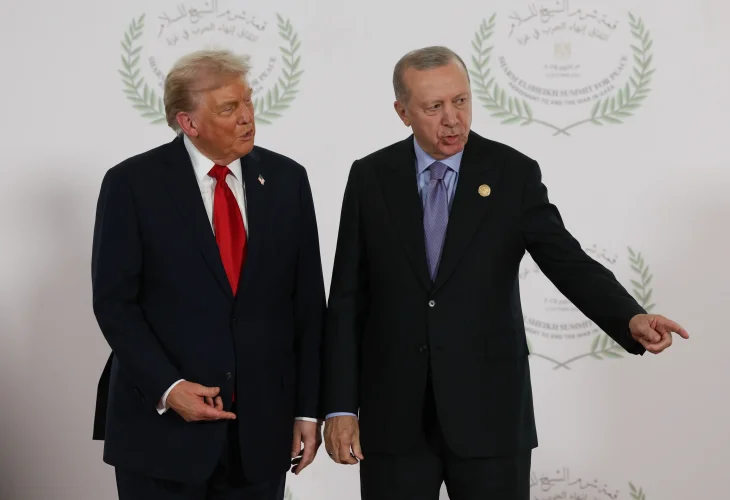 Trump and Erdogan, archive (Credit: shutterstock)
Against the backdrop of the wars in Ukraine and the Middle East, and amid sustained American pressure on alliance members to increase defense spending, the NATO leaders' summit opened today (Tuesday) in Ankara. U.S. President Donald Trump touched down in Turkey shortly before the opening of talks, with one of the most politically sensitive items on the agenda being the potential restoration of Turkey's participation in the F-35 stealth fighter program.
Trump was received by Turkish President Recep Tayyip Erdoğan, who greeted him on the tarmac outside the aircraft. Footage released from the arrival shows the two embracing, posing for photographs, and later walking side by side — with Erdoğan visibly holding Trump's arm as they moved together.
The summit agenda covers a range of pressing security issues, including the continued response to the war in Ukraine, developments in the Middle East, and Washington's demand that NATO member states raise defense expenditure to 5% of GDP — a benchmark that has drawn considerable resistance across the alliance.
Much of the diplomatic attention, however, is focused on the bilateral meeting between Trump and Erdoğan scheduled for today. Central to that conversation is expected to be the question of whether Ankara can be reintegrated into the F-35 program, from which Turkey was excluded in 2019 following its decision to acquire the Russian S-400 air defense system.
According to a report in The New York Times, Trump is weighing whether to allow Turkey to once again procure the advanced stealth jets — a move that could significantly reshape the security architecture of the U.S.-Turkey relationship. Any such decision, however, is expected to face substantial opposition on Capitol Hill.
Developments in Ankara are being watched with particular concern in Jerusalem. Israeli officials fear that Trump may offer Erdoğan a diplomatic concession in the form of restored F-35 access — a step that, in their assessment, could alter the regional balance of power in ways that affect Israeli security interests.
An American decision to approve the deal's renewal would not raise alarm in Israel alone. Greece and Cyprus, both attentive to Turkey's expanding military capabilities, share concerns that restoring Ankara's access to fifth-generation air power would confer a significant strategic advantage and shift the security equilibrium across the Eastern Mediterranean.

