

Israel News
Surgeons Save Reserve Commander After Shrapnel Lodges Near Aorta
A reserve platoon commander seriously wounded in southern Lebanon underwent life-saving surgery after shrapnel lodged just millimeters from his aorta.
- Yuval Aviv
- | Updated
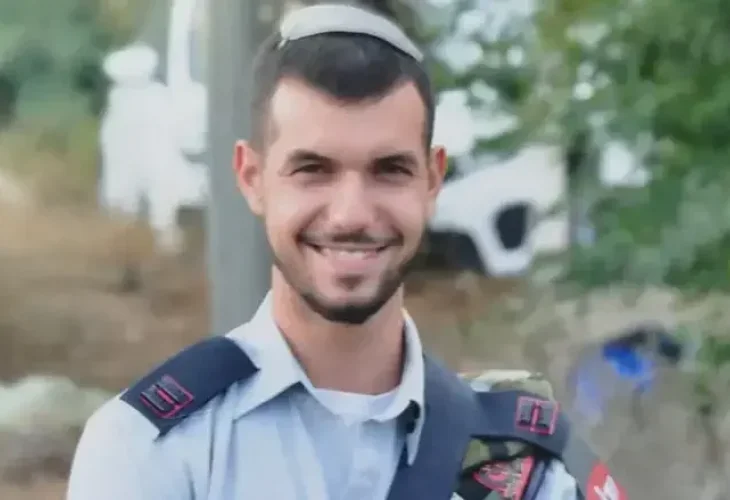 Capt. Malachi Mondani (Photo: Courtesy of the family)
Capt. Malachi Mondani, 25, a reserve platoon commander from the moshav of Neve in the Gaza border region, was seriously wounded during an encounter with terrorists in southern Lebanon last Thursday. After being injured, he was evacuated to Rambam Medical Center with life-threatening penetrating wounds. After stabilizing his condition, doctors discovered an especially rare and dangerous injury: a piece of shrapnel had lodged just millimeters from his aorta, the main artery that carries blood from the heart to the rest of the body. The discovery presented doctors with a complex dilemma. On one hand, Mondani's critical condition and multiple injuries made surgery especially risky. On the other, leaving the shrapnel in place posed a serious threat, as even slight movement could have torn the aorta and caused catastrophic bleeding. Because of the complexity of the case, trauma, vascular, and cardiac surgery specialists convened for an emergency consultation. They ultimately decided to operate and remove the shrapnel. The procedure was performed by Dr. Zvi Adler, a senior physician in Rambam's cardiac surgery department, together with Dr. Kamel Murshad, a resident in the department. The two successfully removed the shrapnel, and the operation was completed without complications. Prof. Gil Bolotin, head of Rambam's cardiac surgery department, described the severity of Mondani's condition upon arrival. "The shrapnel was resting directly against the aorta. Any movement could have punctured the artery and led to a fatal outcome," he said. According to Prof. Bolotin, even the decision to operate was far from straightforward. "Because this is an extremely rare condition that has been documented only sparingly in the medical literature, we held an extensive professional discussion over whether to leave the shrapnel in place or remove it surgically. We ultimately chose surgery. The procedure went smoothly, and fortunately the patient stabilized and was transferred for continued treatment at the medical center."
The finding placed doctors before a complex dilemma. On one hand, the officer’s severe condition and the multiple injuries he had sustained made any surgical intervention especially dangerous. On the other hand, leaving the shrapnel in place carried a real risk, since any movement could have caused a tear in the aorta and led to immediate danger to his life.
Because of the complexity, a professional consultation was convened with trauma, angio, and cardiac surgery specialists. At the end of that discussion, the decision was made to operate and remove the shrapnel. The procedure was performed by Dr. Zvi Adler, a senior physician in the cardiac surgery department, together with Dr. Kamel Murshad, a resident in the department. The two successfully removed the shrapnel safely, and the surgery ended successfully.
Prof. Gil Bolotin, head of Rambam’s cardiac surgery department, described how serious Mondani’s condition was when he was admitted: "The shrapnel was sitting right up against the aorta, in contact with it. Any movement could have punctured the aorta and led to a grim outcome."
According to him, even the decision to operate was far from obvious: "Because this is a rare condition that has been documented only very little in the medical literature, a professional discussion was held over whether to leave the shrapnel in place or operate. We decided on the second option. The course of the surgery went smoothly, and fortunately the patient stabilized and was transferred for continued treatment at the medical center."

